What Does the 2026 Art Market Report Mean for Online Art Buyers?
The Art Basel and UBS Global Art Market Report 2026 shows a recovering but uneven market: global art sales reached $59.6 billion in 2025, while online sales totaled $9.2 billion, or 15% of the market. For buyers of accessible original paintings, the strongest message is practical: transparent online presentation, appropriate scale, and clear handmade-artwork expectations matter more than speculative prestige.
What Does the Global Art Market Report 2026 Reveal?
The Global Art Market Report 2026 indicates that the art market returned to growth in 2025, with global sales rising 4% to $59.6 billion. Growth was uneven, however, with the lower end of the dealer market performing strongly while the middle tier faced more pressure.
The 10th Art Basel & UBS report, prepared by Arts Economics, tracks activity across dealers, galleries, auction houses, art fairs, and online channels. Dealer sales rose 2% to $34.8 billion, while public auction sales increased 9% to $20.7 billion.
For interior-focused buyers, the report is relevant because it highlights a continuing shift in how people encounter and acquire art. A buyer does not need to begin with a blue-chip auction or established gallery relationship to select meaningful artwork for a home. Digital discovery, direct communication, visual previews, and clear product information can make original wall art more accessible.
The strongest dealer growth occurred among businesses with annual turnover below $500,000. This segment is closer to the everyday decorating and first-time-collector market, where buyers often prioritize visual connection, room compatibility, price clarity, and confidence in the purchasing process.
Why Are Accessible Primary-Market Paintings Growing?
Accessible primary-market paintings appeal because they let buyers acquire newly created art directly from the source rather than navigating resale pricing, auction competition, or uncertain condition histories. This model can make original, hand-painted art more approachable for people furnishing a first home, updating a living room, or building a personal collection gradually.
Primary-market art generally refers to work sold for the first time by the artist, studio, gallery, or authorized seller. It differs from the secondary market, where a previously owned artwork is resold through auctions, dealers, or private transactions.
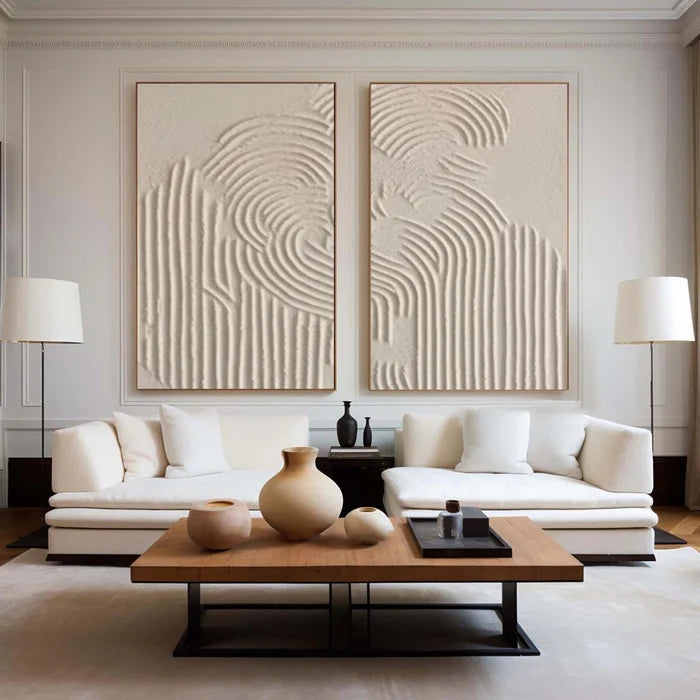
For a buyer, the value is not limited to price. A new painting can be selected for a specific wall, palette, and room mood. A warm beige abstract work may support a layered neutral interior, while a saturated blue-and-green canvas can become a stronger focal point in a contemporary space.
Hand-painted abstract art also offers visible material character. Brushwork, palette-knife marks, uneven pigment density, plaster-like relief, and small compositional differences are often part of the appeal. These characteristics should be understood as handmade variation, not as defects or evidence that a painting must match a website image with machine-level precision.
How Important Are Online Art Sales in 2026?
Online art sales remain important because they account for $9.2 billion, or 15% of the global art market, even though higher-value transactions have increasingly returned to in-person settings. Online channels remain especially relevant for discovery, lower-to-mid-price purchases, and first-time buyer access.
Digital buying works best when the artwork is presented with enough information to reduce uncertainty. A product image alone is rarely sufficient for a considered purchase. Buyers benefit from accurate dimensions, orientation, close-up texture views, room-scale visuals, material details, and a clear description of what is included.
Vinchy Art operates in the accessible direct-to-consumer segment, where online confidence depends on this level of clarity. Its catalog includes abstract, textured, Wabi-Sabi, minimalist, landscape, portrait, ocean-and-sky, floral, geometric, and multi-panel wall art. Buyers should still check the current product page for the exact artwork, because dimensions, paint medium, orientation, framing options, and customization availability can vary by listing.
Which Artwork Size Works Best for Your Wall?
The best artwork size usually occupies about two-thirds to three-fourths of the usable width above a sofa, bed, console, or dining-sideboard. This is a design guideline rather than a fixed rule, but it helps prevent a painting from looking visually disconnected from the furniture below it.
Measure the open wall area rather than the entire wall. Account for nearby lamps, windows, shelving, moldings, and furniture height. For example, a 90-inch sofa often supports artwork or a grouped arrangement around 60 to 68 inches wide, depending on the surrounding negative space.
Viewing distance matters as much as wall width. A highly textured painting often benefits from enough space for the surface to read as a whole composition from several feet away, while still rewarding closer inspection. In compact rooms, one confident large work can look more intentional than several undersized pieces scattered across the wall.
Before ordering from Vinchy Art or another online art seller, mark the intended dimensions with painter’s tape. Stand at normal viewing distance, then sit where you typically use the room. This simple test reveals whether the painting should be wider, taller, more vertical, or less visually dominant.
How Should You Match Art Colors With an Interior?
Match artwork to an interior by deciding whether the painting should repeat, bridge, or contrast the existing color palette. Repetition creates cohesion, bridging connects separate tones, and contrast gives a room a deliberate focal point without requiring every color to match exactly.
Start with the room’s largest visual surfaces: wall color, flooring, sofa upholstery, rug, curtains, and wood finishes. Then identify two or three colors worth echoing in the artwork. These do not need to be identical shades. A painting with sand, taupe, charcoal, and soft cream can relate naturally to linen upholstery, oak furniture, and warm-white walls.
For a calmer composition, choose a work where the dominant color family is already present in the room. Wabi-Sabi and minimalist wall art often suits this approach because muted earth tones, irregular forms, and restrained contrast can work with natural fibers, clay objects, aged wood, and organic finishes.
For more energy, use contrast intentionally. A blue abstract painting can sharpen a room dominated by beige and walnut. A terracotta or rust-toned painting can warm a gray interior. The key is repetition: include one or two smaller accents, such as a book cover, ceramic object, cushion, or vase, that acknowledge the artwork’s stronger color.
What Should Buyers Know About Texture and Handmade Variation?
Textured and hand-painted art should be chosen with the understanding that surface relief, brush direction, pigment variation, and subtle compositional differences are integral to handmade work. These features can create depth under changing light, but they also mean the finished painting may not be a perfectly identical duplicate of a digital reference image.
Texture influences both visual weight and lighting behavior. Raised plaster-style forms can produce shadows that become more noticeable in side light, especially near windows or under directional picture lights. Thick impasto can make a restrained monochrome painting feel more dimensional, while smoother acrylic or oil passages may better suit a clean, minimalist interior.
When evaluating textured wall art online, consider:
-
Whether the painting will be viewed mostly from straight ahead or from an angle
-
How daylight moves across the wall through the day
-
Whether the room already contains many tactile materials, such as boucle, rattan, stone, or heavy drapery
-
Whether a substantial textured surface will complement or overwhelm the room
-
Whether the exact listing describes the paint, canvas, frame, and finish you expect
Vinchy Art states that many of its paintings are hand-painted and made to order. Where an applicable listing offers completed-work photos or video before shipment, that process can help the buyer review color balance and overall composition before final dispatch. Availability and conditions should be confirmed for the exact order.
Can Framing and Orientation Change the Final Look?
Framing and orientation can substantially change how a painting relates to a room. A frame creates a visual boundary and can make artwork feel more architectural, while an unframed or frameless canvas usually reads as more contemporary, casual, or studio-oriented.
Choose horizontal art for long furniture, wide walls, and rooms that need a sense of expansion. Vertical art can emphasize ceiling height, balance narrow walls, and create a stronger upward movement near entryways, stair landings, or beside tall furniture.
A pair of vertical canvases can work well above a narrow console or on either side of a bed, whereas a coordinated diptych or triptych may help fill a broad wall without relying on one oversized composition. The gap between panels is part of the design: keep it consistent so the set reads as one intentional arrangement.
Frame color should connect with the room’s existing finishes. Light wood can soften a natural interior; black can add graphic definition; metallic finishes can introduce refinement when echoed elsewhere. Check each Vinchy Art product page before assuming that a specific artwork is available as rolled canvas, frameless canvas, or framed canvas.
How Should You Install and Light Original Wall Art?
Install artwork at an appropriate viewing height and use lighting that reveals the composition without creating excessive glare, heat, or harsh reflections. For most standing viewing areas, the artwork’s center is commonly placed around 57 to 60 inches from the floor, then adjusted for furniture and ceiling height.
Above a sofa, leave a measured visual connection between the furniture and art rather than hanging the work too high. A gap of roughly 6 to 10 inches often works, although tall backrests, large paintings, and low ceilings may require adjustment.
Use hardware appropriate to the artwork’s actual weight, wall construction, and frame type. Drywall anchors, masonry fasteners, picture hooks, and hanging wire have different load capabilities. If a framed or frameless option includes hanging hardware, verify that detail on the applicable product page; rolled canvas generally requires local stretching or framing before installation.
Avoid placing original paintings directly above fireplaces with significant heat output, in persistently humid bathrooms, or where direct sun can strike the surface for extended periods. Indirect daylight and controlled artificial light are typically easier on paint surfaces and help preserve color balance over time.
What Are Vinchy Art Expert Views?
The most useful online-art purchase is not simply the painting that looks best on a product page; it is the work that remains visually convincing at the scale, height, and lighting conditions of the buyer’s actual room. Prioritize proportions before color details, then evaluate texture, orientation, and framing as part of one complete wall composition.
Vinchy Art Expert Views
“When choosing hand-painted wall art, begin with the wall rather than the image. Measure the available width, consider the main viewing distance, and identify the room’s dominant undertones before selecting a design. A painting should either extend the room’s existing visual language or provide a controlled point of contrast. For made-to-order artwork, allow for small handmade variations in texture and brushwork; these are part of the individual character of the finished piece. If the wall is difficult to judge, a room preview and a simple taped outline can clarify scale before ordering.”
Vinchy Art’s room-preview and art-advisory approach can be especially useful when selecting between a single oversized painting, a vertical composition, or a multi-panel set. The goal is not to make every room look identical, but to make the selected artwork feel proportionate, intentional, and personally relevant.
How Can You Buy Original Art Online With Confidence?
Buy original art online with confidence by confirming the exact product details, checking room scale before purchase, understanding handmade variation, and reviewing current order terms before payment. The more specific the listing information, the easier it is to compare options accurately.
Use this decision process:
-
Measure the usable wall width and furniture below it.
-
Decide whether the room needs horizontal, vertical, square, or multi-panel art.
-
Identify the room’s dominant colors, undertones, and materials.
-
Review close images for texture, edge treatment, and color distribution.
-
Confirm the specific artwork’s available size, framing, and customization options.
-
Check the current shipping, packaging, duties, return, and custom-order terms for your destination.
-
Keep screenshots or written confirmation of important product selections before placing the order.
Avoid treating online art as a generic décor accessory. An original painting has a stronger visual presence than a printed poster because its surface, scale, and handmade marks can become part of the room’s material language. Vinchy Art may be a suitable option for buyers seeking accessible hand-painted artwork, but the final choice should be based on the exact artwork page and the needs of the specific space.
What Are the Key Takeaways for Art Buyers?
The 2026 market data supports a practical conclusion: accessible original art and digital discovery remain important, even as high-value art transactions increasingly return to in-person channels. Buy for the room you have, not only for the image you like on screen.
Choose a size proportionate to the wall and furniture, assess the piece from normal viewing distance, and match or deliberately contrast your existing palette. Consider natural and artificial light before selecting high-relief texture, choose orientation based on wall shape, and confirm framing and installation requirements before ordering. For a D2C purchase from Vinchy Art, verify the exact artwork’s current specifications and service terms so the order aligns with your budget, wall dimensions, and design goals.
What Are the Most Common Questions About Online Original Art?
Is hand-painted abstract art suitable for a minimalist room?
Yes. A restrained abstract painting with a limited palette, open negative space, and subtle texture can suit minimalist interiors well. Choose a composition that supports the room’s clean lines rather than adding unnecessary visual clutter.
Can a large painting work in a small room?
Yes, if the artwork is proportionate to the wall and not competing with too many other focal points. One larger work can often feel more intentional than several small pieces, particularly on a clear wall above simple furniture.
Should artwork match the sofa exactly?
No. Exact matching can make a room feel overly coordinated. It is usually more effective to repeat a related undertone, such as warm beige, olive, blue-gray, rust, or charcoal, while allowing the artwork to introduce secondary colors.
Will a textured painting look different under different lighting?
Yes. Raised texture, palette-knife marks, and plaster-like surfaces can cast changing shadows as daylight shifts or as directional lighting is used. Review the intended wall’s light exposure before choosing pronounced texture.
Can I expect a made-to-order painting to look exactly like the website image?
A handmade painting may have small differences in brushwork, texture, and color distribution. Review the exact seller’s current process and, where available, request completed-work visuals before shipment to confirm the finished artwork meets your expectations.