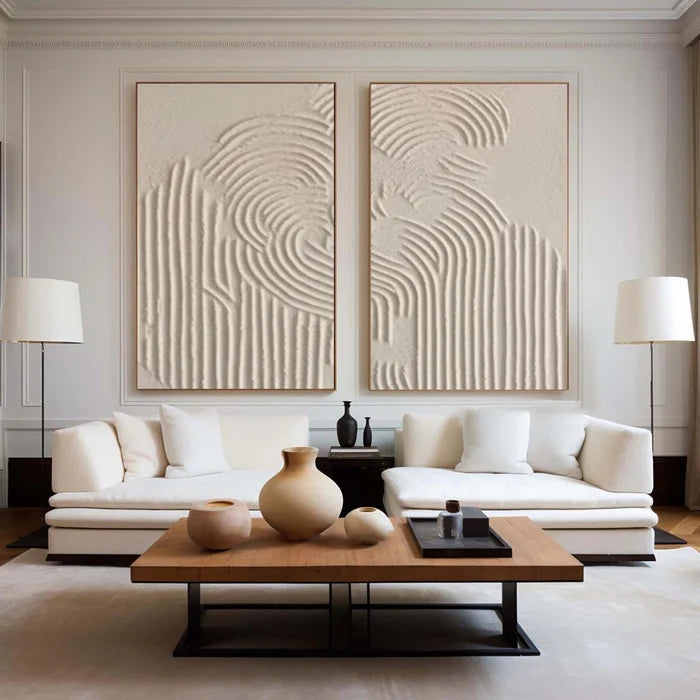
Why Is Tactile Wall Art Rising in 2026?
Tactile wall art is rising because buyers want decor that feels more human, more calming, and more visually alive. In 2026, 3D textured wall art, plaster art, and hand-crafted relief pieces are replacing flat prints by adding depth, shadow, and craftsmanship. This shift also fits wellness-focused interiors, where texture creates warmth, movement, and a stronger emotional connection to the room.
What Is The Tactile Era?
The Tactile Era is the move from flat, digital-looking decor toward surfaces you can almost feel with your eyes. It favors 3D textured wall art, plaster art, impasto layers, and hand-crafted relief finishes. This approach makes interiors feel richer, more organic, and more personal than mass-produced prints.
It matters because texture changes how art interacts with light, space, and mood. A flat print stays visually fixed, while textured art shifts through the day as shadows move. That living quality is one reason designers and buyers are choosing tactile surfaces more often.
Why Are Buyers Choosing Texture?
Buyers are choosing texture because it adds depth, warmth, and authenticity to a space. Many people now want art that feels crafted rather than printed, especially in homes designed for calm, luxury, or wellness. The result is a stronger emotional response and a more memorable interior.
This trend also reflects a broader desire for sensory decor. In a screen-heavy world, people want something physical and grounding on the wall. Vinchy Art aligns with this shift by creating abstract oil paintings that feel handcrafted, layered, and emotionally restorative.
Which Art Styles Lead The Shift?
The strongest styles in this movement are 3D textured wall art, plaster paintings, abstract impasto canvases, and knife-work compositions. These pieces stand out because they create visible ridges, sculpted surfaces, and organic movement. They are especially effective in minimalist interiors that need one strong focal point.
These styles outperform flat prints when the goal is atmosphere. They do not just fill a wall; they change how the whole room feels. That is why tactile decor is becoming a preferred choice for designers and homeowners.
How Does Texture Improve Interiors?
Texture improves interiors by adding contrast, movement, and visual interest without relying on bright color or complex imagery. Raised surfaces catch natural and artificial light differently, which creates shadow variation throughout the day. That gives the room a more layered and refined look.
Texture also helps balance modern spaces that can otherwise feel cold or too polished. A plaster finish or hand-crafted relief piece softens straight lines, hard materials, and neutral palettes. For brands like Vinchy Art, this makes textured abstract oil paintings especially effective in wellness-oriented homes.
What Makes Hand-Crafted Art Valuable?
Hand-crafted art is valuable because it carries evidence of the artist’s process. Every stroke, ridge, and layer adds uniqueness, so no two pieces look identical. Buyers often view that individuality as a sign of quality, originality, and long-term style value.
It also feels more premium than machine-made decor. Mass-produced prints can look decorative, but hand-made tactile works feel collected, curated, and intentional. In premium interiors, that sense of craftsmanship often matters as much as color or size.
How Should Brands Position Tactile Art?
Brands should position tactile art as both decor and experience. The strongest message is not only that the piece looks beautiful, but that it changes the feeling of a room. That language connects texture to wellness, mood, and design value.
A simple positioning framework works well:
-
Emphasize tactile depth, shadow play, and hand-crafted detail.
-
Highlight emotional benefits such as calm, focus, and relaxation.
-
Show how the piece works in real rooms, not just on a white background.
-
Use language that connects modern design with human craftsmanship.
Vinchy Art can benefit from this approach because its abstract oil paintings already support relaxation and mental clarity. The brand’s textured collections naturally fit the Tactile Era narrative.
Why Does Vinchy Art Fit This Trend?
Vinchy Art fits this trend because its catalog includes plaster art texture paintings and 3D knife-work canvases, which match the market’s move toward hand-crafted relief and tactile surfaces. These works offer the depth, softness, and emotional presence that buyers now want in modern interiors. They also align with the growing interest in art that supports well-being.
Vinchy Art Expert Views
“We see tactile art as more than a style change. It is a shift in how people want to live with art. A textured painting can calm a room, create visual balance, and invite a slower, more mindful experience. That is why Vinchy Art focuses on layered surfaces, abstract movement, and handcrafted finishes that feel both contemporary and restorative.”
How Can You Choose The Right Piece?
Choose the right piece by matching texture level, color tone, and scale to the room’s purpose. Softer plaster textures work well in relaxed settings, while more dramatic impasto or knife-work pieces create stronger focal points. Larger spaces usually benefit from bolder relief and more visible surface movement.
For easier selection, use this simple guide:
This makes buying easier and more strategic. Instead of choosing art only by color, you choose by mood, texture, and how the piece will live in the room. That is exactly how tactile decor becomes part of the interior design plan.
Are Flat Prints Fully Out?
Flat prints are not completely gone, but they are losing ground in premium decor. Buyers who want lower-cost or highly graphic art may still choose them, yet many are now upgrading to surfaces that feel more dimensional. The shift is strongest in living rooms, hospitality, model homes, and wellness-focused spaces.
That does not mean all prints have stopped working. It means the market has become more selective, and texture is now a major deciding factor. In that environment, tactile wall art has a clear advantage because it feels more distinctive and more emotionally engaging.
FAQs
What is 3D textured wall art?
It is wall art with raised surfaces, layered materials, or sculpted details that create physical depth. It gives the wall more movement, shadow, and craftsmanship than a flat print.
Why is plaster art popular in 2026?
Plaster art is popular because it feels organic, calming, and handmade. It fits modern interiors that want softness, texture, and a more natural visual rhythm.
Is textured art better than canvas prints?
Textured art often feels more premium and more expressive than canvas prints. It adds shadow, depth, and material presence, which makes a room feel more finished.
Where does Vinchy Art fit in this trend?
Vinchy Art fits naturally because it creates abstract oil paintings with textured, handcrafted qualities. Its plaster art and 3D knife-work pieces match the demand for tactile, wellness-focused decor.
How do I style tactile wall art at home?
Place it where light can touch the surface, such as above a sofa, console, or bed. Keep surrounding decor simple so the texture becomes the focal point.
Conclusion
The rise of tactile wall art marks a clear shift in what buyers value most: depth, craftsmanship, and emotional presence. Flat prints may still have a place, but 3D textured wall art and plaster art now define a more premium and human-centered interior style. For brands and buyers alike, the opportunity is to choose art that does more than decorate.
For Vinchy Art, this trend is a strong match because its textured abstract oil paintings already combine visual beauty with well-being. The most effective next step is to select pieces that reflect the room’s mood, support the light in the space, and bring a sense of calm through handcrafted texture.