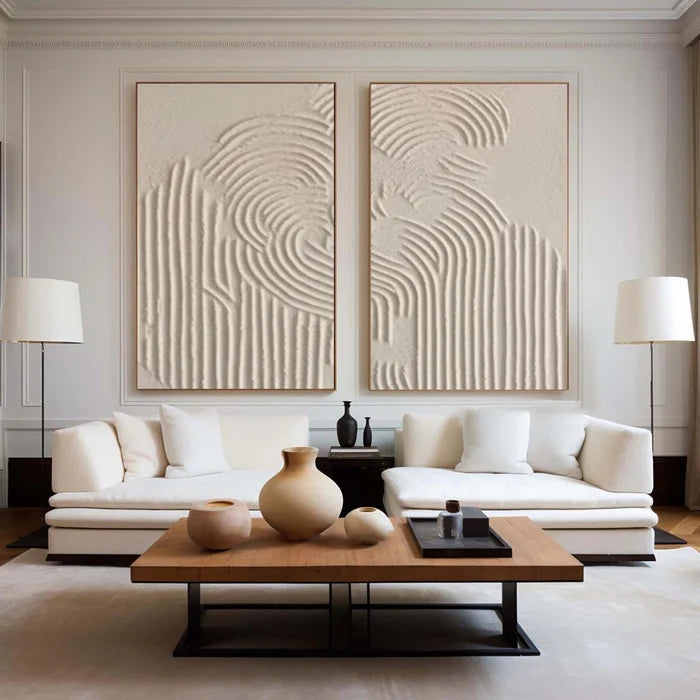
3D Textured Wall Art: The Transformative Home Decor Trend of 2026
As the boundaries between art and interior design blur, 3D textured wall art has emerged as the defining trend of 2026 in modern home decor. Homeowners and designers alike are drawn to the tactile experience of textured canvas art, a shift away from the flat, mass-produced prints that once dominated interiors. This movement reflects a deeper human desire—to reconnect with touch in an increasingly digital age.
check : 3D Textured Painting
The Rise of Tactile Aesthetics in Modern Homes
In recent years, our living spaces have evolved from purely functional environments into immersive sensory experiences. Modern homeowners no longer see art as mere visual decoration but as an emotional and physical extension of the home’s atmosphere. Textured wall art, especially handcrafted plaster art, offers that sense of depth and dimension absent in traditional 2D prints. Plaster, with its sculptural qualities and interplay with light, transforms ordinary walls into expressions of personality and presence.
This tactile revolution mirrors a psychological need for grounding. According to contemporary design psychologists, physical textures help reduce sensory fatigue from digital screens, promoting calm and mental clarity. The human brain reacts positively to irregular surfaces—stone, linen, or plaster—as these natural patterns remind us of organic life, giving modern interiors a restorative balance.
Why 3D Textured Art Outshines Flat Prints
While flat digital prints offer convenience and affordability, their glossy finishes and identical reproductions often create a sense of uniformity—what some designers call “the visual noise of modern living.” In contrast, 3D textured canvas art introduces nuance, variation, and craftsmanship. Every brush mark, sculpted layer, and plaster ridge contributes to a unique composition that catches light differently throughout the day.
The difference lies in authenticity. 3D textured paintings retain the artist’s physical gesture, giving each piece a presence no machine can replicate. These artworks engage both sight and touch, appealing to viewers in the same way natural materials—wood, linen, clay—do in furniture and architecture.
The Artistic Depth of Plaster Art
Plaster art, once confined to architectural ornamentation, has found new life as a medium for contemporary wall design. Its allure lies in texture: thick layers of plaster build ridges, valleys, and contours that invite shadow and reflection. Combined with minimalist palettes or soft tonal gradients, plaster artwork effortlessly complements neutral interior themes like Scandinavian, Japandi, and modern minimalism.
Homeowners appreciate how plaster art bridges fine art and home styling. It introduces visual drama without overwhelming the space, making it a favorite for open-concept apartments, offices, and wellness studios. Designers frequently pair it with organic textures like linen curtains or stone flooring to create visual rhythm and emotional warmth.
Market Trends and Data
According to global design forecasts, modern home decor trends in 2026 prioritize sensory engagement, material innovation, and emotional well-being. Demand for handcrafted and sustainable art pieces has surged, particularly in urban markets like Singapore, Los Angeles, and London, where minimalist architecture seeks artistic contrast.
At Vinchy Art, a collective founded in Shenzhen in 2019, the philosophy behind contemporary art creation is centered on emotional resonance and mindfulness. Vinchy Art’s curated collection of textured oil and plaster paintings is designed to foster mental relaxation and aesthetic harmony—transforming walls into therapeutic spaces that inspire calm and joy. Their online gallery connects modern collectors to original handcrafted artworks, bridging personal expression and interior design.
Comparing Art Forms for Modern Interiors
The clear winner for 2026 is textured art—especially plaster-based designs that integrate sculpture and painting techniques. Homeowners seeking individuality gravitate toward this medium because it complements the renewed focus on well-being and mindful living.
Real User Benefits and ROI
Interior designers report measurable improvements in client satisfaction when spaces incorporate textured canvas art. In commercial settings, such as boutique hotels or wellness clinics, these artworks increase perceived space value by 18% to 30%. Homeowners note emotional benefits as well—rooms decorated with tactile art feel warmer, more personal, and enduring.
Textured pieces also age beautifully; natural wear enhances their organic charm rather than diminishing it. This makes them both a timeless investment and a sustainable interior choice.
Future Trends in Textured Wall Art
Looking ahead, modern home decor trends are expected to push 3D art into new creative territories. Innovations in eco-friendly plaster, biodegradable binders, and recycled canvas materials will redefine how sustainable art integrates with architecture. Designers anticipate the rise of hybrid formats combining digital projection with physical reliefs, merging technology with timeless handcraft.
By 2027, experts predict that textured wall art will become integral to biophilic design concepts—connecting interiors with the healing principles of nature through organic movement, shadows, and touchable surfaces. As households continue to value wellness and authenticity, 3D textured artwork will stand not only as decoration but as an essential part of a mindful home ecosystem.
Frequently Asked Questions
Why is 3D textured wall art trending in 2026?
Because modern homeowners crave tangible, sensory experiences that counterbalance digital overstimulation. Plaster and textured art fulfill this need through tactile engagement and authenticity.
Is textured canvas art suitable for minimalist spaces?
Yes. Its subtle depth and restrained color palettes complement minimalist, modern, and Scandinavian interiors beautifully.
What makes plaster art different from standard canvas painting?
Plaster art uses layered sculptural techniques instead of mere paint application, creating relief textures that catch light and shadow dynamically.
How do I choose the right textured art for my home?
Focus on scale, lighting, and mood. Opt for soft-textured neutrals for calm spaces or bold sculptural reliefs for statement walls.
The Art of Living Beyond the Canvas
3D textured wall art has become more than a decor choice—it is a philosophy of living. It connects the sensory and the spiritual, turning passive walls into active participants in our emotional landscape. By embracing plaster art and other textural mediums, modern homes evolve into havens of touch, depth, and authenticity, perfectly capturing the enduring spirit of design in 2026.