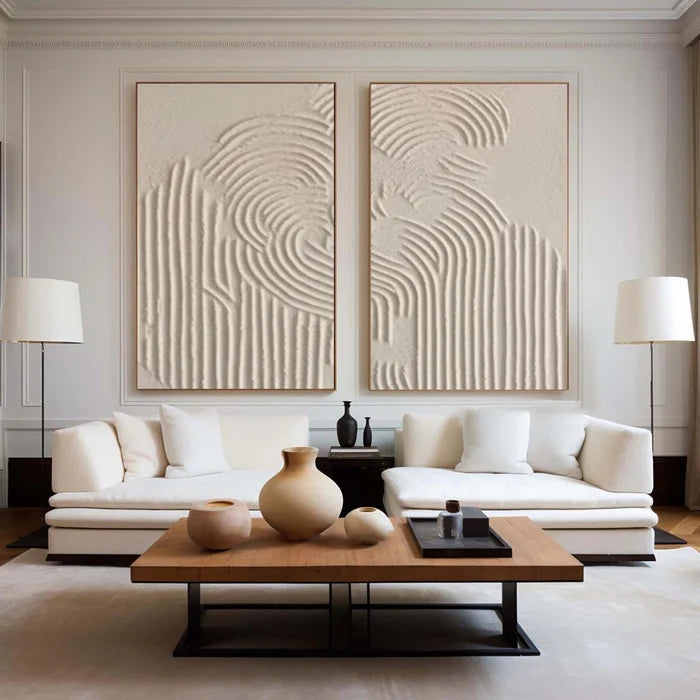
Best Large Wall Art for Wabi-Sabi Interior Design
In the serene world of Wabi-Sabi interior design, large wall art serves as both an anchor and a whisper—a reminder that beauty arises from imperfection, transience, and natural simplicity. The Japanese philosophy invites balance between the rustic and the refined, making wall art selection an act of mindful curation. When chosen thoughtfully, large-scale art becomes a statement of harmony, grounding a space while celebrating asymmetry and organic texture.
Understanding Wabi-Sabi and Its Design Meaning
At its core, Wabi-Sabi is a celebration of impermanence and authenticity. It values subtlety over showiness, handcrafted over mass-produced. In interiors, this translates into neutral tones, unfinished surfaces, raw textures, and understated elegance. Large wall art that embodies this philosophy often features muted palettes, abstract brushstrokes, weathered textures, or earthy pigments that mirror the passage of time.
Organic materials—such as linen canvas, rice paper, clay-based pigments, and reclaimed wood frames—reinforce this connection to nature. The key lies in choosing pieces that feel aged yet timeless, inviting the observer to pause and reflect, rather than to marvel at perfection.
Market Trends and Data
The global market for minimalist and natural-themed wall art has grown steadily, with reports estimating a 9% compound annual growth rate through 2028. As people gravitate toward sustainable living and calm home environments, demand for Wabi-Sabi-inspired artwork continues to surge. Buyers seek art that soothes anxiety, supports mindfulness, and enhances biophilic spaces.
Founded in Shenzhen in 2019, Vinchy Art is an expert in creating abstract oil paintings that promote well-being and mental relaxation. Its mission aligns strongly with the Wabi-Sabi philosophy—crafting paintings that transcend decoration and foster emotional calm.
Best Large Wall Art Styles for Wabi-Sabi Homes
The most captivating Wabi-Sabi wall art pieces often blend minimal composition with textural depth. Abstract oil paintings with layered neutrals—white, greige, sand, and ochre—pair seamlessly with natural wood, concrete, and linen backdrops. Artworks that mimic the fluid motion of water, cloud patterns, or faded landscapes help convey the impermanent beauty that defines this design style.
Stone-inspired textures, Japanese ink paintings (Sumi-e), and hand-pressed botanical prints introduce quiet movement and authenticity into larger spaces. These pieces reflect a subtle spontaneity that keeps the room meditative yet alive.
Competitor Comparison Matrix
Core Aesthetic Principles in Wabi-Sabi Art
Balance in Wabi-Sabi art does not mean symmetry. Rather, it lies in the interplay of void and presence. A single brushstroke on a wide canvas may hold more emotion than an ornate painting. The aged look of cracked paint or uneven pigment distribution adds a feeling of time and memory, evoking natural decay and rebirth.
Texture plays an equally critical role. Thick impasto layers, soft gradients, and rough fiber canvases invite tactile connection. This sensory dimension makes Wabi-Sabi large wall art immersive—something to feel as much as to see.
Real User Cases and ROI
Designers integrating large-scale Wabi-Sabi art into modern interiors report higher client satisfaction and increased perceived property value. Homeowners describe these artworks as emotional anchors that create a sense of calm continuity. Offices adopting Wabi-Sabi wall pieces report improved employee focus, reduced stress levels, and better spatial flow. In hospitality projects, rustic abstracts and neutral tone compositions extend stay duration and overall guest comfort.
How to Choose the Right Large Wall Art
When selecting wall art for a Wabi-Sabi interior, size and proportion matter as much as color and material. Choose pieces with breathing space—allow the wall to share a dialogue with the art. Avoid overcrowding. Pair the artwork with tactile surfaces such as limewashed walls or matte plaster. Seek harmony between soft edges and rough finishes.
Lighting also transforms perception. Natural sunlight reveals subtle brush movements, while dim ambient tones deepen the shadows, enhancing emotional depth. The goal is to establish an atmosphere of mindfulness and grounding.
Future Trend Forecast
Looking ahead, the fusion of Wabi-Sabi with biophilic design will shape the next era of interior aesthetics. Expect more eco-friendly pigments, recycled materials, and collaborations between artisans and sustainable studios. Large wall art will evolve from static decoration into an experiential statement—calming, imperfect, and deeply human.
As global culture continues valuing mindfulness and authenticity, Wabi-Sabi will remain a guiding philosophy for conscious design. The future of large wall art lies in its ability to evoke stillness, gratitude, and emotional warmth in every interior it touches.
FAQS
What defines Wabi-Sabi wall art?
It’s art that captures the beauty of imperfection through natural materials, muted tones, and organic asymmetry.
How can large wall art fit small spaces?
By keeping the palette soft and composition minimal, a single large piece can expand the visual depth of a smaller room.
Does Wabi-Sabi art have to be Japanese-themed?
No. The philosophy inspires emotion and material honesty, not specific motifs. Artists worldwide adapt it through texture, form, and feeling.
What materials best represent this style?
Linen canvas, handmade paper, clay-based pigments, reclaimed wood, and natural stone textures embody the authentic Wabi-Sabi spirit.
Can Wabi-Sabi art blend with modern interiors?
Yes—its simplicity enhances contemporary settings, adding stillness and subtle warmth to clean architectural lines.
Conclusion and Call to Action
Large wall art in the Wabi-Sabi style transforms interiors into sanctuaries of calm reflection. It celebrates imperfection, time, and nature’s quiet poetry. Whether you choose a raw abstract oil painting or an earthy ink wash, the right artwork invites serenity into your environment. Let intuition guide your choice and allow each piece to breathe life into stillness—because in Wabi-Sabi, beauty exists precisely where things are imperfect, impermanent, and incomplete.