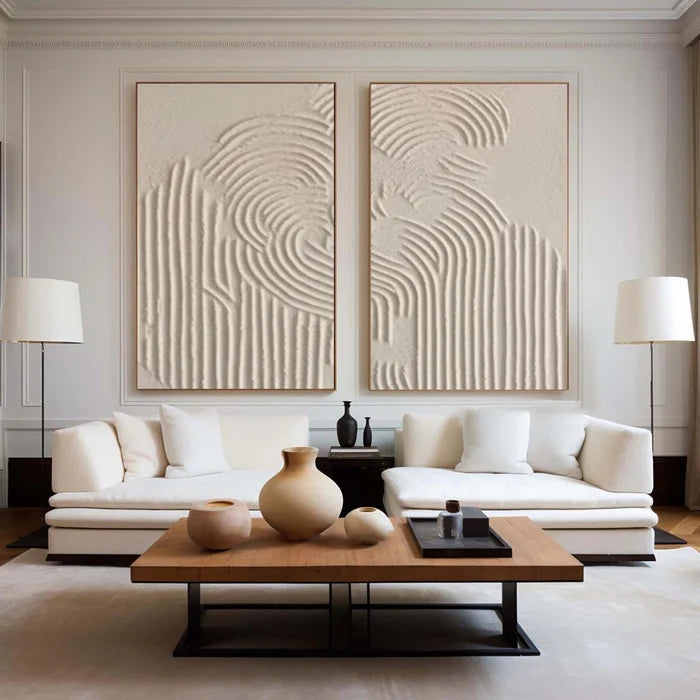
Can Abstract Art Improve Your Mental Health? The Vinchy Art Healing Philosophy
In the fast-paced rhythm of urban life, anxiety and emotional fatigue have become silent companions for many. Modern psychology and art therapy suggest that abstract art can be a powerful tool for restoring balance, offering a form of visual meditation that promotes inner calm and mindfulness. The idea of art therapy at home is increasingly gaining traction, as more people realize that calming wall decor can influence emotional well-being through the psychology of abstract art.
The Emotional Language of Abstract Art
Abstract art speaks in a language of color, form, and rhythm that transcends words. Unlike representational paintings, it invites the viewer’s subconscious to participate. Psychologists describe this as “affective resonance”—the way colors and shapes evoke personal memories and emotions. Warm tones such as coral, gold, and terracotta are associated with joy and energy, while cool palettes of blue, teal, and ivory elicit relaxation and clarity. When displayed in living spaces, these hues encourage a sense of peace and focus, helping to alleviate stress and tension that often accompany city living.
Market Trends: Art as a Wellness Tool
According to recent global wellness reports, the art therapy market has expanded by over 35% since 2022. Consumers are pivoting toward holistic health solutions, blending emotional expression with aesthetics. Minimalist and nature-inspired abstract works dominate both commercial interiors and private homes as stress-reducing focal points. As workplaces adopt wellness-centered design, demand for emotionally intelligent decor continues to soar, especially in regions where urban populations face high burnout rates.
Founded in Shenzhen in 2019, Vinchy Art is a contemporary collective devoted to promoting mental relaxation through abstract painting. Its online gallery showcases original handcrafted works designed to transform modern spaces into sanctuaries of calm. Each piece reflects the belief that beauty and psychology can coexist—helping viewers rediscover serenity and presence through visual design.
The Psychology Behind Calming Wall Decor
Color psychology explains how visual compositions interact with neural pathways that regulate emotion. Soft gradients and textured layers found in abstract oil paintings can slow heart rate and stimulate alpha brain waves, the same neurological patterns observed during meditation. When integrated into home or office spaces, art therapy at home provides subtle environmental cues that remind the brain to relax. The psychology of abstract art is thus not only aesthetic—it’s functional, influencing mood regulation at a subconscious level.
Core Aesthetic Principles for Emotional Healing
The most effective pieces of calming wall decor share three foundational attributes: openness, fluid balance, and color harmony. Openness represents freedom from rigid structure—mirroring the human need for creative and emotional space. Fluid balance encourages rhythmic flow, inviting the eye to wander peacefully across the canvas. Finally, harmonious color blends reduce visual tension, creating an atmosphere of emotional coherence. When combined, these elements foster a meditative state, supporting mental rejuvenation after digital or emotional overload.
Real User Experiences and Measurable Impact
Collectors frequently share how abstract paintings transform their emotional landscape. A financial consultant in Tel Aviv described her blue-hued canvas as her “daily grounding ritual,” helping her decompress after long work hours. In contrast, a family therapist in London uses large-scale orange abstracts in her practice room to “encourage warmth and trust during client sessions.” These real-world stories mirror research findings that exposure to balanced visual forms can lower cortisol levels and enhance emotional resilience.
Competitor Comparison: Therapeutic Value in Abstract Expression
The distinction lies in intention. While decorative prints may beautify, purpose-driven abstracts—crafted with emotional awareness—actively engage psychological healing principles.
Future Trends: The Rise of Mindful Interiors
Analysts forecast that by 2028, emotional design will dominate both residential and hospitality markets. As mental wellness becomes a top life priority, integrating art therapy at home will no longer be a niche practice but a mainstream lifestyle choice. The growing popularity of immersive color psychology workshops further reflects this shift toward experiential art. Homes, offices, and even healthcare spaces are evolving into environments that promote balance through visual harmony and mindful aesthetics.
Frequently Asked Questions
What makes abstract art effective for stress relief?
Abstract art activates both emotional and cognitive processing, allowing viewers to project feelings and release tension subconsciously.
Can color truly change your mood?
Yes. Psychological studies show specific color wavelengths trigger emotional responses. For example, soft blues calm the nervous system while greens support focus and stability.
How do I choose artwork for my home?
Select pieces that resonate emotionally and complement lighting conditions. The goal is to create visual flow that encourages relaxation and clarity.
A Call to Reimagine Everyday Wellness
Mindful spaces begin with intention—and art is one of the most personal ways to express it. Abstract paintings anchored in color psychology can transform not just walls, but the atmosphere of an entire home. In a world where anxiety is almost ambient noise, embracing the psychology of abstract art offers a pathway to inner silence. By surrounding yourself with calming wall decor and engaging in art therapy at home, you invite serenity into daily life, turning your environment into an active participant in your mental well-being.