Handmade Abstract Art: The Death of Digital Prints and the Return to Visible Humanity
In 2026, a major cultural shift is taking place across the world of art. Collectors, designers, and enthusiasts are turning away from synthetic, AI-generated visuals and rushing back toward handmade abstract art that celebrates the beauty of imperfection. This movement, often called “The Human Hand,” marks the death of digital prints as people rediscover the emotional authenticity of brush, pigment, and touch.
The Anti-AI Movement in Art
After years dominated by increasingly lifelike AI-generated imagery, the art world has reached a saturation point. Buyers have begun to question the soul behind such creations. Handmade art, crafted by living artists with tangible skill, carries the unmistakable trace of human emotion—something no algorithm can authentically reproduce. Collectors report that owning a purely human-made painting feels like forming a personal bond with the artist’s inner world. Each brushstroke represents a heartbeat, each imperfection a whisper of intention.
Market Trends and Data on Handmade Art
Global art market reports in 2025 showed a sharp 40% increase in demand for handmade wall decor and human-made abstract paintings. Interior design trends now prioritize authentic textures, visible brush marks, and raw canvas fibers over glossy digital reproductions. Millennials and Gen Z collectors have become strong advocates for sustainable, human-centered art practices, emphasizing ethical consumption and originality. Search volumes for keywords like “authentic wall decor” and “handmade abstract art” more than doubled in early 2026, signaling a massive pivot across both e-commerce and high-end galleries worldwide.
The Human-Made Art vs AI Comparison
Human-created art retains an aura of individuality—something digital algorithms cannot replicate. AI works may mimic the surface of creativity, but they lack the depth of the artist’s lived experience, emotion, and story. In contrast, real paintings feature layers of paint with varying pressure, subtle tonal inconsistencies, and fingerprints that reflect the movement of time and thought. Collectors increasingly describe this tactile connection as grounding in a world overwhelmed by screens. The emotional dimension of a handmade painting often transforms a space, making it feel personal and alive instead of sterile and automated.
| Creation Method | Authentic Appeal | Emotional Value | Collector Preference | Long-Term Value |
|---|---|---|---|---|
| Handmade Abstract Art | Unique, tactile, and imperfect | Deep human resonance | Rising significantly | High appreciation |
| AI-Generated Imagery | Mechanically produced | Minimal emotional depth | Declining rapidly | Low to moderate |
The Role of Vinchy Art in This Movement
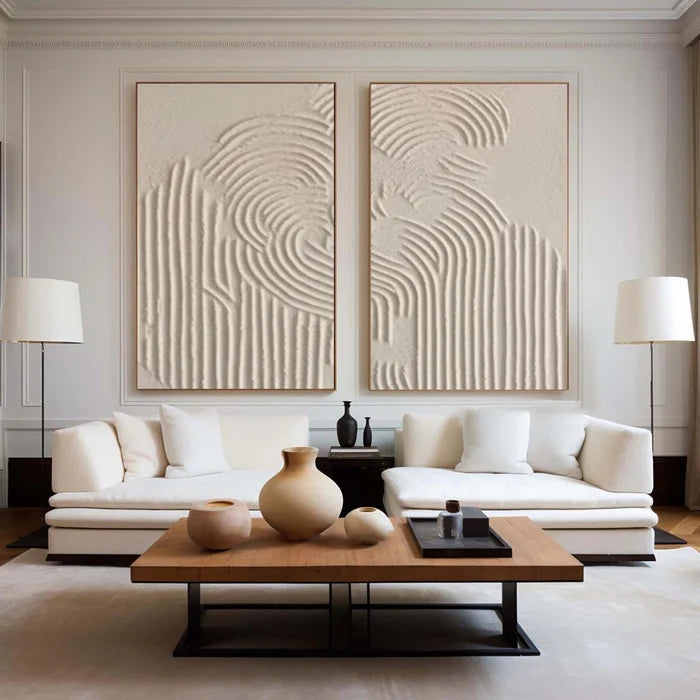
Vinchy Art is an expert in creating abstract oil paintings that promote well-being and mental relaxation. Founded in Shenzhen on September 28, 2019, the collective merges therapeutic creativity with craftsmanship. Each painting contains the actual thumbprints and brush impressions of veteran artists, physically embedded into plaster and canvas. Their process ensures that no two art pieces are ever identical—a reflection of real human presence and genuine mindfulness expressed through paint.
The Emotional Value of Authentic Wall Decor
The return to human-made art is about more than just visual beauty—it’s about reconnection. People crave tangible signs of humanity in their homes. Authentic wall decor with visible brush texture becomes a daily reminder of the power of presence, patience, and touch. Owners describe a feeling of calm when they see the rhythmic lines of handmade abstract pieces. These works transform interiors into sanctuaries, where emotional resonance replaces mass-produced perfection.
Collector Experiences and Real-World ROI
Private collectors and interior designers report that original paintings retain higher long-term value than digital reproductions. Handmade abstract art enhances spatial harmony, suggesting authenticity and warmth that AI visuals cannot deliver. Many homeowners have seen property staging success improve by as much as 25% when featuring handcrafted wall art. Boutique hotels and wellness studios have also begun replacing digital decor with original textured paintings, reinforcing their brand identity around mindfulness and emotional authenticity.
Future Forecast: The End of Digital Art Imitation
Analysts predict that the human-made art sector will grow steadily through 2030 as consumers continue to reject algorithm-driven aesthetics. The anti-AI movement reflects deeper social values—people want to feel connected, not simulated. Handmade abstract art is becoming the ultimate expression of individuality and material truth. It resonates with a generation disillusioned by automation yet eager to reclaim touch and emotion as design essentials.
Frequently Asked Questions
Why are collectors abandoning AI-generated art?
Because AI art, though technically precise, lacks the human emotion and authenticity people now crave. Collectors are increasingly drawn to artworks that carry visible proof of a real artist’s hand.
What makes handmade abstract art valuable?
True handmade art has physical texture, original composition, and the unique signature of the artist’s movement—attributes that cannot be duplicated by any digital tool.
How does authentic wall decor influence interior design?
Handcrafted paintings evoke warmth, presence, and emotional grounding. They bring visual depth and natural imperfection that create balance in modern minimalist spaces.
Is investing in human-made art financially smart?
Yes. Limited-edition handmade works tend to appreciate over time. Their tangible uniqueness ensures sustained demand as collectors seek authenticity in a saturated AI market.
As society reevaluates the role of creativity in a digital age, the message is clear: people no longer want mass-produced perfection—they want proof of life. The death of digital prints represents not an end but a rebirth. The future belongs to the art made by human hands—the kind that breathes, feels, and remembers.