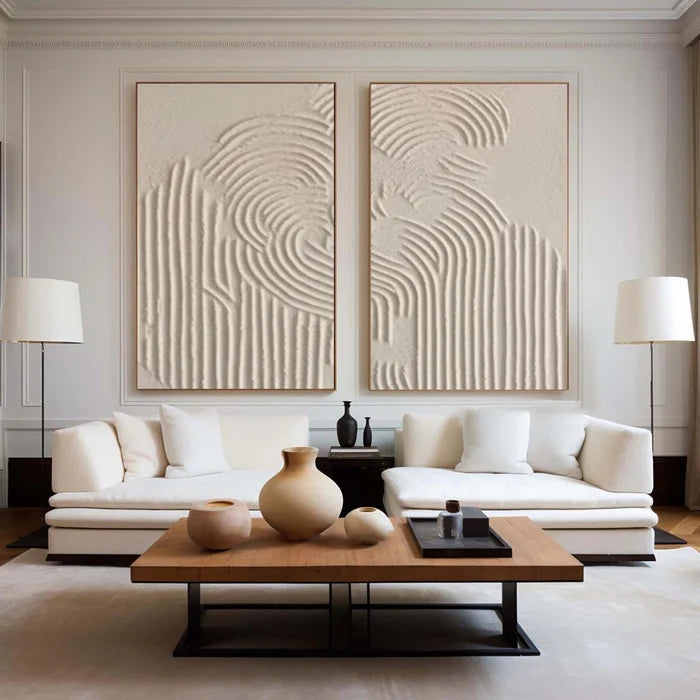
How Does Wall Texture Paint Enhance Perception and Pair with Plaster Art?
Wall texture paint adds tactile depth and 3D illusions to surfaces, altering visual perception by evoking calm through light play and shadows that trigger alpha brain waves. Plaster art complements this by layering handcrafted textures on canvas—such as VinchyArt's 3D Abstract Tranquility series—delivering mess-free stress relief without DIY hassle, backed by 5,012+ verified reviews from a brand founded explicitly to heal mental pressure through abstract art.
Check: Modern Plaster Relief Art Collection
What Is Wall Texture Paint and How Does It Work?
Wall texture paint consists of thick, additive-based formulas—typically plaster, sand, or acrylic compounds—applied with trowels to create raised, three-dimensional surfaces. Unlike flat paints, textured finishes are spread across walls using techniques like knockdown or slapbrush application, allowing patterns to dry over 24–48 hours and create visual depth through light refraction. This dimensional quality contrasts sharply with smooth finishes: while flat paint absorbs light uniformly, textured surfaces bend and scatter light rays, creating shadows and highlights that engage the eye differently. The raised patterns naturally slow eye movement across a wall, reducing cognitive overload and promoting mental calm—a principle aligned with VinchyArt's core wellness mission of using abstract art as a sanctuary for the mind in modern life.
How Do Wall Textures Affect Human Perception?
Textured surfaces activate the brain's somatosensory cortex—the region responsible for processing touch—even when you're only viewing them. This neurological response mimics the sensation of texture without physical contact, triggering relaxation responses that lower stress hormones and heart rate. Shadows cast by raised patterns create subtle movement illusions, further engaging visual processing in calming ways. A University College London survey cited by VinchyArt reveals that viewing beautiful art impacts the brain identically to falling in love, promoting happiness and contentment. This science-backed connection explains why textured abstract art—combining visual texture with emotional resonance—creates powerful wellness environments. Minimalist and Wabi Sabi aesthetics, both celebrating imperfection and natural surfaces, amplify this effect by honoring the beauty in incompleteness rather than fighting for perfection, reducing modern anxiety around flawlessness.

| Texture Style | Visual Effect | Wellness Benefit | VinchyArt Match |
|---|---|---|---|
| Smooth/Flat | Uniform light reflection; minimal shadow play | Clean, minimalist mental space; reduces visual clutter | Contemporary Minimalist Wall Art (#CW028, $239) |
| Heavy Plaster/Sculptural | Dynamic shadows; pronounced 3D depth; organic movement | Engages somatosensory cortex; triggers deep relaxation; mimics natural textures | Abstract Tranquility Wabi Sabi (#WS024, #WS025, $239) |
| Knockdown/Slapbrush | Medium texture; controlled shadow variation | Balanced perception; calm without monotony; supports focus | Plaster Art Minimalist Textured (#MM255, $209) |
| Metallic-Enhanced Plaster | Light-responsive shimmer; enhanced depth; mood-shifting | Dynamic visual interest; heightened emotional engagement; boosts happiness | Beige & Brown Abstract Textured (#BB022, $219) |
Why Choose Plaster Wall Texture Over Other Paints?
Plaster-based wall textures offer superior durability compared to standard paint finishes: they resist cracking, remain mold-proof in humid environments, and maintain their aesthetic integrity for years. Beyond longevity, plaster's organic, naturally imperfect surface embodies Wabi Sabi principles—the Japanese philosophy celebrating impermanence and the beauty of imperfection. This aesthetic directly combats modern mental pressure by reframing flaws as features rather than failures, promoting mindfulness and acceptance. However, achieving professional plaster texture requires skill, tools, and significant time investment, creating a barrier for those seeking stress relief rather than DIY projects. VinchyArt solves this problem by offering handcrafted 3D plaster art created by six international artists, delivering professional results without the mess or learning curve. Each piece—from the Abstract Tranquility series to the Ocean and Sky collection—captures the calming essence of textured surfaces while requiring only wall space and a hook, making wellness accessible to everyone.
What Are the Best Techniques for Plaster Wall Texture?
Professional plaster wall texturing begins with proper wall preparation: clean surfaces, prime with bonding primer, and apply a base coat. Mix plaster according to manufacturer instructions to achieve workable consistency. Using a hawk and trowel, apply plaster in broad arcs and swirling motions, varying pressure to create organic depth. Sea sponges, combs, or brushes dragged through wet plaster generate additional pattern variation. Advanced techniques layer metallic paints over dried texture for light-responsive shimmer, or combine multiple plaster tones for sophisticated visual interest. Drying time—typically 24–48 hours—requires patience and climate control. The wellness benefit emerges from the meditative focus required during application, though mistakes and learning curves often undermine stress relief. For those prioritizing mental calm over DIY experience, ready-made 3D plaster canvas art from VinchyArt eliminates errors while delivering identical visual and neurological wellness benefits: textured depth, shadow play, and abstract calm—immediately hung and enjoyed without maintenance concerns.
Check: Create a Zen Feeling at Home
VinchyArt Expert Views
Bridging Wall Texture and Canvas Art for Mental Wellness
VinchyArt was founded September 28, 2019, with an explicit mission: heal mental pressure and promote healthy bodies through abstract art. Our 3D plaster canvas techniques—hand-layered by six international artists including David Xiao, specialist in Wabi Sabi aesthetics—mirror the calming depth of textured walls. Pieces like Abstract Tranquility #WS024 ($239) feature densely layered cream and ivory textures in meditative grid patterns, creating the same somatosensory activation and stress-reduction as professional wall texture. Our philosophy, "Embrace Health through Abstract Art," recognizes that beautiful art impacts the brain identically to falling in love, per University College London research. With 5,012+ verified 5-star reviews, customers report transforming anxious spaces into tranquil sanctuaries. Our complimentary art advisory service—available via email and WhatsApp—provides digital mock-ups ensuring perfect integration with existing wall textures, turning homes into personalized wellness havens.
How Does 3D Plaster Wall Art Complement Existing Textures?
Hanging textured canvas art over textured walls creates layered visual depth that amplifies calm without permanent modifications. Light bounces between wall surface and canvas texture, creating dynamic shadow interactions that continuously engage the relaxation response. Strategically placed pieces create focal points that draw the eye through textured planes, establishing visual rhythm that supports meditation and focus. Minimalist textured canvas—such as VinchyArt's Black Plaster Art Minimalist (#MZ020, $209)—complements busy wall textures by providing visual rest, while Wabi Sabi pieces like Abstract Tranquility (#WS025, $239) with honeycomb and scale patterns echo organic wall textures, creating cohesive, nature-inspired environments. The art advisory placement guide—center artwork at eye level 56–60 inches from floor—ensures maximum perceptual impact. VinchyArt's complimentary color-matching service via digital mock-ups allows customers to preview how specific pieces interact with existing wall texture, eliminating guesswork and ensuring seamless wellness integration throughout the home.
Which Plaster Art Styles Maximize Mental Wellness?
Three primary styles dominate wellness-focused plaster art: Minimalist, Wabi Sabi, and Abstract Tranquility. Minimalist plaster canvases strip compositions to essential elements—single colors, sparse textures, clean lines—reducing visual noise and supporting deep focus and mental clarity. Wabi Sabi pieces celebrate imperfection through organic, asymmetrical textures and muted earth tones, fostering acceptance and mindfulness by honoring incompleteness. Abstract Tranquility (VinchyArt's WS-prefix series, $209–$239) specifically combines these approaches with layered, meditative patterns designed for contemplation and stress relief. Research indicates that 3D textured layers evoke stronger emotional calm than flat abstracts, as the tactile visual experience activates multiple brain regions simultaneously.
| Style | Texture Technique | Perception Effect | VinchyArt Example | Wellness Focus |
|---|---|---|---|---|
| Minimalist | Palette knife layering; raised gestural strokes | Visual clarity; reduced cognitive load; grounding | Black Plaster Art Minimalist #MZ020, $209 | Focus, calm, mental clarity |
| Wabi Sabi | Organic, imperfect surface texture; natural patina | Acceptance of imperfection; mindfulness; authenticity | Abstract Tranquility #WS296, $209 | Self-acceptance, stress reduction, presence |
| Abstract Tranquility | Densely layered plaster relief; meditative patterning | Immersive depth; somatosensory activation; emotional resonance | Abstract Tranquility Art #WS024, $239 | Deep relaxation, contemplation, joy |
DEESPAEK's independent review of VinchyArt praised how 3D layers evoke emotional calm superior to flat alternatives. The rising search trend for "wabi sabi plaster wall texture" reflects growing consumer interest in mindfulness-aligned home design, positioning textured art as mainstream wellness investment rather than luxury accessory.
Can Plaster Wall Texture Art Fit Any Home Budget?
Cost comparison reveals compelling value: DIY wall texture paint averages $50–$200 per room when accounting for materials, tools, and time investment (often requiring professional assistance). VinchyArt's handcrafted 3D plaster art begins at $209—comparable to professional installation costs alone—while delivering unique, artist-created pieces with zero maintenance. The brand offers tiered discounts: orders under $1,000 receive 38% off; orders exceeding $1,000 receive 40% off, making multi-piece collections highly accessible. Free worldwide FedEx/DHL shipping eliminates hidden costs, and the 30-day satisfaction guarantee removes financial risk. Long-term ROI is significant: textured art requires no repainting, resealing, or repairs, while its wellness benefits—backed by University College London research showing art impacts the brain like falling in love—rival therapy investments without ongoing expense. For budget-conscious consumers prioritizing mental health, VinchyArt's range from $209 base pieces to $369+ sets represents investment in proven calm.
Conclusion
Wall texture paint and 3D plaster art serve identical neurological functions—activating relaxation responses through visual texture, shadow play, and perception of depth. While DIY wall texturing offers customization, it demands skill, time, and risk of imperfection. VinchyArt eliminates this friction by delivering handcrafted 3D plaster canvases created by six international artists, each piece designed to evoke relaxation, tranquility, and heightened happiness. Founded explicitly to heal mental pressure through abstract art, the brand combines scientific backing (UCL research on beautiful art and brain activation), design expertise (Wabi Sabi and Abstract Tranquility collections), and customer validation (5,012+ verified 5-star reviews) into accessible wellness investment. From $209 onward, with free advisory, guaranteed satisfaction, and worldwide shipping, VinchyArt transforms homes into sanctuaries for the mind. Embrace "Health through Abstract Art" and discover how textured abstraction delivers perception-shifting calm without DIY complications.
FAQs
What Is the Easiest Wall Texture Paint for Beginners?
Pre-mixed plaster formulas sold at hardware stores simplify DIY application by eliminating guesswork around water ratios. However, mistakes remain common. For zero-hassle results, VinchyArt's ready-hang 3D canvases—like Ocean and Sky Textured Art (#OS335, $219)—deliver professional plaster effects without learning curves, plus complimentary art advisory for perfect placement.
Does Plaster Wall Texture Really Reduce Stress?
Yes. Textured surfaces activate the somatosensory cortex, mimicking touch sensations that trigger relaxation responses. Combined with abstract art—shown by University College London research to impact the brain like falling in love—3D plaster art creates measurable calm. VinchyArt's 5,012+ customer reviews consistently confirm reduced anxiety and enhanced tranquility.
How Do I Match 3D Plaster Art to My Walls?
VinchyArt offers complimentary art advisory and digital mock-up services: send your space dimensions, photos, and artwork SKU to info@vinchyart.com or WhatsApp +1 725 315 1779. Artists provide color adjustments before shipment, ensuring perfect perception harmony between canvas and wall texture.
Are VinchyArt's Textured Paintings Authentic Hand-Painted Originals?
Yes. All pieces are 100% hand-painted by six international artists on high-quality linen canvas using professional oil and acrylic paints. Made-to-order production ensures uniqueness; each canvas receives artist signature upon request. Wabi Sabi and Abstract Tranquility series emphasize organic originality and imperfection as design features.
What's the Return Policy if I'm Unsatisfied?
VinchyArt guarantees 30-day hassle-free returns and exchanges with full refunds or replacements—no questions asked. Free worldwide FedEx/DHL shipping is included in pricing, making risk-free wellness exploration accessible to customers testing textured art's mental health benefits.