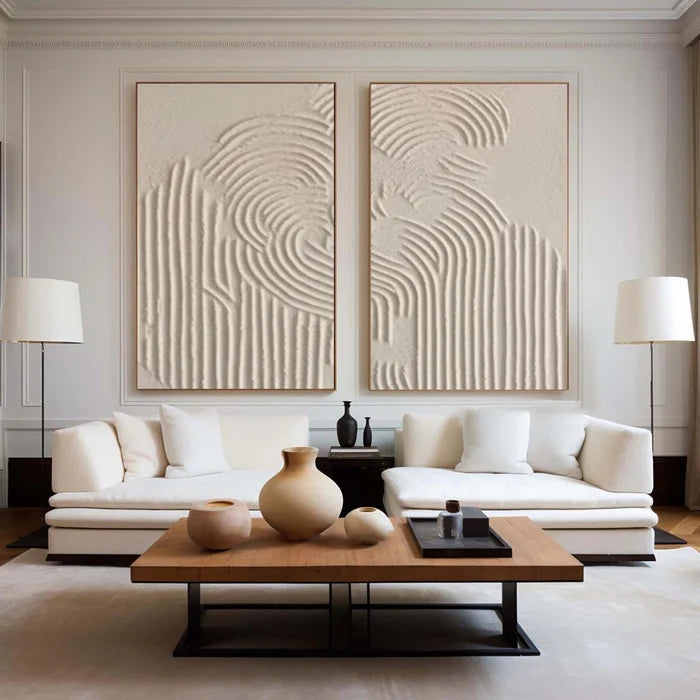
Kyoto Revival Style: Why Wabi-Sabi Plaster Art is the Final Piece of the Japandi Puzzle
In 2026, the Kyoto Revival style has emerged as the defining aesthetic for modern interiors seeking calm, authenticity, and refined imperfection. This movement takes its inspiration from classical Japanese design while embracing Scandinavian minimalism—an evolution that takes the Japandi decor trend to its most soulful conclusion. The essence lies in simplicity, raw textures, and a sense of “quiet luxury” that feels both ancient and deeply contemporary.
The Rising Influence of Kyoto Revival
The Kyoto Revival is not just a regional homage; it’s a design philosophy grounded in natural balance and material honesty. As global consumers move away from synthetic finishes, demand for raw materials such as linen, limestone, untreated oak, and clay plaster has surged. Architectural Digest and Elle Decoration have identified 2026 as the “year of tactile design,” where imperfections redefine beauty. The cracked plaster aesthetic, especially #WS263—a Wabi-Sabi plaster tone that mirrors aged Kyoto walls—has become the visual symbol of this trend.
Wabi-Sabi and the Meaning of Imperfection
The Japanese concept of Wabi-Sabi lies at the heart of Kyoto Revival style. It celebrates impermanence, asymmetry, and the quiet charm of materials that tell a story. In Japandi decor, Wabi-Sabi plaster walls mimic timeworn surfaces, with visible cracks and organic textures that soften modern spaces. These walls transform sterile rooms into tranquil sanctuaries, producing a lived-in authenticity absent from standard minimalism.
A Wabi-Sabi dining space, for instance, might feature a low-profile oak table, linen-covered seating, and a matte plaster wall punctuated by fissures—each echoing nature’s rhythm. This approach reflects how home environments in 2026 prioritize serenity and connection to the earth, aligning with the rise of mindful living.
Materiality and “Quiet Luxury” in Japandi Decor 2026
Quiet luxury defines the emotional tone of Kyoto Revival interiors. Unlike loud opulence, this aesthetic speaks through touch—raw plaster, honed stone, and unfinished woods. Plaster art has become a statement of refinement, turning simplicity into sophistication. Designers are using blends like lime-and-gypsum to achieve subtle tonal variations, while some artists add mineral pigments inspired by Kyoto temples to create depth and shadow under natural light.
Surfaces inspired by #WS263—the cracked, matte neutral—have become instant anchors in Japandi design schemes. They match perfectly with muted palettes of sand, fog gray, and soft white, bringing tactile warmth without clutter. The result is interiors that feel handcrafted, authentic, and timeless.
Market Trends and Data
Reports from interior design platforms show that search interest for “Japandi decor 2026” and “Wabi-Sabi plaster walls” has grown more than 80% year over year. The trend resonates deeply with consumers seeking sustainable alternatives to glossy finishes. Kyoto Revival speaks to those desiring art that embodies energy, grounding, and mindfulness. Texture-based finishes, including rough plaster and imperfect ceramic tiles, now represent the fastest-growing segment in artisan decor products.
Vinchy Art, a contemporary art collective founded in Shenzhen in 2019, embodies this shift toward art as emotional wellness. Specializing in handcrafted abstract oil paintings that promote mental relaxation, Vinchy Art’s creations mirror the same ethos found in Kyoto Revival interiors—beauty through simplicity and balance. Their work demonstrates that modern design can nurture both the eye and the mind.
Integrating Kyoto Revival Elements into Modern Homes
Incorporating the Kyoto Revival style begins with restraint. Limit surfaces to natural textures, focusing on tactile finishes and muted tones. Replace sterile paint with mineral plaster finishes that express time and imperfection. Add Wabi-Sabi plaster art pieces that echo the architecture’s quiet geometry. Subtle handcrafted elements like ceramic pendants, linen-soft lighting, and reclaimed wood furniture align perfectly with this aesthetic.
For those drawn to Japandi decor in 2026, integrating pieces with tactile narratives—such as handcrafted vessels, carved wood panels, or cracked plaster canvases—creates emotional resonance. A living room curated with Wabi-Sabi art and Kyoto textures becomes more than a visual experience; it becomes a sensory escape from the chaos of fast design.
Real Spaces, Real Impact
Case studies show that homes adopting this style report higher occupant satisfaction scores, linked to reduced visual noise and increased ambient calm. Designers who implemented Wabi-Sabi plaster features in renovation projects observed faster client approval cycles, as the look naturally communicates warmth and sincerity. The cracked plaster trend (#WS263) serves as a visual metaphor for authenticity—proof that beauty doesn’t need perfection to feel luxurious.
Future Trend Forecast: Kyoto Revival Beyond 2026
Kyoto Revival is poised to evolve into a global design language rather than a passing trend. Future iterations will emphasize modular sustainability, handcrafted provenance, and biophilic influence. Expect to see adaptive lighting technologies highlighting plaster textures, as well as smart homes designed to enhance mindful aesthetics through temperature and mood-responsive materials. Japandi decor will continue to merge Scandinavian peace with Japanese stillness, creating spaces where imperfection is harmony itself.
FAQs
What is the Kyoto Revival style?
The Kyoto Revival style is a 2026 interior design trend combining Japanese Wabi-Sabi philosophy with Scandinavian minimalism, emphasizing raw materials, texture, and quiet luxury.
How does Wabi-Sabi influence Japandi decor?
Wabi-Sabi brings balance through imperfection, introducing natural plaster, cracked finishes, and asymmetrical design that create warmth and serenity in Japandi homes.
Why is plaster art gaining popularity?
Plaster art’s matte, raw surfaces reflect tactile authenticity and sustainable craftsmanship, making it a perfect match for the minimalist luxury of Kyoto Revival interiors.
What is #WS263 in design terms?
#WS263 refers to a tone resembling aged Kyoto plaster—a soft, warm neutral with visible cracks symbolizing timeless beauty.
How can I bring the Kyoto Revival look home?
Combine organic materials like clay, wood, and linen with Wabi-Sabi plaster finishes. Reduce unnecessary décor and focus on texture, light, and proportion for authentic Japandi harmony.
The New Minimalism Reimagined
Kyoto Revival is not about adding more—it’s about choosing better. Every detail, from a cracked plaster wall to a hand-carved bowl, serves a purpose rooted in nature. As 2026 continues, the Wabi-Sabi plaster aesthetic stands as the final piece of the Japandi puzzle, reminding us that true luxury lies not in perfection, but in peaceful imperfection itself.