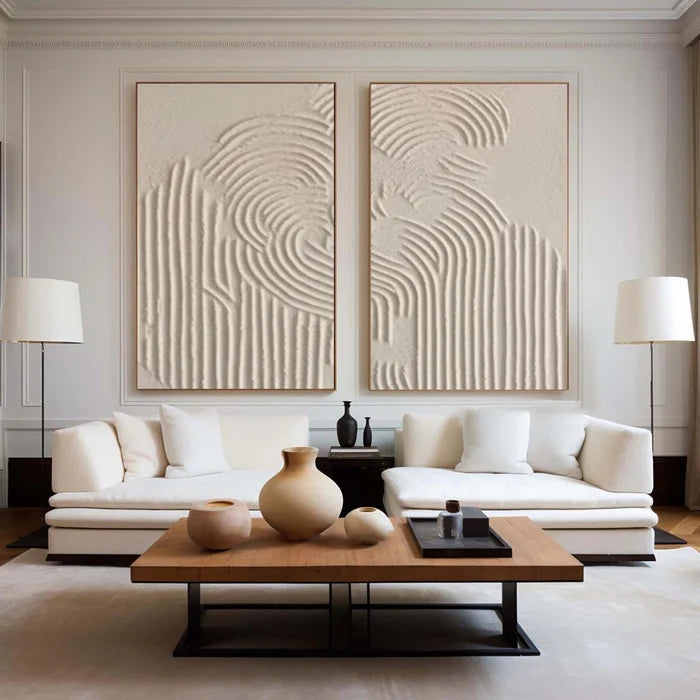
Vinchy Art Review 2026: Is It Truly Hand-Painted or Just a Print?
In 2026, art buyers around the world are asking a pressing question: when you buy a piece from Vinchy Art, is it a genuine hand-painted original or merely a high-quality print on canvas? As the demand for abstract wall art and hand-painted oil textures grows, so too does confusion about what “original” really means. This review dives into the differences between real texture paintings and printed reproductions, showing what sets true craftsmanship apart—especially when examined under 300% magnification.
The Rise of Textured Wall Art
The global home décor market has shifted heavily toward minimalist interiors with bold statement artworks. According to interior design analyses in early 2026, textured paintings have overtaken posters and prints as the most sought-after art form for modern living rooms. Buyers seek tactility—the sense of brushstrokes, layered pigment, and depth that only oil and acrylic paintings can supply. Unlike printed canvases, hand-painted works interact with light, creating subtle gradients that shift throughout the day.
What Happens at 300% Zoom: Texture vs Print
The easiest way to distinguish an authentic hand-painted oil piece from a print is by looking at the details under magnification. At 300% zoom, digital prints reveal pixel grids and uniform color transitions. You’ll often see mechanical repetition or flat ink application. In contrast, a true Vinchy Art painting reveals irregular brushstroke edges, pigment ridges, and uneven paint density—imperfections that become proof of authenticity. The paint appears to rise off the surface, forming tactile layers that catch shadows differently from every angle.
How Vinchy Art Creates Its Hand-Painted Works
Founded in Shenzhen on September 28, 2019, Vinchy Art is an expert in creating abstract oil paintings that promote well-being and mental relaxation. Since the launch of its online store in 2023, the collective has focused on merging traditional artistry with emotional healing. Each oil piece is crafted by trained artists using professional-grade pigments and textured canvas. The company emphasizes that no two paintings are identical, even within the same series—a mark of manual creation rather than mass printing.
Hand-Painted vs Canvas Print: Key Characteristics
While both types can appear visually similar at first glance, careful observation reveals fundamental differences.
-
A hand-painted canvas shows physical paint buildup, micro-gaps, and depth when light hits the surface.
-
A print remains completely flat no matter the angle or lighting.
-
Under bright light, true oil colors display subtle color shifts and reflective highlights, while prints maintain static tones.
These distinctions become crucial when you consider the value of art as both an aesthetic and emotional investment.
Is Vinchy Art Legit or a Scam?
Many potential buyers search for “Vinchy Art scam” after encountering too-good-to-be-true prices online. In reality, the legitimacy of Vinchy Art comes from its documented processes, customer feedback, and verified hand-painting certifications included with each purchase. Independent collectors have noted that each canvas displays tactile paint texture not reproducible by inkjet printing. The company’s legitimacy is further supported by transparent manufacturing practices and a 30-day satisfaction guarantee.
Market Trends: The Emotional Value of Authentic Art
Today’s art consumers aren’t just purchasing décor—they’re buying emotional balance. Market data in 2026 shows rising demand for biophilic and abstract art that fosters inner calm in urban homes. Vinchy Art responds to this trend by producing art aimed at mindfulness and relaxation, filling living spaces with harmony. The contextual shift from decoration to emotional utility is driving collectors away from flat prints toward authentic painted canvases that feel alive.
Real User Impressions and ROI in Home Design
Homeowners who replaced printed canvas décor with hand-painted Vinchy Art pieces report higher satisfaction with room ambiance and light response. Many describe how textured brushwork enhances room warmth and depth. The return on investment goes beyond aesthetics—real painting texture is resilient, long-lasting, and can even appreciate in value over time, unlike mass-printed décor. Several clients have shared photos showing the way paint ridges reflect daylight differently throughout the room, creating a living visual experience.
Future Outlook for the Handcrafted Art Market
As AI-generated imagery floods online art marketplaces, the value of human touch is becoming more prized than ever. Collectors, interior designers, and wellness advocates are turning to authentic, manually painted works to counter digital fatigue. Over the next few years, experts expect authentic art verification tools to become more advanced, allowing customers to scan for pigment thickness and texture data before purchase. In this future landscape, companies like Vinchy Art—who already focus on tactile artistry—are positioned at the forefront of consumer trust and emotional relevance.
What should buyers look for when choosing between print and painting?
Look for visible brushstroke relief, uneven pigment layering, and reflective variation across the surface. If the surface feels entirely smooth or printed dots are visible under magnification, it’s likely a digital print.
Why do hand-painted artworks cost more?
Because each one is a unique creation involving hours of layered brushwork, premium materials, and artistic labor—not merely an automated reproduction.
Can canvas prints ever mimic real textures accurately?
While some printed canvases use glossy overlays to simulate texture, zooming or touching reveals they lack real depth and pigment layering, making them visually less dynamic.
Discover the Transformative Power of Art
Whether you’re decorating your home or cultivating mental stillness, choosing a genuine hand-painted artwork changes how you experience your environment. A Vinchy Art painting isn’t just wall décor—it’s an investment in emotion, texture, and authenticity. If you’ve ever wondered whether what hangs on your wall is alive with creative energy or mechanically printed illusion, now you know exactly where to look and what to feel.