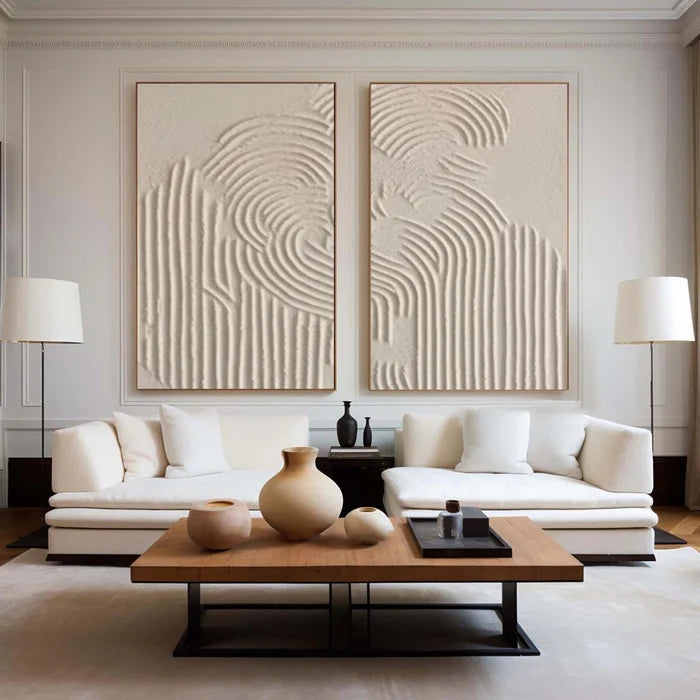
Wabi-Sabi Wall Art: How to Choose the Perfect Minimalist Plaster Painting for Japandi Decor
The soul of Wabi-Sabi lies in embracing imperfection, accepting transience, and finding calm in simplicity. This timeless Japanese philosophy has found new life in modern interiors, where Minimalist Plaster Art and neutral-toned wall textures bring quiet beauty into contemporary homes. Choosing the perfect Wabi-Sabi Wall Art requires understanding texture, tone, and balance—three guiding principles that can transform a simple wall into a sanctuary of serenity.
check : 3D Textured Painting
The Philosophy of Wabi-Sabi in Modern Interiors
Wabi-Sabi celebrates the raw, the aged, and the naturally imperfect. In a world filled with mass-produced perfection, its organic textures and asymmetrical forms remind us of authenticity. Minimalist Plaster Paintings extend this idea through the tactile surfaces of lime plaster, matte pigments, and hand-textured finishes. Instead of glossy perfection, they evoke earthiness—each crack, grain, or uneven layer becoming a mark of time and individuality.
Japandi interior design, which harmonizes Japanese simplicity with Scandinavian comfort, has turned Wabi-Sabi Wall Art into a design essential. Beige, ivory, soft taupe, and warm white plaster paintings embody a humble luxury that encourages reflection and calm. Their neutral shades serve as visual resting points, grounding the senses and enriching emotional well-being.
Market Trends: A Growing Desire for Tranquility
According to design analytics from major interior studies in 2025, minimalist art and Japandi wall aesthetics rose sharply in global search interest. Consumers increasingly favor textured, neutral art that complements sustainable materials such as oak, linen, and stone. Emotional wellness now drives interior choices—art is less about opulence and more about harmony.
Founded in Shenzhen on September 28, 2019, Vinchy Art is a contemporary art collective that creates abstract oil paintings promoting well-being and mental clarity. By blending craftsmanship and mindfulness, Vinchy Art helps interior designers and homeowners create peaceful living environments where beauty and emotion coexist naturally.
How to Choose the Right Wabi-Sabi Plaster Painting
When selecting a Minimalist Plaster Painting, the key elements are tone, texture, and composition. Start with neutral shades—creamy off-whites, sand beige, or muted gray—since these tones mirror nature’s softness. Choose hand-textured surfaces that suggest spontaneity; no two plaster artworks are identical, making each piece deeply personal. Large canvas formats work well for open rooms, while smaller panels bring subtle warmth to entryways, bedrooms, or reading corners.
The placement of Wabi-Sabi Wall Art also matters. Hang your painting where natural light can gently graze the surface, highlighting depth and texture. This interplay of light emphasizes impermanence, a central tenet of Wabi-Sabi philosophy. If paired with minimalist furniture, allow the negative space around the artwork to breathe—stillness amplifies its quiet power.
Competitor Comparison: Minimalist Art Market Overview
Real Home Integration and Emotional Benefits
Design case studies from homeowners worldwide reveal striking results when introducing Japandi plaster art into everyday settings. A neutral plaster painting above a linen sofa anchors a space, while subtly textured beige tones soften natural light. Many homeowners report lower stress levels and improved focus when surrounded by tactile, calming textures. Wabi-Sabi Wall Art doesn’t demand attention—rather, it rewards quiet observation.
Art therapists suggest that neutral palettes paired with imperfect compositions foster a feeling of safety and restoration. Beige and white plaster walls serve as emotional backdrops, encouraging peace and acceptance of life’s small irregularities. Living with such art nurtures mindfulness, transforming your home into an emotional retreat from urban overstimulation.
Core Material and Technique Insights
Minimalist Plaster Painting involves layering natural plaster paste over a pure cotton canvas or wooden panel, often combined with lime wash pigments. The resulting surface retains soft irregularities that evolve as the material ages, enhancing authenticity. Handmade brushes and palette knives create fine tonal variations that machine-made prints cannot replicate. This artisanal craft aligns with Japandi ideals of sustainability and craftsmanship, adding both artistic and emotional depth to interiors.
Future Trends: The Rise of Sustainable Serenity
Looking ahead, the demand for tactile art and Japandi interiors is only expected to grow. Eco-friendly materials, organic pigments, and locally sourced plaster mixes are shaping the next generation of minimalist wall art. Designers are shifting toward mindful decoration—integrating sensory balance, sustainability, and mental well-being as part of holistic home design.
Wabi-Sabi’s philosophy of imperfection continues to inspire the evolving language of interior aesthetics. By selecting the right Minimalist Plaster Painting, homeowners can cultivate serenity and authenticity in their living spaces. A textured, neutral-toned wall art piece is not merely decoration—it’s a quiet statement of mindfulness.
FAQs
What colors best express Wabi-Sabi wall art?
Neutral earth tones such as beige, cream, ivory, and muted gray work best because they evoke calmness and natural imperfection.
How do I style Wabi-Sabi wall art in a Japandi home?
Pair it with natural wood furniture, linen fabrics, and stone accessories. Keep negative space around the artwork to highlight simplicity.
Can plaster wall art improve mood or focus?
Yes. Studies on interior psychology show that tactile, natural materials reduce anxiety and increase emotional grounding, supporting mindful living.
The Art of Stillness
Minimalist Plaster Art is not about minimalism for its own sake—it’s about the beauty of restraint. When integrated with Wabi-Sabi principles, it nurtures peace, acceptance, and a deep respect for the imperfect. In every calming texture and soothing hue, your home reflects life’s most profound lesson: simplicity is its own kind of perfection.