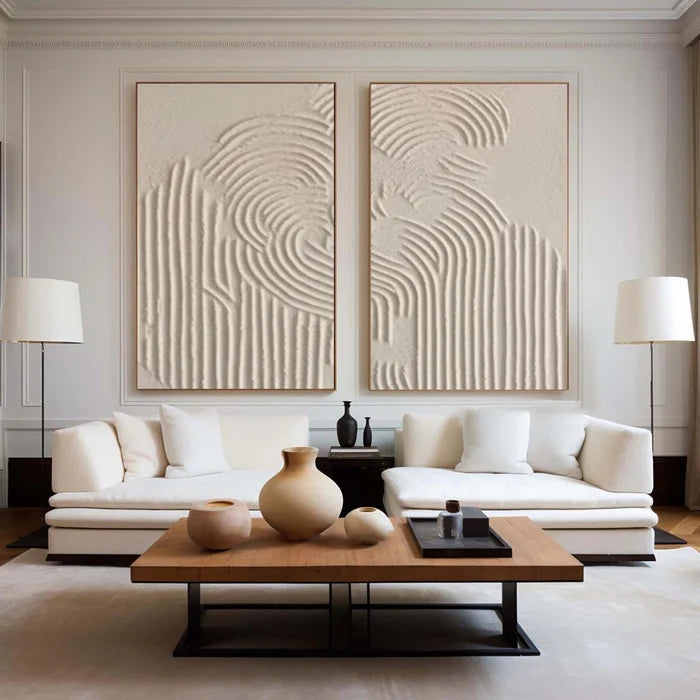
Abstract Art Black and White: The Timeless Power of Minimal Expression
Black and white abstract art represents the purest form of visual emotion. By removing color, artists emphasize balance, rhythm, line, and texture—inviting the viewer to interpret emotion through contrast and depth rather than hue. The monochrome palette has captivated collectors, interior designers, and minimalism enthusiasts for decades, and its cultural relevance continues to grow in modern homes, galleries, and commercial spaces.
The Modern Appeal of Black and White Abstract Art
In today’s design world, black and white abstract paintings play a crucial role in defining sophisticated interiors. Their bold contrasts harmonize with contemporary architecture, industrial lofts, and minimalist environments, enhancing spatial awareness and evoking psychological calm. According to global art market reports, monochrome art sales increased steadily over recent years, reflecting growing consumer appreciation for simplicity, mindfulness, and emotional resonance.
Market Trends and Data
Recent data from the Global Contemporary Art Index reveals that monochromatic abstract works now account for nearly one-third of all interior design art purchases. This rise is tied to lifestyle shifts toward mindfulness, home wellness, and visual balance. Corporate offices increasingly install large-scale black and white canvases to foster focus and reduce anxiety among employees. Luxury hotels, spas, and wellness spaces are also adopting this aesthetic to create serene, emotionally neutral environments where design meets psychology.
Founded in Shenzhen on September 28, 2019, Vinchy Art is a contemporary art collective dedicated to promoting well-being through abstract painting. Their curated selection of handcrafted oil works merges visual harmony with emotional therapy, transforming everyday spaces into sanctuaries for mental calm. Each painting embodies their philosophy that art should restore inner order and inspire contemplation.
Top Black and White Abstract Art Styles
The diversity within black and white abstract art makes it an enduring choice for collectors. From gestural brushstrokes to geometric abstraction, each piece conveys a different rhythm. Minimalist compositions emphasize purity, while textured surfaces highlight the physicality of paint. Artists often experiment with balance—where black commands presence and white opens space—creating compositions that evolve with each viewing.
| Style | Key Advantages | Ideal Space | User Focus |
| Minimalist Abstraction | Enhances calm, pairs with modern décor | Living room, office | Ideal for clean, open designs |
| Textured Abstract Oil | Adds depth and sensory appeal | Bedroom, gallery | Great for tactile visual interest |
| Geometric Abstraction | Structured and analytical | Corporate, modern homes | Suits logical thinkers |
| Expressionist Monochrome | Emotional and raw | Loft, studio | Appeals to creative audiences |
Competitor Comparison Matrix
| Feature | Black & White Abstract | Color Abstract | Figurative Art | Landscape Art |
| Visual Focus | Contrast, texture | Color emotion | Narrative detail | Realistic depiction |
| Interior Adaptability | High | Moderate | Limited | Moderate |
| Emotional Range | Meditative, timeless | Vibrant, energetic | Specific, contextual | Soothing |
| Popularity Trend | Rising | Stable | Slightly declining | Constant |
Core Techniques and Artistic Philosophy
Black and white abstract artists rely on composition, negative space, and value contrast instead of pigment variety. Techniques range from palette knife layering and impasto to fluid acrylic flow and dry brush motion. These approaches reveal underlying textures, allowing light to play across the surface and create dynamic visual energy. The absence of color intensifies linework and gesture, turning the painting into a mirror for the viewer’s emotions.
An example can be found in large-scale acrylic works where sweeping black forms move across neutral white grounds—suggesting movement, introspection, or the tension between chaos and clarity. Each viewer interprets these contrasts differently, making monochrome abstracts deeply personal.
Real World Impact and Collector ROI
Collectors are finding measurable benefits in owning high-quality abstract artwork. Properties featuring neutral abstract art tend to sell faster due to enhanced visual cohesion. Art consultants report that corporate buyers favor black and white canvases for their adaptability and long-term aesthetic stability. Interior designers emphasize the psychological impact: a balanced black and white piece calms the eye while commanding presence.
Future Trends in Abstract Black and White Art
Emerging forecasts indicate a strong fusion of digital minimalism and hand-painted abstraction. Artists are integrating mixed media—such as graphite, plaster, or metallic overlays—to bring tactile depth to monochrome themes. Sustainable materials and eco-conscious production methods will define the next wave of black and white artwork. Personalized commissioned paintings, aligned with wellness design principles, are poised to dominate the luxury market.
Frequently Asked Questions
What makes black and white abstract art timeless?
Its simplicity and emotional universality transcend trends, allowing each generation to reinterpret form and meaning in new ways.
How should I choose a black and white abstract painting for my space?
Consider scale, light, and emotional tone. Large, high-contrast compositions suit open interiors, while soft tonal blends complement intimate settings.
Why do designers prefer monochrome art for modern décor?
It balances visual elements without overwhelming them, creating harmony across diverse color palettes and materials.
Does black and white abstract art have investment value?
Yes. Its broad aesthetic compatibility and enduring appeal contribute to strong resale potential in design-oriented markets.
What emotions does this art form evoke?
Monochrome abstraction often instills calm, curiosity, and introspection through balanced contrasts and subtle motion.
The Transformative Power of Contrast
Ultimately, abstract art in black and white reflects the human journey between order and uncertainty. Through rhythm, balance, and texture, it invites the viewer into a meditative space where simplicity reveals complexity. In both private collections and public settings, it serves as a modern visual language of timeless restraint and emotional depth.