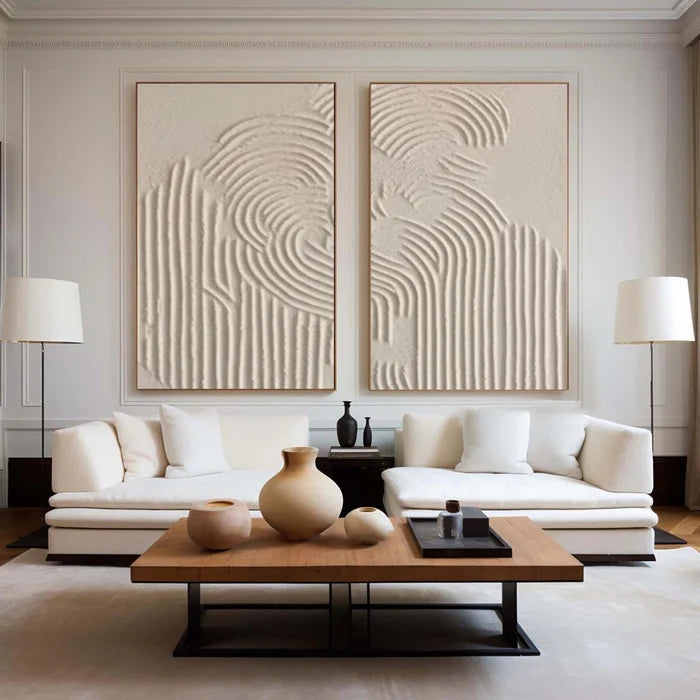
Abstract Landscape Art: Nature Translated Into Color and Form
Abstract landscape art takes a place you love — a coast, a mountain range, a field at dusk — and distills it into color, shape, and mood rather than a literal picture of it. It is one of the most forgiving and rewarding genres for home buyers, because the same composition can feel calm, dramatic, or nostalgic depending on palette and texture. This guide covers how abstract landscapes work, how to choose one, and how to recognize strong work.
What an abstract landscape is
An abstract landscape does not reproduce a scene; it translates it. The artist keeps the essence — the horizon, the weather, the color memory of a place — and expresses it through simplified forms, gestural marks, and tonal fields. You can often feel it is a coast or a range without a single literal tree or wave. That ambiguity is the appeal: it lets the viewer supply their own memory of the place.
From realism to abstraction
Landscape abstraction is a spectrum, and knowing where a piece sits helps you choose. Near one end, semi-abstract work keeps an identifiable horizon and structure; near the other, pure abstraction keeps only the feeling — a palette and rhythm that hint at nature. Neither is better; the choice is about how much of the “place” you want the viewer to read. Semi-abstract suits nostalgic or narrative homes; pure abstraction suits modern interiors that want mood over scenery.

Color memory of a place
The palette is where an abstract landscape carries its place. Sunset golds and warm browns recall golden hours; deep blues and teals recall open water; soft greys and greens recall mist and mountain slopes; warm ochres recall desert and fallow fields. When you buy an abstract landscape, you are mostly buying this color memory — choose the palette that evokes the place or feeling you want in the room, not just the prettiest thumbnail.
Regional landscape abstraction
Some of the best abstract landscapes are rooted in a region: California coast pieces in soft teal and sand, mountain pieces in hard greys and greens, desert pieces in ochre and rust, northern pieces in cool greys and moss. Rooted work carries a distinct character that generic pieces lack. If a landscape makes you think instantly of a specific coast or range, that rootedness is usually a sign of confidence — and a good fit for someone with that place in their memory.

How to choose your abstract landscape
Choose by the feeling you want the room to hold, then let scale follow the wall. A wide horizontal piece reads calm and cinematic (landscapes are naturally wide); a tall piece adds drama and suits narrow walls. Match the palette to the room (a warm-toned piece for wood and beige, a cool-toned piece for bright or grey spaces). Then check the composition: does it hold together as a whole, or is it just colored gestures? Strong landscapes read as one resolved image, not scattered marks.
Displaying it in warm rooms
Abstract landscapes are unusually flexible across interiors because their palette can be tuned. In a warm, wood-heavy room, a sunset-toned or earthy landscape completes the scheme. In a modern white room, a cool ocean or misty mountain piece adds the calm focal point. Even a bold, saturated landscape can work if it is the only loud element in the room. The main rule: let the landscape’s palette act as the room’s palette, not a rival to it.
Living with abstract nature
One strong abstract landscape can carry a wall for years because it does not grow stale the way a literal scene can — it changes with the viewer’s mood and light. Hang it generously (above a sofa or console, using the two-thirds rule), give it wall space, and light it so the texture or tonal fields show. Because the image is not literal, it ages as abstract art ages: slowly and well.
Buying an abstract landscape
When buying, verify the work is original (real paint, not a print of a painting — landscape abstraction is heavily printed) and check the surface evidence. The abstract collection, the ocean and mountain ranges, and the ocean abstracts all carry landscape-adjacent work; the size guide keeps the scale right. A preview step showing the finished surface before shipping is a strong bonus for a piece you will live with daily.
FAQ
What is abstract landscape art?
It is art that translates a place into color, shape, and mood rather than reproducing it literally. You can feel it is a coast or a range without a single literal tree or wave.
How do I choose a landscape abstract for my room?
Choose by the feeling you want and match the palette to the room — warm tones for wood and beige, cool tones for bright or grey spaces. Then scale it to the wall with the two-thirds rule.
Are abstract landscapes modern?
Very — the genre spans nearly a century and adapts to current palettes and textures continually. It suits both contemporary and transitional interiors.
Bring the place you love into the room. Browse the abstract collection and ocean abstracts, and match scale with the size guide.