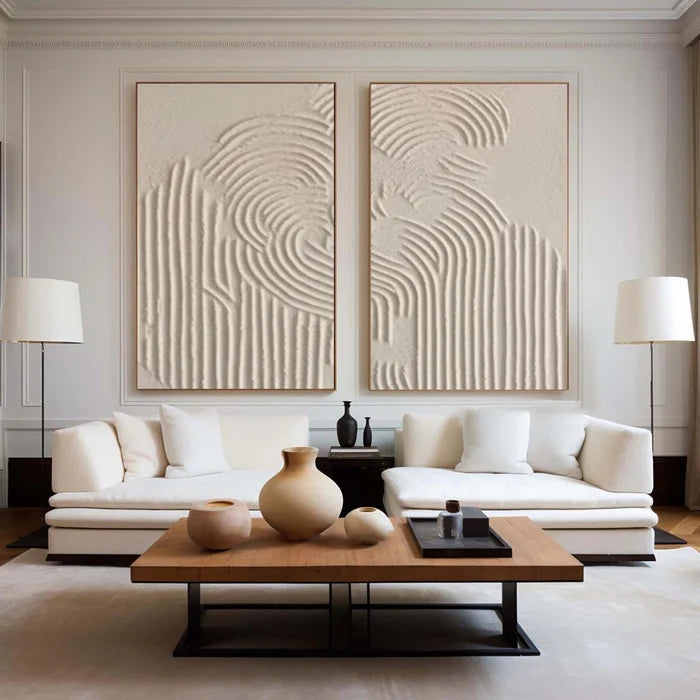
Black and Gold Textured Art: Metallic Accents for Evening Glow
Black and gold textured art is the evening palette: under low lamplight, the gold catches the glow and the black absorbs the shadow, so the piece reads as a quiet luxury accent rather than a loud statement. The styling rule is restraint — gold as the counterpoint, black as the ground, and the room's evening light as the third partner.
The Evening Palette
The evening palette also answers the wall question: a black and gold piece on a deep grey wall reads as part of the room, while the same piece on a white wall becomes the single event. The wall decides whether the piece is an accent or the anchor, and the choice follows the room's job.
The evening palette also follows the room's hours: the piece is chosen for the lamp, not for the daylight, and the placement should be where the evening light actually falls. A black and gold piece bought for the window will disappoint at night; one bought for the lamp will glow.
Black and gold are a pairing built for low light: black gives the surface depth and absorbs the room's shadows, while gold reflects whatever light exists and carries the glow. Together they read as refined in the evening, which is when living rooms are actually used. The black textured collection and the gold collection cover the two sides of the pairing.
The monochrome textured article explains how dark and light work together in a minimal scheme, and the same logic applies when the light is gold rather than white.
How Gold Reads Under Low Light
The gold's behavior also changes with the bulb: a warm lamp makes the gold glow golden, while a cool bulb makes it read silver. The bulb is part of the pairing, and the warm lamp is the honest choice for the evening palette.
The gold's reading also depends on the texture: a gold that sits in the relief catches the light in points, while a flat gold band reflects as a stripe. The textured placement is the difference between a glow and a glare, which is why the relief carries the metal.
Gold's behavior under low light is the whole point: it catches the lamp and reflects the glow, while flat colors sink into the shadow. The effect depends on the finish — a matte gold reads as understated, while a brighter gold carries more glow. The choice follows the room: a calm room wants matte, a dramatic room can carry the brighter metal.
The placement also matters: a black and gold piece belongs where a lamp can be aimed at it, because the gold needs the light to do its work. A piece in a shadowed corner reads as black alone, which is half the pairing.
Pairing With Brass and Velvet
The pairing also sets the room's temperature: brass warms the black, velvet softens it, and smoked wood grounds it. The three materials complete the evening room, and the gold ties them together.
The pairing also extends to the wall: a black and gold piece on a deep grey wall reads as part of the room, while the same piece on a white wall becomes the single event. The wall decides whether the piece is an accent or the anchor.
Black and gold pairs naturally with the materials of evening rooms: brass, velvet, and smoked wood. The brass repeats the gold, the velvet absorbs the light like the black, and the wood grounds both. The beige brown minimalist collection shows the warm neutral side that completes the pairing.
The rule is to keep the metals quiet: one brass lamp, one brass frame detail, and the gold in the art. Too many metals compete, and the evening glow becomes a cluttered shine.
Using Gold With Restraint
The restraint also extends to the accents: a gold frame detail, a brass lamp base, or a gold thread in the velvet — one at a time. The single metal note keeps the evening glow, and the second note turns it into a shine.
The restraint also applies to the room's other metals: if the lamp is brass, the frame can be matte black, and if the frame is gold, the lamp stays simple. One metal at a time keeps the evening glow from becoming a shine.
The failure mode of black and gold is overuse: gold everywhere reads as showroom, not luxury. the fix is restraint — gold as the counterpoint, appearing in the texture's highlights or the frame, while the black carries the surface. One gold element per piece, and one per room, is the honest limit.
The test is the doorway view: if the gold catches the eye once and the black holds the rest, the pairing works; if the gold competes with itself, the restraint needs tightening.
Vinchy Art Studio Recommendation
The studio also advises a two-hour test for the gold: noon for the daylight reading and evening for the glow. A black and gold piece that holds both hours is a piece the room keeps.
The studio also advises testing the gold under the room's actual lamp before committing: the glow depends on the bulb and the angle, and the preview step lets buyers see the metal in motion. The lamp is half the pairing.
In the Vinchy Art studio, black and gold pieces are made for the evening: the gold is placed in the relief so it catches the lamp, and the black carries the depth. The studio recommends matte gold for calm rooms, a single brass companion in the room, and the piece where the light can reach it. The preview step confirms the gold's glow before it ships.
Conclusion
The pairing's final rule is the room's hours: the piece is bought for the evening, and the daytime reading is the bonus. The lamp is the primary light, and the window is the second.
The final word on black and gold is the lamp: the piece is made for the evening, and the light completes it. Place the gold in the relief, pair it with brass and velvet, use one metal at a time, and the room gains its evening glow.
The final word on black and gold is the lamp: the piece is made for the evening, and the light completes it. Place the gold in the relief, pair it with brass and velvet, use one metal at a time, and the room gains its evening glow without the showroom shine.
Black and gold textured art is the evening palette: gold catches the lamp, black holds the shadow, and the pairing reads as quiet luxury. Use gold with restraint, pair it with brass and velvet, and place the piece where the light can reach it. The room gains its evening glow — without the showroom shine.
Black & Gold Checklist
- Gold placed in the relief for the light to catch
- Matte gold for calm rooms, brighter gold for drama
- One brass companion per room
- Velvet or smoked wood around the piece
- One gold element per piece
- Doorway view checked for overuse
FAQ
Does black and gold art work in daylight?
Yes, but it is built for evening: the gold's glow is strongest under low lamplight, and the black carries the depth during the day. The piece serves both hours, with the lamp completing the pairing.
What finish of gold is best?
Matte gold for calm rooms, brighter gold for dramatic ones. The finish follows the room's temperature, and the light decides how much glow shows — the texture places the glow in points.
What materials pair with black and gold?
Brass, velvet, and smoked wood. The brass repeats the gold, the velvet absorbs the light, the wood grounds the pair — and one metal note at a time keeps the glow.
How much gold is too much?
One gold element per piece and one brass companion per room — and one metal at a time in the composition. Gold everywhere reads as showroom, while restraint reads as luxury.
Where should a black and gold piece hang?
Where a lamp can be aimed at it. The gold needs the light to do its work, and a shadowed corner reads as black alone — the lamp is half the pairing.
Shop Black & Gold Accents
The black and gold piece also benefits from a monthly evening check: if the gold stops catching the lamp, the bulb or the angle has drifted, and a small adjustment restores the glow without changing the piece.
The shopping checklist for a black and gold piece is short: gold in the relief, matte or bright by the room, one brass companion, and a lamp to complete the pairing. A black and gold piece that passes the checklist is the one the evening keeps.
Shop the black textured collection above at Vinchy Art for hand-painted, made-to-order pieces — with custom sizes and preview before shipping.