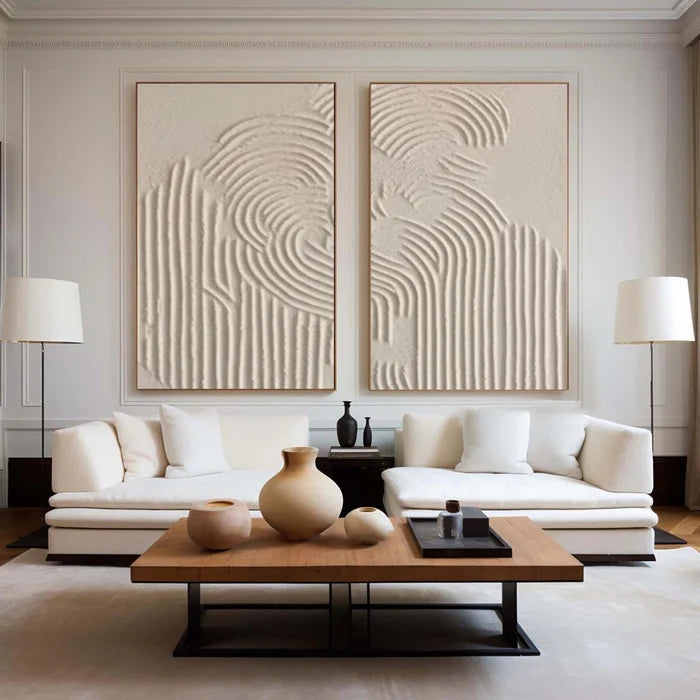
Bringing the modern western aesthetic into your living room without making it feel themed or dated
A modern western aesthetic works best when it avoids looking like a movie set. The challenge is real: lean too far into cowboy décor and the room feels staged, but strip it down too much and you lose the character that makes western chic interiors appealing in the first place. The goal is balance—keeping the spirit of Americana and ranch-inspired design while refining it through clean lines, controlled color palettes, and thoughtful focal points. Done well, a rustic modern living room feels grounded, warm, and quietly expressive rather than overly decorative.

Where western style goes wrong in modern spaces
The most common mistake is treating cowboy core decor as a collection of objects instead of a visual language. When hats, boots, and literal western symbols are scattered across a room, they compete rather than connect.
A living room filled with small western-themed items—mini horses, signage, rope accents—often ends up feeling cluttered and nostalgic in a way that clashes with modern minimalism. The eye doesn’t know where to rest, and nothing feels intentional.
Modern western interiors work differently. They rely on fewer, larger elements with stronger presence. Instead of ten small references, one well-placed piece—especially wall art—can carry the entire theme while the rest of the room stays restrained.
The role of art in defining a western chic interior
In a modern western living room, wall art is not decoration—it is structure. It anchors the aesthetic and sets the tone for everything else.
Large-scale paintings featuring horses, open landscapes, or even abstract interpretations of western motifs provide that anchor. What matters is not just the subject, but how it is rendered. Textured neutral paintings—think soft browns, dusty beiges, charcoal lines—feel far more current than highly saturated or overly detailed imagery.
A piece with visible brushwork or plaster texture introduces depth that flat prints cannot replicate. Under natural or directional lighting, these surfaces shift subtly throughout the day, giving the room a sense of movement without adding clutter.
For those exploring handcrafted options, browsing a curated selection of modern western aesthetic wall art can help clarify how scale, texture, and subject work together rather than relying on isolated decor pieces.
Why neutral western artwork feels more sophisticated
Color is where many western interiors lose their modern edge. Traditional palettes often lean heavily into reds, oranges, and high-contrast imagery. While authentic, they can overpower contemporary furniture and clean architectural lines.
Neutral-toned artwork solves this by softening the narrative. A painting of a horse rendered in layered beige and grey, or a wide-brim hat suggested through abstract strokes, keeps the western reference intact but removes visual noise.
This approach creates a quieter focal point. Instead of demanding attention, it invites it. The room feels curated rather than themed, which is essential in a modern setting where restraint is part of the aesthetic.
Pairing canvas art with leather, wood, and clean lines
The success of a rustic modern living room often comes down to how materials interact. Art should not feel isolated from furniture—it should echo it.
-
A large neutral canvas above a cognac leather sofa reinforces warmth without duplicating color exactly.
-
Light oak or reclaimed wood elements connect with earthy tones in the artwork, creating continuity across the room.
-
Black or metal accents in furniture can be mirrored through subtle line work or shadow in the painting, keeping the space grounded and structured.
Spacing and proportion matter just as much. Oversized art works best when it spans roughly two-thirds to three-quarters of the sofa width, leaving breathing room on either side. Hanging it too high or choosing a piece that is too small breaks the visual connection and weakens the overall effect.
Texture is the difference between modern rustic and flat décor
One of the defining features of a refined western chic interior is tactile contrast. Smooth walls, clean-lined furniture, and minimal accessories need something to offset them. This is where textured paintings become essential.
Unlike flat posters, handcrafted paintings with raised surfaces, knife work, or plaster finishes catch light differently depending on the time of day. In a living room with warm lighting (around 2700K), textures appear softer and more blended. Under cooler lighting (4000K), shadows become sharper, emphasizing depth.
This subtle variability keeps the room from feeling static. It also aligns with the natural, imperfect qualities associated with western landscapes—weathered, layered, and organic.
When the modern western look does not work
Not every space benefits from this style. Rooms that already rely heavily on bold color, high-gloss finishes, or ultra-urban design elements can clash with western influences.
If your living room includes bright jewel tones, glass-heavy furniture, or very compact wall space, introducing large western-themed artwork may feel forced. In these cases, a more abstract or minimal piece with only a hint of western influence is often a better fit.
It is also important to consider lighting. A textured painting placed in a dim corner can lose its dimensional quality entirely, appearing flatter than intended.
Using scale and placement to avoid a themed look
Scale is what separates a designed room from a decorated one. In modern western interiors, bigger is usually better—but only when proportioned correctly.
A single large canvas above the sofa creates a clear focal point. Alternatively, a set of two works well for wider walls, provided spacing is consistent and the pieces share a cohesive palette.
Avoid gallery walls filled with small western references. They tend to dilute the aesthetic and reintroduce the “theme room” problem. Instead, let one or two pieces carry the narrative while everything else supports it quietly.
Bringing it together with confident art selection
Choosing the right artwork is often the turning point between a room that feels unfinished and one that feels resolved. The difficulty is that scale, color, and texture are hard to judge from product images alone.
This is where tools like a digital room preview or a guided art advisory can make a meaningful difference. Being able to visualize a painting on your own wall—or get input on how it pairs with your existing materials—reduces the guesswork that often leads to mismatched purchases.
For those refining a western-inspired living room, exploring handcrafted options through Vinchy Art’s curated collections offers a clearer sense of how modern western themes translate into large-scale, texture-driven pieces that suit real interiors rather than staged environments.
Frequently Asked Questions
What defines a modern western aesthetic in a living room?
A modern western aesthetic combines traditional ranch-inspired elements with minimalist design principles. It focuses on natural materials, neutral palettes, and a few strong visual statements rather than multiple decorative items.
Can cowboy core decor still work in a modern space?
Yes, but it needs to be edited. Instead of multiple literal references, use one or two symbolic elements—often through artwork—while keeping the rest of the room clean and understated.
What type of wall art works best for a rustic modern living room?
Large-scale, neutral-toned paintings with western-inspired subjects or abstract interpretations work best. Textured, handcrafted pieces add depth and prevent the room from feeling flat.
How do I keep western decor from looking outdated?
Limit color intensity, avoid overly detailed or literal imagery, and focus on scale and material quality. Pair western elements with modern furniture and clean architectural lines.
Is textured wall art better than prints for this style?
In most cases, yes. Textured paintings interact with light and add dimension, which aligns with the organic, layered feel of western interiors. Prints tend to look flatter and less integrated in comparison.