Choosing Animal Wall Art That Works: The Ultimate Scale, Style, and Space Guide
Animal wall art often looks compelling in isolation. However, once installed, its success depends entirely on scale, palette, and spatial psychology. A massive lion portrait can inject raw power into an expansive studio loft, yet feel claustrophobic in a compact bedroom. Conversely, a soft, ethereal bird composition might bring tranquility to a narrow hallway but completely disappear on a bustling living room feature wall.
The real challenge is not merely selecting an animal imagery theme you admire, but ensuring the specific medium, scale, and emotional tone of the piece seamlessly align with your room's physical proportions and lighting architecture. Mastering these variables transforms standard decor into an intentional, high-authority focal point.

Spatial Psychology: How Animal Imagery Shifts Room Dynamics
Unlike abstract art, which builds atmosphere gradually through shape and color, animal subjects communicate immediate psychological cues and behavioral personality traits.
-
Dynamic Motion: A horse captured mid-gallop or an eagle in flight introduces kinetic energy and direction, making them ideal for high-traffic, conversational spaces.
-
Stasis and Calm: A resting deer, a solitary heron, or minimalist marine life introduces quiet, stillness, and restorative focus.
In practice, your selection must reflect how you intend a space to function rather than just matching visual aesthetics.
Contextual Placement Strategies
-
The Living Room & Executive Office: These spaces demand presence. Bold, commanding wildlife—such as tigers, elephants, or large apex predators—anchors the architecture and establishes an energetic focal point.
-
Bedrooms & Reading Corners: These sanctuaries benefit from non-confrontational subjects. Softer compositions featuring birds, fish, or grazing animals foster lower heart rates and relaxation.
Deciding Your Aesthetic: From Minimalist Lines to Moody Fine Art
Finding the right execution depends entirely on your architectural vibe. Animal art spans a vast stylistic spectrum, and mismatching the style with your interior decor is a common design pitfall.
Minimalist Line Art & Monochrome
Characterised by clean, single-stroke lines and strict monochrome palettes, minimalist animal art is engineered for contemporary, Scandinavian, or low-clutter spaces. It offers a subtle, sophisticated nod to nature without overwhelming the room’s visual field.
Abstract, Cubist & Geometric Animals
Utilising sharp edges, cubist influences, and vibrant, splashy color blocks, geometric animal art creates a highly energetic, artistic atmosphere. These pieces act as perfect conversation starters in modern apartments, creative studios, or dynamic home offices.
Fine Art Photography & Traditional Realism
High-definition close-up portraits, deep painterly tones, and gallery-wrapped canvases offer a sophisticated, moody aesthetic. Highly detailed realism anchors transitional or traditional spaces, adding formal weight and historical texture to the walls.
The Mathematics of Scale: Eliminating Placement Mismatches
The single most common mistake buyers make when purchasing animal wall art online is scale mismatch. Selecting a canvas based solely on the subject rather than the wall’s dimensions leads to poor spatial balance.
To eliminate guesswork, implement these strict mathematical proportions for your layouts:
| Wall or Furniture Context | Suggested Artwork Width | Visual and Spatial Effect |
| Above a 3-Seat Sofa | 60% – 75% of sofa width | Creates a perfectly balanced, grounded focal point. |
| Above a Bed (Queen/King) | 55% – 70% of bed headboard width | Establishes a calm, weighted, and symmetric composition. |
| Narrow Hallway or Entryway | Vertical orientation (Single or Diptych) | Adds structural height, rhythm, and expansive depth. |
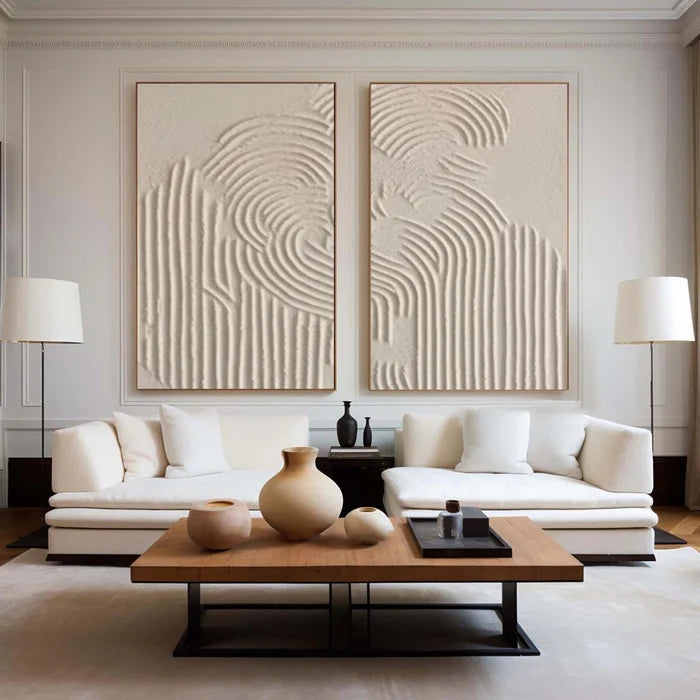
| Large Empty Feature Wall | Oversized single piece or a 2-3 piece set | Creates a commanding gallery presence; avoids visual fragmentation. |
Animal subjects actively amplify scale errors. A tiny wolf portrait lost on a massive accent wall looks disconnected, while an oversized, hyper-realistic animal face staring down in a tight dining room can feel intrusive.
Furthermore, orientation dictates flow: horizontal wildlife landscapes perform best above long furniture pieces, while vertical or portrait-oriented compositions are essential for transitional zones.
Environmental Variables: Ambient Lighting and Surface Texture
Even a flawlessly proportioned piece of art will fail if its color temperature clashes with the room’s ambient light.
-
Warm Indoor Lighting (2700K): Mutes cooler tones like navy blues, teals, and emerald greens, while intensifying earthy browns, terracotta, and warm golds.
-
Cool Daylight Bulbs (4000K+): Flattens rich reds and deep oranges, making them look clinical, while sharpening crisp whites and minimalist line art.
Handcrafted Paintings vs. Mass-Produced Prints
The physical medium changes how light behaves across the artwork's surface. This distinction alters the entire viewing experience throughout the day.
| Material Aspect | Handcrafted Fine Art Paintings | Mass-Produced Canvas Prints |
| Surface Depth | Visible brushwork, impasto texture, genuine layering. | Flat, uniform, and entirely synthetic surface. |
| Light Interaction | Dynamic shifting shadows based on the time of day. | Consistent, predictable, but completely static reflection. |
| Spatial Presence | Tactile, luxurious, and room-defining asset. | Primarily decorative, secondary, and easily ignored. |
| Uniqueness | Distinct organic variations in every single piece. | Identical, generic copies replicated infinitely. |
For animal compositions specifically, physical texture enhances the organic realism of fur, the delicate structure of feathers, and the fluid motion of water in ways flat digital prints simply cannot replicate.
Architectural Integration: Avoiding the "Staring" Effect
There are specific instances where animal art creates subtle, psychological discomfort rather than aesthetic pleasure. A prime example is the "Staring Effect."
Placing a high-contrast, hyper-realistic predator portrait directly across from a primary seating area forces guests to look directly into a pair of intense eyes. Over time, this creates subconscious tension rather than a welcoming atmosphere.
Avoiding Common Layout Mismatches
-
Aesthetic Contrast: Ensure your animal art either echoes the dominant accent colors of your room (e.g., a deep green velvet sofa matching the foliage in a jungle scene) or provides a controlled, intentional contrast. Random, uncoordinated palettes make a room feel chaotic.
-
Multi-Piece Alignment: When hanging sets of two or three pieces (Triptychs), maintain a strict 5cm to 8cm gap between frames. Misaligned spacing breaks the visual flow, destroying the illusion of a unified gallery display.
How to Safely Source and Visualise Art Online
Sourcing art online can introduce uncertainties regarding color accuracy, scale, and texture. To remove risk from your investment, utilise advanced digital validation tools before purchasing.
-
Digital Augmented Reality Preview Tools: Upload a straight-on photo of your actual wall to accurately test proportions, lighting compatibility, and eye-level positioning before buying.
-
Art Advisory Consultation: If you are uncertain about color coordination, mixing minimalist and abstract elements, or frame choices, leverage an expert art advisory service to cross-reference your fabric swatches, flooring tones, and lighting angles with curated collections.
Frequently Asked Questions
What type of animal wall art is best for a formal living room?
Larger, expressive subjects executed as fine art photography or textured abstract paintings work best. Majestic wildlife themes, such as horses or lions, establish an immediate visual anchor. Ensure the canvas covers 60% to 75% of the furniture piece it sits above to maintain proper proportion.
Can animal wall art fit into a strictly minimalist interior?
Absolutely. Opt for minimalist line art, monochrome vector illustrations, or clean geometric structures. A single handcrafted piece featuring subtle canvas texture adds immense intellectual depth to a space without cluttering the clean aesthetic.
How do I calculate the right size painting for my feature wall?
Measure the total width of the wall or the furniture it will hang over. Multiply that width by 0.60 and 0.75. Your ideal artwork or multi-frame gallery set should fall within that specific size range to ensure it looks balanced and intentional.
Why does my art look different at home compared to the online image?
Online images are backlit by digital screens. In a physical room, the art relies on ambient light. Furthermore, genuine handcrafted paintings feature raw textures and raised paint lines that cast subtle shadows, meaning the artwork's appearance will beautifully evolve as natural daylight transitions into evening light.
How do I hang a set of three animal prints without it looking cluttered?
Treat the entire set as a single, massive visual unit. Hang the pieces so that their central horizontal line sits exactly at eye level (roughly 145cm from the floor), and maintain an identical, strict gap of 5cm to 8cm between each frame to preserve continuity.