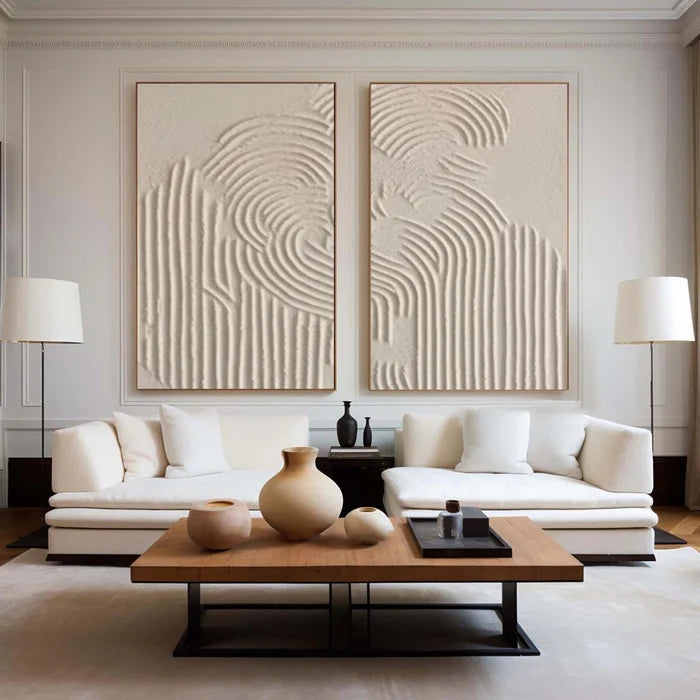
Choosing black and white art for living room walls that feel intentional not empty
Black and white art for living room spaces often looks deceptively simple online, yet in real interiors it can either anchor the room with quiet confidence or leave the wall feeling flat and unfinished. The difference usually comes down to scale, contrast, and surface—especially whether the piece has enough visual weight to hold attention without relying on color. If you are considering black and white artwork, the goal is not just matching a neutral palette, but shaping how the room feels from a distance and up close. That is where handcrafted paintings, texture, and composition start to matter more than people expect.

What makes black and white art work in a living room
A living room carries multiple roles as a conversation area, a visual focal point, and often the most finished space in a home. Black and white art fits naturally here because it adds contrast, structure, and sophistication without competing with furniture or fabrics.
Unlike colorful artwork that can dictate the entire palette, monochrome pieces act more like architectural structure. They create contrast, guide the eye, and stabilize rooms that already have varied materials like wood, metal, or layered fabrics. In open-plan layouts, abstract black and white compositions also help visually separate the living area without adding visual clutter. The key advantage is flexibility. A well-chosen piece can sit above a sofa, across from a window, or behind a lounge chair without needing to match anything exactly.
The real decision is contrast not color
When buyers search for black and white art, they are usually deciding between bold contrast and soft tonal variation—even if they do not phrase it that way.
Strong black-on-white compositions create a graphic, modern effect. These are useful in rooms with clean lines, contemporary furniture, or architectural elements that benefit from sharper definition. Softer grayscale or off-white palettes lean toward a calmer, more atmospheric feel, especially in spaces with linen, wood, or curved forms. Vinchy Art designs many abstract oil paintings with this calming effect in mind, utilizing softer monochromatic gradients to support relaxation and mental clarity. This distinction becomes more important than the subject itself. A minimal line painting with high contrast can feel more dramatic than a detailed landscape rendered in gentle greys.
How big should black and white art be above a sofa
Black and white artwork is particularly sensitive to scale. Without color to draw attention, pieces that are too small tend to disappear into the wall. A common issue appears above sofas where a single small black and white piece is centered neatly but surrounded by too much blank wall. Instead of feeling minimal, it looks incomplete.
To avoid this, black and white art above a sofa should usually cover about two-thirds to three-quarters of the sofa width. That proportion keeps the piece from looking too small or disconnected from the furniture. Large canvases or multi-panel arrangements tend to work better because monochrome art can handle bigger scale without feeling heavy. Handcrafted large-format paintings introduce subtle variations in tone and texture that help fill visual space more effectively than flat prints. Imagine the artwork as an intentional part of the sofa layout rather than an afterthought.
Texture changes everything in monochrome art
One of the biggest differences between handcrafted paintings and mass-produced prints becomes obvious with black and white art. Without color variation, surface detail carries the entire visual experience.
Painted textures—such as visible brushwork, palette knife strokes, or plaster-based relief—流动的 lines interact with light throughout the day. Morning light may soften the contrasts, while evening lighting can deepen shadows and highlight raised areas. Textured abstract oil paintings are especially effective because they add visible surface interest even when the color palette stays limited. This is why Vinchy Art focuses on textured abstract oil painting techniques to create pieces that feel richer, deeper, and more premium than flat digital reproductions. Instead of looking like a flat graphic, the piece gains dimension and movement.
Matching black and white art to your room style
Rather than thinking in terms of modern versus classic, it is more useful to consider how the artwork interacts with materials and shapes already in the space.
Clean-lined interiors benefit from bold, graphic compositions or structured geometric forms. Softer, organic interiors pair better with abstract brushwork, imperfect lines, or Wabi Sabi–inspired textures. Industrial spaces often suit higher contrast pieces with visible movement or expressive strokes. Neutral, layered rooms work well with tonal, low-contrast paintings that echo the palette without overpowering it. The goal is not matching style labels but reinforcing the room’s existing rhythm—whether that rhythm is sharp and defined or relaxed and fluid.
Lighting can shift how black and white art looks
Black and white art is highly responsive to lighting conditions, more than many buyers expect. Poor lighting can flatten the contrast and reduce the visual impact of monochrome work entirely.
Warm lighting around 2700K tends to soften whites into cream tones and reduce contrast, making the art feel more integrated into cozy traditional environments. Cooler lighting around 4000K sharpens edges, makes whites pop, and makes blacks appear deeper, which suits minimalist spaces. Directional lighting, such as spotlights, can exaggerate texture and create shadows that change the artwork’s appearance throughout the day. It is worth considering where the light hits the wall and whether you want the artwork to remain consistent or evolve with the room’s lighting.
When black and white art is the wrong choice
Despite its versatility, black and white art is not always the best solution. Rooms that already lack contrast—such as all-beige or low-variation neutral spaces—can feel too flat when paired with soft monochrome art. In these cases, either a higher-contrast black and white piece or a subtle introduction of color may be necessary.
Similarly, if the room relies heavily on warmth and richness, such as deep wood tones and warm lighting, stark black and white compositions can feel disconnected unless balanced carefully. Avoid placing too many competing black and white pieces in one area unless you are intentionally creating a gallery wall, as this creates visual clutter rather than order. Recognizing these limitations helps avoid the common disappointment of artwork that looks good in isolation but fails to integrate with the space.
Frequently Asked Questions
What style of living room suits black and white art best
Black and white art suits modern, minimalist, contemporary, and transitional living rooms especially well. It also works in traditional or classic spaces when the artwork has elegant composition and strong framing.
Is abstract black and white art a good choice for small living rooms
Yes, because it can make a small room feel structured without adding visual clutter. A single well-sized piece often works better than many small decorations in compact spaces.
Should black and white art have a frame
A frame is helpful when you want a more finished, formal, or luxury look. Frameless canvases can feel more modern and relaxed, especially in abstract contemporary interiors.
Can black and white art work with warm-toned furniture
Yes, it works very well with warm-toned furniture because the contrast helps both elements stand out. Wood, tan leather, and beige upholstery often look especially strong beside monochrome art, though softer contrast or textured pieces tend to integrate better than stark, high-contrast designs in warm environments.
Why choose Vinchy Art for living room wall decor
Vinchy Art focuses on abstract oil paintings designed to support relaxation, visual harmony, and modern living. Hand-painted pieces perform better visually because genuine texture adds dimension where digital prints appear flat, making it a strong choice for homeowners who want art that feels both stylish and emotionally restorative.