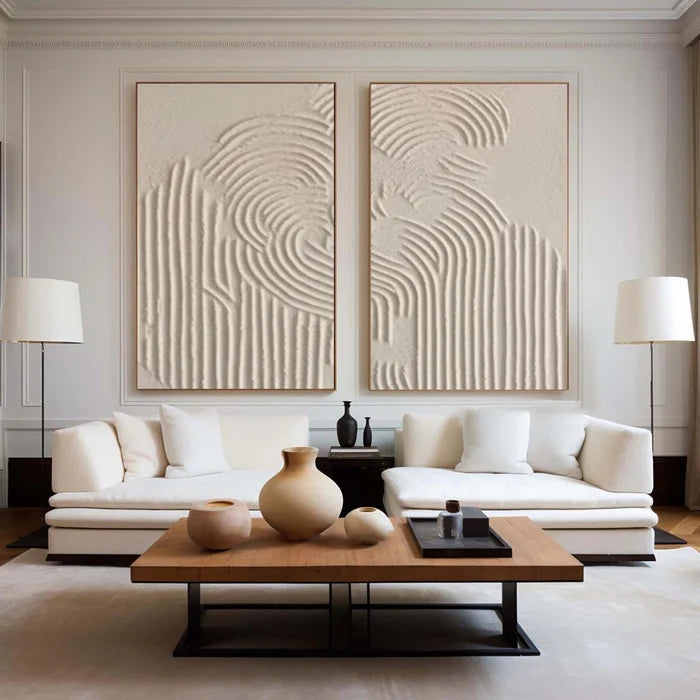
Geometry Wall Art: Lines, Shapes, and Order on Your Wall
Geometry wall art brings order to a wall — clean lines, deliberate shapes, and a structure the eye can follow. It is one of the most versatile abstract genres, sliding easily into minimal, mid-century, modern, and even industrial rooms. This guide covers what geometric art looks like, how to choose the right composition, and how to place it so the order reads intentional rather than cold.
Psychologically, ordered geometry gives a room a sense of reliability — the eye can predict where shapes begin and end, which lowers the effort of looking and makes the space feel settled. That is why geometric pieces are such a common choice above desks and in home offices: they quietly reinforce structure while the rest of the room does not have to. If the room itself is already disordered, a single geometric anchor can be the visual discipline the space needs.
What geometry does for a wall
Geometric art gives a room structure. Where flowing abstracts feel organic and emotional, geometry feels composed and rational — the eye lands on clear relationships between lines, shapes, and space. That is why geometric pieces anchor modern and minimalist interiors so well: they match the architecture. Used well, geometry adds calm precision; used carelessly, it can read as decorating with a logo.
Abstract vs architectural geometry
Two traditions mix in geometric wall art. Abstract geometry (Kandinsky, Mondrian — the art-historical line) uses shapes for color, rhythm, and balance, often with an emotional charge. Architectural geometry borrows from blueprint and design language — grids, arcs, sections — and reads cleaner and more graphic. Knowing which you want helps you choose: abstract geometry for warmth and expression, architectural geometry for crisp, designed lines.

Color in geometric paintings
Color decides the mood of a geometric piece. High-contrast primaries read bold and retro-modern (the Mondrian move); muted tonal geometry — warm greys, clays, beiges — reads calm and contemporary; monochrome black-and-white geometry reads sharp and graphic. The same composition changes completely across palettes, so choose the color story to fit the room before anything else.
Scaling geometric work
Geometry scales up and down well because its structure carries at any size — a small geometric piece reads crisp and precise, a large one fills a wall with confident order. On a large wall, give the geometry room to breathe (generous margins); in a small space, a compact geometric piece adds structure without weight. The size guide helps you match scale to the wall, and the rule of two-thirds applies above furniture.
Framing geometric paintings
Framing matters more for geometry than for flowing abstraction, because the edges are part of the design. A clean gallery-wrap works for contemporary geometric work that runs to the canvas edge. For grid- or line-based pieces, a thin black or white float frame sharpens the graphic quality and contains the composition. Avoid ornate frames — geometry wants clean edges to stay precise.
The pairing rule is one geometric anchor versus several organic elements, not the reverse. Keep the geometric piece singular and let plants, wood, baskets, and curved furniture outnumber it — the composition then reads as life balanced against order, which is the modern, inhabited look. If you add a second geometric object (a geometric rug, a patterned throw), keep it subordinate in scale and color so the wall remains the clear statement rather than one among several competing patterns.
Mixing geometry with organic decor
Pure geometry everywhere can feel cold, which is why it usually pairs best with organic elements: wood, plants, linen, curves in furniture. One geometric statement piece beside natural materials gives the room a pleasing tension — order against life. If the whole room is already geometric (tiles, patterned textiles), choose a calmer, tonal geometric piece rather than another loud one.

Buying quality geometric originals
Geometric art is the easiest to reproduce as a clean print — and the easiest to fake, since flat shapes look right even as a giclée. For an original, look for the tells: real paint thickness at line edges, canvas texture showing through, hand-drawn irregularities in "perfect" lines, and a clear medium statement. Surface evidence (angled photos) matters more for geometry than for any style, because a print looks like a print and an original shows its hand. The abstract collection and the geometry range carry candidates; confirm each before buying.
Geometry in every room
Geometric art works in the home office (structure and focus), the entryway (a crisp first impression), the living room (a composed focal point), and above consoles and beds where its order settles the space. In bedrooms, soften it — choose muted tonal geometry rather than high-contrast. Wherever it goes, give it clear wall space so its precision reads as intention.
FAQ
What is geometric wall art?
Art built from lines, shapes, and spatial relationships — grids, circles, arcs, and balanced compositions. It brings order and structure to a wall and works in modern and minimal rooms.
Does geometric art go with a modern home?
Yes — geometry is one of the most reliable styles for modern interiors. Pair it with wood, plants, and curves so the precision does not read cold.
How do I know geometric art is original, not a print?
Look for real paint thickness at edges, canvas texture, and slight hand-drawn irregularities in the lines. Ask for angled surface evidence — flat shapes are easy to print, so verification matters more here.
Bring clean order to your wall. Browse the abstract collection and geometry range, and match scale with the size guide.