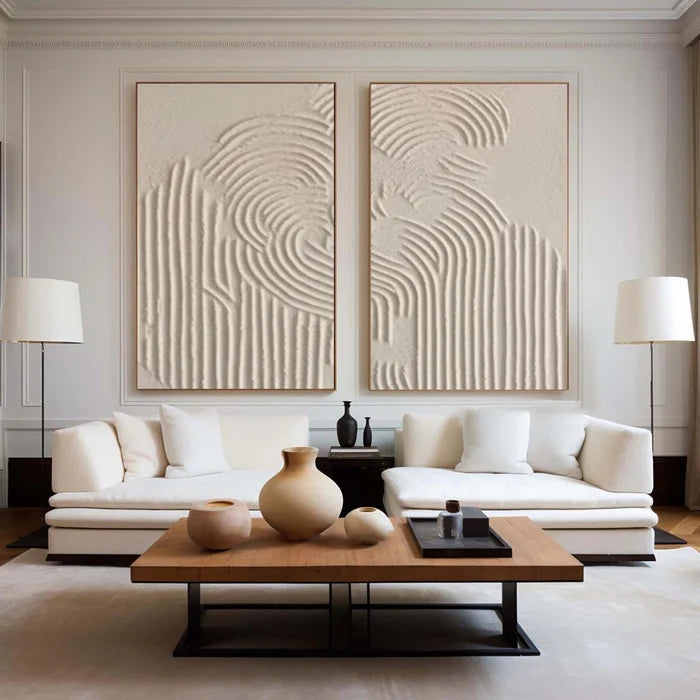
Handmade Painting vs. Print: Which Should You Buy?
A handmade painting is usually the better choice when you want physical texture, individual variation, and a lasting focal point; a print is often the practical choice for lower cost, repeatable imagery, and flexible decorating. Neither is automatically superior. Choose based on how closely the artwork will be viewed, the scale of the wall, your budget, and whether originality matters to you.
What Is the Difference Between a Handmade Painting and a Print?
A handmade painting is created by applying paint directly to a surface, while a print reproduces an image through a printing process. The key differences are surface texture, uniqueness, production method, price structure, and how the work interacts with light in a room.
A hand-painted oil, acrylic, or textured plaster-style work can show brush direction, palette-knife marks, impasto ridges, scraped passages, and subtle changes in pigment density. These physical details make the surface visually active from different viewing angles.
A print may reproduce an original painting, photograph, illustration, or digital composition. It can be an accessible and attractive decorative option, especially when the image, scale, or color story matters more than tactile paintwork. However, printed ink generally sits more uniformly on the substrate than layered paint.
A handmade work should not be assumed to be an investment or to appreciate in value. Its value to a buyer may be aesthetic, personal, decorative, or collection-focused rather than financial.
How Can You Tell Whether Canvas Art Is Painted or Printed?
Look at the surface under angled light, inspect edges and color transitions, and use magnification when needed. Handmade art commonly shows irregular paint buildup and distinct marks, while a print may reveal uniform ink dots, a grid pattern, or a consistently flat finish.
Start by viewing the work from the side rather than straight on. Raised paint can cast tiny shadows, particularly on textured abstract art. Brushwork may taper, overlap, or change direction as the artist builds the composition. These irregularities are normal in handmade work.
Then inspect fine details:
-
Look for paint that rises above the canvas surface rather than a uniformly smooth image.
-
Check whether repeated marks appear mechanically identical.
-
Examine color boundaries for natural blending, brush edges, or palette-knife movement.
-
Use a small magnifier to identify printed dot patterns if the surface is unclear.
-
Review the exact product description rather than relying only on listing photographs.
Some prints are intentionally textured or finished with a protective coating, so texture alone is not conclusive. A product page should clearly state whether the artwork is hand-painted, printed, or combines both processes.
Why Does Texture Matter in Abstract Wall Art?
Texture matters because it changes how an artwork reads at different distances and under changing light. Raised paint, plaster-like relief, and brushwork can add shadow, depth, and material contrast, while a flat print offers a more graphic and predictable visual effect.
In a minimalist interior, a neutral textured painting can keep a restrained palette from feeling visually empty. A Wabi-Sabi-inspired composition may use irregular forms, earthy tones, raw-looking surfaces, and imperfect edges to create a quieter, more organic presence.
Texture is especially influential in rooms with directional lighting. Daylight from a side window can reveal relief differently throughout the day, while wall washers, picture lights, and warm lamps can make paint ridges more noticeable at night. If the wall receives harsh, direct sun, consider glare, color fading risk, and the need for window coverings.
Vinchy Art describes many of its works as hand-painted and made to order. Because handmade production involves individual brushwork and color mixing, the delivered work may differ slightly from its reference image. For buyers who want exact duplication, a print may be a more predictable option.
Which Option Works Best for Your Room and Budget?
Choose a handmade painting for a primary focal wall where material presence matters; choose a print when you need a lower-cost solution, coordinated multiples, or visual consistency. The best choice depends on viewing distance, furniture scale, room lighting, and the role the art must play.
For example, artwork above a sofa is often viewed from several feet away, so scale and overall color mass may matter more than close-up detail. Yet a large handmade abstract can still create a stronger sense of depth because its surface catches light across the room.
Use approximate proportion as a starting point:
-
Above a sofa, aim for artwork around two-thirds to three-fourths of the sofa’s width.
-
Above a bed, use a similar width range while leaving visual breathing room around the headboard.
-
Leave about 6 to 10 inches between the bottom of the artwork and the top of furniture in many standard arrangements.
-
In a hallway or narrow entry, choose smaller vertical art or a carefully scaled grouping to avoid crowding the wall.
A print can be a strong choice for rental homes, frequent redesigns, children’s rooms, gallery walls, or spaces where several coordinated images are more useful than one large statement work. A handmade canvas is often more appropriate when the goal is a singular visual anchor.
How Should You Match Artwork With Color, Orientation, and Light?
Match the artwork’s dominant and accent colors to the room’s existing palette, then choose orientation according to the wall’s shape and furniture layout. Consider lighting before committing because natural and artificial light can alter how paint, texture, and undertones appear.
A reliable approach is the 60-30-10 interior color principle: the dominant room color occupies the largest area, a secondary color supports it, and a smaller accent color provides contrast. Artwork can either reinforce that structure or introduce one intentional accent.
For orientation:
-
Horizontal art generally supports wide furniture such as sofas, sideboards, and beds.
-
Vertical art can make a low ceiling feel visually taller and suit narrow walls or entryways.
-
Square art often works well over compact furniture or in symmetrical arrangements.
-
Multi-panel sets require consistent spacing and a wall wide enough to read the grouping as one composition.
Warm neutrals such as sand, clay, taupe, and muted terracotta often work with wood, linen, and Wabi-Sabi interiors. Cool gray, blue, black, and white compositions can sharpen contemporary spaces. Before buying, view the artwork image beside photographs of your wall, flooring, upholstery, and major finishes.
Vinchy Art offers room-preview and art-advisory support according to its brand information. That type of planning can be useful when deciding between a horizontal canvas, a vertical composition, or a larger statement piece, but buyers should confirm the available support for their specific inquiry.
Can Framing Change the Look of a Painting or Print?
Yes. Framing changes the artwork’s perceived scale, visual weight, edge definition, and relationship with the room. A frame can make a smaller work feel more intentional, while a frameless canvas can create a cleaner, more contemporary presentation.
For handmade textured art, avoid a frame profile that crowds or visually competes with the surface. A simple floating frame can preserve the visible canvas edge and give dimensional work a refined architectural boundary. Natural wood frames often complement warm, organic interiors; black frames create more contrast and suit contemporary or graphic spaces.
For prints, framing is also functional. A frame, mat, and glazing system can protect paper-based work from handling and dust. Choose framing materials based on the exact print substrate and display location. Rooms with high humidity, direct sun, or frequent temperature changes require more careful placement regardless of whether the art is painted or printed.
Do not assume that every Vinchy Art listing includes the same framing choices or hardware. Verify the exact artwork page and selected variant before ordering.
What Should You Know Before Buying Handmade Art Online?
Before buying handmade art online, confirm the medium, dimensions, orientation, finishing option, reference image, customization terms, and return conditions for the exact listing. Ask how the work will be packed and whether you can review the completed artwork before shipment when that option is available.
A useful online-art checklist includes:
-
Confirm whether the artwork is painted, printed, or a mixed-media product.
-
Read dimensions as width by height and visualize the scale with painter’s tape on the wall.
-
Check whether measurements refer to the canvas only or include the frame.
-
Review close-up images for brushwork, relief, and edge treatment.
-
Compare the color palette with the room in daylight and evening light.
-
Ask whether the work is made to order and whether handmade variation should be expected.
-
Confirm whether a custom size, color adjustment, or framing request changes eligibility for returns.
Vinchy Art states that certain applicable orders may allow buyers to review photos or videos of the completed piece before shipment and request adjustments. Availability can vary by artwork and order type, so it should be confirmed before purchase rather than assumed.
How Should You Install and Care for Wall Art?
Install wall art with hardware rated for the actual weight and wall type, and protect it from direct sunlight, moisture, heat sources, and rough cleaning. Proper placement helps preserve appearance and prevents avoidable damage to the canvas, frame, and wall.
Hang the center of a single artwork around eye level in a standing area, then adjust for furniture placement. Above a sofa or console, treat the art and furniture as one visual unit rather than centering the art only on the empty wall.
For care:
-
Dust gently with a clean, dry, soft brush or microfiber cloth.
-
Do not use water, household sprays, solvents, or abrasive cloths on painted surfaces.
-
Avoid pressing on raised texture, impasto, or plaster-style relief.
-
Keep artwork away from bathrooms, damp basements, fireplaces, and HVAC vents where possible.
-
Use appropriate anchors for drywall, masonry, or stud-mounted installation.
If an artwork arrives rolled, follow the seller’s instructions for stretching or framing. Avoid rushing unrolling or flattening, especially in cold conditions, because canvas and coatings can be less flexible at low temperatures.
What Are Vinchy Art Expert Views?
“The strongest choice is not automatically the most textured, largest, or most expensive artwork. Start with the wall’s role in the room. A large handmade abstract can add depth where a space needs a focal point, while a print can be the right solution for a flexible gallery wall or a precise color story. Measure the furniture, assess daylight and evening lighting, and decide whether you prefer visible handmade variation or repeatable consistency. For a made-to-order painting, allow room for natural differences in brushwork and tone; those variations are part of the character of individually produced art.”
Vinchy Art’s catalog includes abstract, textured, minimalist, Wabi-Sabi, landscape, portrait, animal, and set-format wall art. Use the exact listing to verify its medium, format, dimensions, and available options before treating it as suitable for a particular room plan.
Which Choice Should You Make for Your Space?
Choose a handmade painting when you want tactile materiality, individualized variation, and a focal piece that responds to light. Choose a print when budget, repeatability, easier replacement, or coordinated multi-artwork styling is the priority.
Measure the wall and furniture first. Then compare the artwork’s orientation with the room’s geometry, assess your existing palette in both daylight and artificial light, and decide how much surface texture you want. For a large living-room wall, a handmade abstract from Vinchy Art may suit a layered, contemporary, or Wabi-Sabi interior. For a rotating gallery wall or a tightly controlled color scheme, a print may be the more practical purchase.
The right decision is the one that fits the scale of the room, the viewing distance, the installation requirements, your framing preference, and the amount you want to spend.
What Are the Most Common Questions About Handmade Paintings and Prints?
Can a print look like a handmade painting?
Yes. High-quality printing and textured finishes can imitate painted imagery from a distance. Up close, handmade work is more likely to show irregular paint edges, layered buildup, and non-repeating mark-making.
Are handmade paintings always one of a kind?
A handmade painting is individually made, but a seller may create multiple hand-painted interpretations of a similar design. Check whether the listing describes the work as an original, a recreation, a made-to-order painting, or an edition.
Does a large print look better than a small handmade painting?
Not necessarily. Large scale can create more impact, but texture and originality can make a smaller handmade piece compelling at close range. Match the work’s size to the wall and furniture rather than choosing solely by medium.
Can textured art be placed in a sunny room?
It can, but avoid prolonged direct sunlight whenever possible. Strong UV exposure and heat can affect many art materials over time, so use window treatments or choose a wall with indirect light.
Should I choose framed or frameless canvas art?
Choose framed art for a more finished, architectural look and frameless canvas for a simpler, contemporary edge. Confirm the exact Vinchy Art product variant before purchase because framing availability can vary by listing.