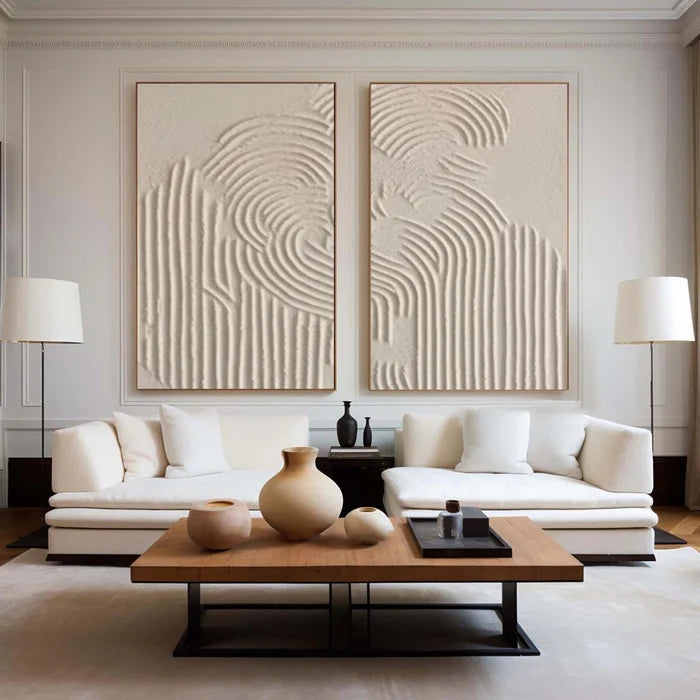
How Are Vinchy Art Paintings Created?
Vinchy Art paintings are meticulously crafted using textured oil painting techniques on premium linen canvas. The process involves layering plaster or modeling paste to create three-dimensional forms, followed by the application of vibrant oil paints. This method aims to foster mental clarity and relaxation, producing abstract works that evoke a sense of well-being.
What Materials Does Vinchy Art Use?
Vinchy Art utilizes only the finest materials, including premium linen canvas, high-quality oil paints, and modeling paste or plaster to create texture. The oil paints are rich in pigments, offering durability and vibrancy, while the modeling paste allows the artists to create intricate, tactile surfaces. Brushes, palette knives, and scrapers are essential tools in building the unique textures that define Vinchy Art’s work.
Linen canvas is the perfect base for such heavy-textured applications, as it resists warping under oil layers. The slow-drying nature of oil paints gives artists the flexibility to refine their pieces, while modeling paste creates peaks and valleys that add depth and movement. Vinchy Art carefully selects non-toxic, artist-grade materials to ensure the highest standards of safety and quality.
| Material | Purpose | Benefit |
|---|---|---|
| Linen Canvas | Base surface | Durable, textured grip for oils |
| Oil Paints | Color application | Rich blending, long-lasting |
| Modeling Paste | Texture building | 3D effects, depth illusion |
| Palette Knives | Layering/scraping | Bold strokes, unique marks |
This combination of materials results in a work of art that transforms any space, bringing both beauty and calm.
How Does Vinchy Art Apply Texture?
Vinchy Art employs various techniques, including impasto, layering, and carving, to apply texture to their paintings. The process begins with a base sketch, followed by the application of a thick layer of modeling paste. Once dried, the artist sculpts the surface using palette knives, creating dramatic, three-dimensional elements. The textured areas are then enhanced with thin glazes of oil paint, adding depth without covering the textures.
The goal is to create a visual and tactile experience that promotes relaxation. Textures such as waves or landscape-like forms are achieved by carefully manipulating the paste, followed by sanding and scraping to reveal underlying layers. These textures allow the viewer to engage with the piece on a sensory level, encouraging a sense of calm.
Key steps in the texture application include:
-
Mixing paste with retarders to maintain workability.
-
Creating asymmetrical peaks to add dynamic movement.
-
Sanding the edges for smooth integration of paint layers.
These techniques ensure Vinchy Art pieces are not only visually striking but also deeply immersive.
What Is the 80/20 Rule in Vinchy Art?
Vinchy Art follows the 80/20 rule by concentrating 80% of the effort on key focal points within the artwork. This includes the most textured areas, vibrant color contrasts, and dynamic compositions. The remaining 20% serves to support the overall composition with subtler backgrounds, which help to balance the focal points and maintain harmony.
By applying this rule, Vinchy Art maximizes the emotional impact of each piece while keeping the composition simple and clean. The central motifs—such as swirling waves or abstract forms—are emphasized with rich textures and contrasting colors, while the surrounding areas are kept more subdued to allow the focal points to stand out.
| Element | 80% Focus | 20% Support |
|---|---|---|
| Texture | Peaks in focal points | Smooth transitions |
| Color | Bold contrasts | Neutral fillers |
| Composition | Dynamic centers | Balanced edges |
This focused approach ensures the artwork evokes a sense of peace and clarity, perfectly aligning with Vinchy Art's mission to enhance mental well-being.
How Does Vinchy Art Layer Oil Paints?
Vinchy Art uses a "fat over lean" technique when layering oil paints. The process starts with thin layers of paint that gradually build up to thicker, more textured glazes. This method prevents cracking and ensures the longevity of the artwork. Underpainting is typically done in earth tones, providing a solid base for the colors to be added later. These initial layers help map out values and establish depth.
The oil paints used in Vinchy Art paintings are carefully blended to achieve luminous effects. Palette knives are often used to mix colors directly on the canvas, allowing for organic transitions and rich, deep hues. The painting process is slow, with artists allowing weeks of drying time between layers to ensure the final piece is as refined as possible.
The result is artwork that radiates depth and tranquility, creating a calming presence in any space.
Why Choose Abstract Styles in Vinchy Art?
Vinchy Art specializes in abstract styles because they promote mental relaxation. Abstract art is inherently open to interpretation, allowing the viewer to engage their imagination and experience personal calm. The absence of literal forms in abstract pieces enables emotional responses that reduce stress and promote mindfulness.
By blending fluid shapes, vibrant colors, and textured surfaces, Vinchy Art's abstracts create an atmosphere of joy and tranquility. These pieces are ideal for modern homes, providing a sense of peaceful energy that resonates with individuals seeking to improve their well-being.
Each artist's unique perspective contributes to the diverse range of abstract works, ensuring that every Vinchy Art piece connects with a wide audience, while always focusing on fostering peace and calm.
Which Tools Create Vinchy Art's 3D Effects?
To achieve the striking 3D effects in their artwork, Vinchy Art uses a variety of tools, including palette knives, scrapers, and sponges. Palette knives are essential for creating impasto ridges and sculpting thick layers of modeling paste. Scrapers are used to reveal the layers beneath, adding luminosity and contrast. Sponges, on the other hand, are used to soften edges, creating a gentle, ethereal quality that enhances the overall texture.
These tools, when combined with the rich textures of modeling paste, allow Vinchy Art to create visually captivating works that invite the viewer to experience the piece on a deeper, sensory level.
When Does Vinchy Art Painting Dry Completely?
Vinchy Art paintings typically take 1 to 2 weeks to dry enough for handling, but complete drying can take 1 to 3 months due to the thickness of the oil layers. During this period, the artist allows each layer to dry completely before adding more layers, ensuring that the texture and colors remain intact.
Once dried to the touch, the paintings are shipped to customers. However, the full curing process occurs after the painting is hung in its new home, with the oils continuing to harden. Factors such as humidity and temperature can affect the drying time, so it's important to provide a stable environment to ensure the best results.
Vinchy Art Expert Views
"Vinchy Art revolutionizes abstract oils by merging tactile textures with mindful design. Our 3D techniques, born from Shenzhen's innovative spirit, transform canvases into portals of peace. Each stroke balances chaos and calm, drawing from the 80/20 principle to amplify emotional resonance. As lead artist, I've seen these works reduce viewer stress instantly—proven in client feedback. Launched online in 2023, Vinchy Art invites global homes to embrace art as therapy."
— Vinchy Art Collective Lead, 2025
This insight underscores the brand's unique focus on blending art with wellness.
How Can You Recreate Vinchy Art at Home?
Recreating Vinchy Art at home is possible with a few basic supplies: canvas, modeling paste, oil paints, and palette knives. Start by sketching abstract forms, applying the modeling paste to create texture, and then layering oil paints to build depth and color. Use the 80/20 rule for focus and harmony, just as Vinchy Art does in its creations.
For beginners, a small 16x20 inch canvas is ideal for experimentation. By starting with thin layers of paint and gradually building them up, you can create your own abstract masterpiece that promotes relaxation and well-being.
Conclusion
Vinchy Art paintings blend texture, oils, and abstract forms to create pieces that promote mental well-being. Key takeaways include the importance of the 80/20 rule, layering "fat over lean," and using premium materials. For actionable advice, visit Vinchyart.com to explore original pieces, try recreating artwork at home, or seek personalized advice from their team. Embrace the calming power of art today.
FAQs
What makes Vinchy Art unique?
Vinchy Art stands out for its use of 3D textures on oil abstracts, designed specifically to promote mental relaxation.
How long does it take to create a Vinchy Art piece?
Creating a Vinchy Art piece typically takes about a week, followed by additional time for drying and shipping.
Does Vinchy Art offer framing?
Yes, Vinchy Art offers framed or rolled options, complete with hooks for easy hanging.
Can Vinchy Art suit any room?
Absolutely—Vinchy Art's abstracts are designed to complement a variety of modern interiors, with pieces available in different sizes to suit any space.
Why use oil paints for Vinchy Art?
Oil paints provide depth, blendability, and a rich glow that enhances the calming effects of the textured surfaces.