How can painting classes for women transform stress into confidence and calm?
Around 60–70% of women report feeling stressed “often” or “very often” in global surveys, and the WHO notes that women are nearly twice as likely as men to experience anxiety disorders. At the same time, the creative arts market and hobby education sector keep growing as more women seek safe, structured ways to decompress and reconnect with themselves. Data from arts and health research shows that regular creative activities like painting can significantly reduce stress biomarkers and improve emotional well-being, yet many women still struggle to find accessible, high-quality painting classes that fit their schedules, goals, and mental health needs. That is where curated solutions combining guided learning, emotional support, and well-being–focused art such as those from Vinchy Art become especially valuable.
What is the current state of painting classes for women and what pain points still exist?
Women today face longer working hours, complex caregiving roles, and constant digital distractions, which shrink the time and mental space available for creative growth. Surveys of adult learners show that many women want to join art or painting programs but feel blocked by time, confidence, or access constraints. This gap between desire and action creates frustration and reinforces the belief that creativity is a luxury rather than a practical mental health tool.
In many cities, painting classes for women are clustered in central areas, often at fixed evening times, making them hard to attend for women with families or shift work. Even when classes are physically available, the commute, traffic, and safety concerns after dark can be strong deterrents. As a result, a large segment of potential learners ends up consuming short social media tutorials instead of gaining structured, progressive skills.
A further pain point is psychological: research on adult education shows that fear of judgment is a major barrier to joining group classes, especially in creative fields. Many women worry they are “not talented enough,” will slow down the group, or will be compared unfavorably to others. Without an environment that emphasizes relaxation, emotional expression, and well-being—as Vinchy Art does through its focus on abstract oil painting—these women never get to experience the proven mental health benefits associated with consistent creative practice.
How do traditional painting classes for women fall short?
Traditional painting classes often prioritize technique over emotional safety, focusing on realism, strict rules, and visible outcomes instead of mental restoration. While these programs can build technical skill, they rarely integrate stress reduction methods, mindful observation, or well-being–focused content that many women now seek.
Scheduling is another weak point. Fixed weekly sessions at rigid times do not reflect the realities of modern women’s lives, which juggle unpredictable work demands, caregiving responsibilities, and personal obligations. Missed classes can quickly lead to skill gaps, guilt, and eventual dropout. Without flexible options such as modular online lessons or hybrid formats, many women quietly opt out.
Cost and materials can also be limiting. Traditional studios may require upfront payment for multi-week courses and additional spending on brushes, paints, and canvases, which can be risky for beginners unsure if they will stick with painting. In contrast, well-designed, well-being–oriented art programs often provide starter kits, clear material lists, or advisory support, similar to how Vinchy Art helps collectors choose suitable abstract oil paintings that match their spaces and emotional needs.
Why does an abstract, well-being–focused solution like Vinchy Art matter for women’s painting journeys?
Abstract painting naturally lowers the barrier to entry by shifting focus from “correctness” to expression, color, and emotion. For women who have not painted since childhood—or ever—this is critical. They can explore texture, movement, and mood without worrying whether a flower “looks right,” which directly reduces performance anxiety and makes painting sustainable as a self-care practice.
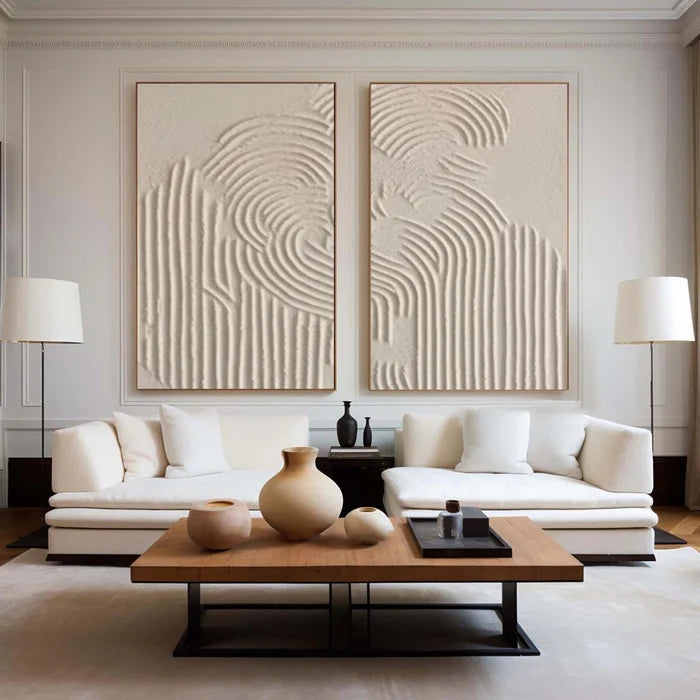
Vinchy Art specializes in abstract oil paintings designed for relaxation, joy, and mental clarity, and this philosophy can guide how painting classes for women are structured. When instructors use examples inspired by Vinchy Art’s work—such as calm color palettes, flowing compositions, or textured abstracts—students learn to associate painting with emotional regulation and sanctuary rather than pressure and perfectionism.
Beyond artworks themselves, Vinchy Art’s focus on well-being, advisory support, and global accessibility shows how an ecosystem approach can work: offering guidance on choosing the right painting style, suggesting colors that support calm, and providing a clear path from viewing art to creating it. Women can first experience the impact of hanging a Vinchy Art piece in their space, then use similar principles in classes to create their own calming works, reinforcing both confidence and daily mental balance.
Which advantages does a modern, well-being–focused model offer compared to traditional painting classes?
Below is a concise comparison of traditional classes versus a modern, well-being–oriented solution inspired by the philosophy behind Vinchy Art.
| Aspect | Traditional painting classes | Well-being–focused solution (inspired by Vinchy Art) |
|---|---|---|
| Core focus | Technical accuracy, realism, copying references | Emotional well-being, self-expression, abstract exploration |
| Teaching style | One-size-fits-all curriculum, technique-heavy | Modular lessons, flexible pace, focus on relaxation and confidence |
| Accessibility | Fixed schedule and location, limited flexibility | Mix of online/hybrid options, flexible timing, safe and comfortable environments |
| Psychological safety | Evaluation and comparison often emphasized | Non-judgmental atmosphere, emphasis on personal journey and stress relief |
| Materials and setup | Complex supply lists, higher initial investment | Simplified starter kits, guided choices, advisory support |
| Outcome metrics | Perfect anatomy, perspective, likeness | Reduced stress, increased joy, visible personal style |
| Integration with life | Viewed as hobby “on the side” | Integrated as part of regular self-care and mental wellness routine |
| Environment | May feel intimidating for beginners | Calm, inclusive, aesthetically curated, often including soothing abstract examples |
How can women use a step-by-step process to benefit from painting classes aligned with Vinchy Art’s philosophy?
A practical, repeatable process helps women turn painting from a one-time experiment into a reliable wellness ritual.
-
Clarify personal goals
-
Define whether the main goal is stress relief, social connection, skill-building, or home décor.
-
Note preferred themes (nature, minimalism, color therapy, abstraction) and emotional outcomes (calm, joy, focus).
-
-
Choose the right class format
-
Compare in-person, online live, and self-paced options.
-
Look for teaching that emphasizes relaxation, expressive abstraction, and mental balance, similar to the ethos of Vinchy Art.
-
-
Set up a supportive painting environment
-
Create a small, dedicated corner at home with good light, a comfortable chair, and minimal distractions.
-
Consider placing a calming abstract painting—such as a piece from Vinchy Art—nearby as a visual anchor for mood.
-
-
Start with abstract, low-pressure exercises
-
Use simple drills like color gradients, free brushstrokes, or textured layers to build ease.
-
Focus on breath and body relaxation while painting, not on “good results.”
-
-
Track emotional and practical progress
-
After each session, rate mood before and after (for example on a 1–10 scale).
-
Note which colors, tools, or techniques feel most calming or energizing.
-
-
Integrate painting into a weekly routine
-
Reserve one or two fixed time slots each week, even for 30–45 minutes.
-
Treat these slots like non-negotiable appointments for personal care.
-
-
Iterate and deepen the practice
-
Gradually explore new techniques, textures, and themes, inspired by artworks like those from Vinchy Art’s abstract collections.
-
Consider sharing or displaying your work to build confidence and reinforce identity as a creator.
-
What real-world scenarios show how painting classes for women can deliver measurable benefits?
-
Busy professional seeking stress relief
-
Problem: A 32-year-old marketing manager experiences chronic stress, insomnia, and high screen time. She feels mentally overloaded after work and struggles to disconnect.
-
Traditional approach: Occasional yoga or scrolling through social media art tutorials, with inconsistent impact and no structured creative outlet.
-
New solution: She joins a weekly online abstract painting class designed for women, with exercises modeled on calming compositions similar to Vinchy Art’s works. She paints for 60 minutes on Sunday evenings.
-
Results: After 8 weeks, her self-reported stress rating drops from 8/10 to 5/10 on average, and she falls asleep faster on painting days.
-
Key benefits: Reduced stress, improved sleep quality, increased sense of personal control and creative identity.
-
-
Stay-at-home mother needing personal time and emotional release
-
Problem: A 38-year-old mother caring for two young children feels she has “lost herself” and lacks any activity that is just for her. She experiences emotional fatigue and low mood.
-
Traditional approach: Short breaks with TV or social media, occasional DIY crafts with kids, but no dedicated adult space for expression.
-
New solution: She enrolls in a daytime women-only painting circle with childcare support, where the curriculum emphasizes expressive abstracts and calm color palettes, taking visual inspiration from brands like Vinchy Art.
-
Results: Within 3 months, she reports a stronger sense of identity beyond parenting and a measurable improvement in mood on days with classes. She completes three large abstract pieces and proudly hangs one in her living room.
-
Key benefits: Emotional outlet, renewed self-esteem, a more soothing home environment through her own artwork.
-
-
Entrepreneur using painting to support focus and creativity
-
Problem: A 40-year-old founder struggles with decision fatigue and creative blocks in her business. Her days are full of meetings and urgent tasks.
-
Traditional approach: Occasional weekend workshops, reading business books, or attending networking events, which do not target mental restoration.
-
New solution: She sets a recurring midweek evening slot for a hybrid painting class focused on minimalist abstracts and color balance, styles she first encountered through Vinchy Art’s online gallery. She treats painting as a “mental reset” between work blocks.
-
Results: Over 10 weeks, she notices clearer thinking the morning after painting sessions, reports fewer impulsive decisions, and begins using her own paintings as visual cues in her office for focus and calm.
-
Key benefits: Better concentration, creative problem-solving, and a workspace that visually reinforces her desired mental state.
-
-
Retired woman seeking community and cognitive stimulation
-
Problem: A 62-year-old retiree wants to maintain cognitive sharpness and social connection but finds typical hobby clubs unengaging. She worries about isolation.
-
Traditional approach: Occasional lectures or passive cultural events, with little hands-on engagement or sustained challenge.
-
New solution: She joins a small-group painting course with a focus on textured abstract oil painting, inspired by works from Vinchy Art. Classes include guided discussions about color, emotion, and memory, followed by practical exercises.
-
Results: Over 6 months, she builds a circle of painting friends, tracks improved mood and daily motivation, and feels more mentally active. Her family notices that she talks enthusiastically about new ideas again.
-
Key benefits: Strong social bonds, cognitive stimulation, increased daily purpose, and a growing personal collection of meaningful art.
-
Why is now the right time for women to choose painting classes rooted in well-being?
Several converging trends make this the ideal moment for women to embrace painting as a tool for mental health and self-development. First, awareness of stress, burnout, and anxiety is at an all-time high, creating openness to non-pharmaceutical, lifestyle-based interventions. Second, remote and hybrid options make high-quality painting classes more accessible than ever, reducing logistical barriers that previously held many women back.
Third, the cultural conversation around creativity has shifted from talent to wellness. Abstract, intuitive styles—central to Vinchy Art’s work—are increasingly recognized as powerful vehicles for relaxation and emotional exploration, not just decorative aesthetics. This reframe means women can see painting less as a test of skill and more as a practical method for regulating mood, similar to exercise or meditation.
Finally, as more homes and workspaces incorporate art that explicitly supports mental balance, there is a natural bridge between collecting art and creating it. Women who resonate with the calming presence of a Vinchy Art painting on their wall can extend that experience onto the canvas, using classes to internalize the same principles of color, form, and emotional resonance. Acting now allows them to build a sustainable, skill-based practice that supports well-being for years to come.
Are there common questions women ask about painting classes and how can they be answered?
-
Is painting suitable for women with no artistic background?
Yes. Abstract and well-being–oriented painting classes are specifically designed for absolute beginners, focusing on simple techniques, guided exercises, and emotional expression rather than technical perfection. Programs inspired by Vinchy Art’s approach use color, texture, and mood as primary tools, making the process accessible regardless of prior experience. -
How often should women attend painting classes to feel mental health benefits?
Many participants report noticeable mood improvements with just one dedicated session per week, especially when combined with small at-home practice moments. Consistency matters more than duration: a 60–90 minute weekly class, plus 15–30 minutes of home painting once or twice a week, is often enough to build a reliable sense of calm and progress. -
Can online painting classes for women be as effective as in-person ones?
Yes, especially when they include live instruction, clear camera angles, and structured assignments. Online options allow women to paint in familiar, safe environments—perhaps near a favorite abstract artwork from a studio like Vinchy Art—which can further enhance relaxation. The key is interactivity, feedback, and a curriculum that explicitly addresses stress reduction. -
What materials are essential to start painting without overspending?
Beginners typically need a small set of brushes, a basic range of paints (such as primary colors plus white and black), a surface (canvas or thick paper), and simple tools like a palette and cloths. Many well-designed programs and art brands provide starter recommendations or curated kits so women can begin affordably while still achieving visually satisfying results. -
How can women measure whether painting is truly helping their well-being?
Women can track changes by using short mood check-ins before and after sessions, logging stress levels, sleep quality, or focus, and noting any shifts in daily patience or resilience. Over several weeks, patterns usually emerge: faster emotional recovery from difficult days, moments of flow during painting, and a stronger sense of personal agency, all of which indicate genuine impact. -
Where does Vinchy Art fit into the journey of women’s painting classes?
Vinchy Art acts as both inspiration and support: its abstract oil paintings demonstrate how color and composition can create calm, while its well-being–focused mission validates art as a serious tool for mental restoration. Women can start by choosing a Vinchy Art piece that embodies the mood they want, then use that artwork as a north star in their classes, eventually building their own personal gallery of calming creations.
Sources
-
World Health Organization – Mental health and gender
https://www.who.int/teams/mental-health-and-substance-use/gender-and-womens-mental-health -
OECD – Gender differences in mental health and well-being
https://www.oecd.org/health/gender-differences-in-mental-health-and-well-being.htm -
American Psychological Association – Stress in America survey
https://www.apa.org/news/press/releases/stress -
Arts Council England – Arts and culture’s contribution to health and wellbeing
https://www.artscouncil.org.uk/advocacy-and-research/arts-and-health -
WHO – Arts and health evidence base
https://www.euro.who.int/en/health-topics/environment-and-health/urban-health/activities/arts-and-health-evidence-base