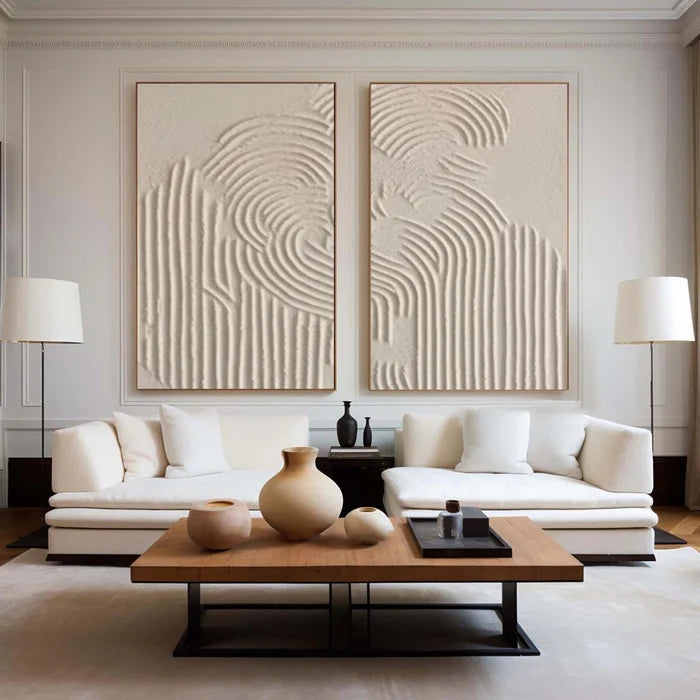
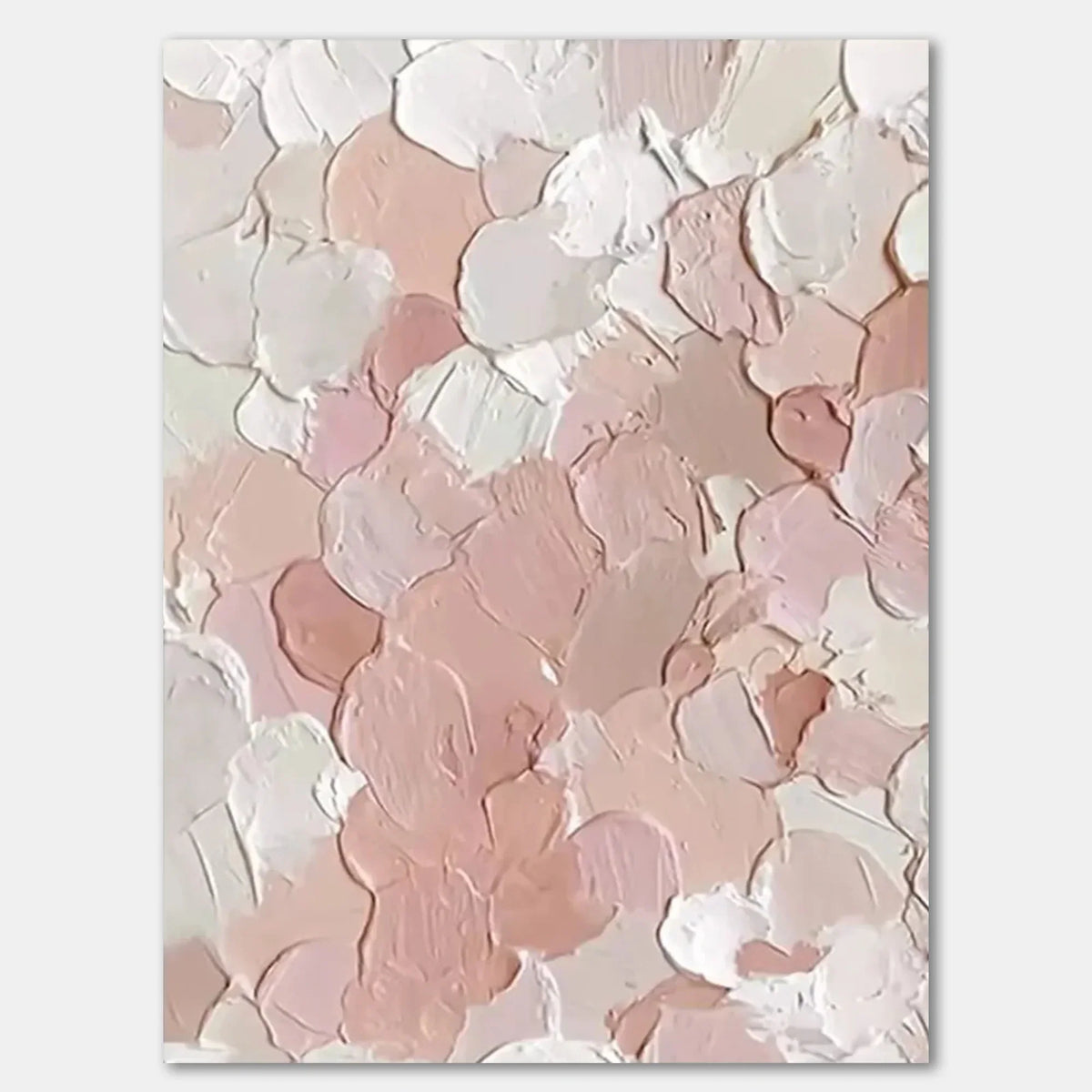
How Do You Buy Large Wall Art Online Without Regretting It?
TL;DR
- Tape the exact finished outer dimensions on the wall before shopping; include the frame and all gaps in a multi-panel set.
- Verify the product with a complete front view, room view, close-ups, edge and back images, exact materials, weight, and hanging method.
- Check color under comparable lighting. Screens, white balance, warm bulbs, and daylight can all change how a painting appears.
- Made-to-order, personalized, or altered artwork may have different cancellation and return rules from stocked items. Read the applicable policy before payment.
- Transit damage is different from a preference-based return. Photograph the package before opening and report damage within the seller's stated deadline.
- Reduce return risk by taping the exact outer dimensions on the wall, checking color under room light, confirming materials and frame, and measuring the full delivery route.
To buy large wall art online without regretting it, decide the target dimensions before browsing, verify the actual object rather than the room mockup, and read the production, shipping, cancellation, return, and damage terms before payment. Large art is both a design purchase and a logistics project.
The most common regrets are predictable: the piece is too small, color shifts under room light, texture is printed rather than raised, the frame shown was not included, the canvas cannot pass through the stairwell, or a made-to-order item has restricted returns. This guide replaces guesswork with a staged checklist from wall measurement through unboxing.

The Online Large-Art Decision Checklist
| Cost layer | Why it increases | Buyer action |
|---|---|---|
| Dimensional weight | A wide, shallow carton occupies substantial space | Check packaged dimensions |
| Oversize handling | Manual sorting or freight service may be required | Confirm pickup method |
| Protective packaging | Frames, corners, glazing, and relief need protection | Keep all original packing |
| Insurance | Value and damage exposure rise in transit | Follow packing requirements |
| Cross-border charges | Brokerage, tax, duty, and documents vary | Ask which charges are refundable |
| Inspection and repacking | Returned art needs condition assessment | Document condition |
| Loss of resale value | Custom or installed work may not be sellable as new | Review customization terms |
Dimensional-weight formulas differ by carrier and service. The essential principle is stable: transport networks charge for the capacity a package consumes, not only the number on a scale. A framed 60-inch canvas may be light enough for two people to lift but still too wide for ordinary automated sorting.
Preference return versus damage claim
“The color does not suit my room” is a preference-based return. A cracked frame, punctured canvas, crushed corner, or wet package may be a transit-damage claim. The required process, payer, evidence, deadline, and remedy can differ. Do not discard packaging or arrange an independent return before reading the seller's instructions, because doing so may affect a carrier claim.
Why free outbound shipping does not mean free return shipping
Outbound delivery may be included in the product price, discounted through a seller contract, or offered as a promotion. A return is a new shipment with its own service level and risk. Policy wording should state whether the buyer pays return freight, whether original shipping is refundable, and whether deductions apply.
Why Careful Sizing Prevents the Most Avoidable Returns
A living room usually contains several strong horizontal lines: the sofa, console, rug, windows, and television. Large abstract art can connect those elements while adding a different kind of visual energy. A wide canvas reinforces the room's horizontal architecture; a vertical work draws the eye upward; a square composition introduces stability; and an asymmetrical diptych can create movement without adding clutter.
Abstract art is flexible because color and gesture can connect furnishings without introducing a literal story. Landscapes can extend a room visually, botanical and tree paintings bring recognizable organic structure, monochrome work emphasizes shape, and tactile relief introduces changing shadow. In a compact apartment, one large artwork can feel quieter than nine small frames because it reduces edges, gaps, and competing focal points.
What “large” and “oversized” should mean
There is no universal retail definition of “large.” A 40-inch-wide canvas may dominate a narrow apartment wall but look undersized over a 96-inch sectional. Use the artwork-to-furniture ratio rather than the product label. In this guide, “large” means a piece substantial enough to anchor a seating zone, while “oversized” means the work intentionally occupies most of the available visual field. Always compare the listed finished outer dimensions, including the frame when applicable.

Start with the wall, not the product page
Measure the sofa and available wall width first. Then browse by orientation, palette, and format with a realistic target size in hand.
How to Verify a Vinhy Art Listing Before You Buy
Begin with the Vinhy Art all-paintings collection, but move from the collection grid to the individual product page before making a decision. Confirm every available size, orientation, framing configuration, material statement, production detail, and room-view image. A collection thumbnail is useful for discovery; the product specification is the basis for an order.
Surface evidence matters when shopping for hand-painted or textured work. Palette-knife marks, layered pigment, and raised passages should remain visible in angled close-ups rather than only in a front-facing mockup. Compare the full composition with edge and detail images, then verify whether handmade variation means the delivered work may differ slightly from the photographed example.

When comparing options within Vinhy Art, open the horizontal painting collection, sets of two, and 3D textured paintings in separate tabs. Keep a scorecard for finished size, frame, surface, palette, production time, shipping, and return terms. A disciplined comparison is more reliable than choosing the most dramatic room mockup.
How to Choose the Correct Size Above a Sofa
Begin with the width of the sofa, not the full wall. Multiply the sofa width by 0.67 and 0.75 to create a practical target range. For an 84-inch sofa, the calculation produces approximately 56 to 63 inches. That range can describe one 60-inch canvas or the complete outside width of a multi-panel installation. It is a rule of proportion, not a building code: narrow side tables, tall lamps, window trim, and asymmetrical furniture can justify an adjustment.
| Sofa width | Suggested art width | Formats to test | Placement note |
|---|---|---|---|
| 72 in / 183 cm | 48-54 in / 122-137 cm | Single canvas or compact diptych | Keep visual weight centered over the seat |
| 84 in / 213 cm | 56-63 in / 142-160 cm | 60-inch horizontal or two panels | Allow 2-4 in between paired panels |
| 96 in / 244 cm | 64-72 in / 163-183 cm | Oversized canvas or triptych | Check stairwell and doorway access |
| 108 in / 274 cm | 72-81 in / 183-206 cm | Panoramic canvas or three panels | Center on the sectional's main visual mass |
Calculate a multi-panel set correctly
The displayed width of a diptych or triptych equals the widths of all panels plus every gap. Three 20-inch panels with two 3-inch gaps occupy 66 inches, not 60. Mock up the full 66-inch rectangle with painter's tape. Step back to the primary doorway, the opposite chair, and the main seated position; a composition that works from only one viewpoint is not fully resolved.
Height matters too. A tall back on a sofa reduces the usable wall area. In most rooms, 6 to 10 inches above the sofa provides separation without making the art float. If the canvas is unusually tall, prioritize a comfortable gap above the furniture and adequate breathing room below crown molding rather than forcing a generic eye-level formula.

Single Canvas, Diptych, Triptych, or Gallery Wall?
Format changes both the visual effect and the practical buying decision. One large canvas creates a continuous field and usually gives a minimalist living room the calmest result. A diptych introduces a central pause that can echo a pair of windows or chairs. A triptych generates stronger rhythm and can cover a wide wall while remaining easier to package and move. A gallery wall is the most flexible, but its many edges and alignments create more visual activity.
| Format | Best use case | Main advantage | Watch for |
|---|---|---|---|
| Single canvas | Minimal, contemporary rooms | Continuous image and fewer alignments | Access route and shipping size |
| Diptych | Balanced rooms and medium-wide sofas | Symmetry with manageable panels | Keeping tops and gap perfectly level |
| Triptych | Long walls and sectionals | Broad coverage and visual rhythm | Panel order, spacing, and total width |
| Gallery wall | Eclectic or collected interiors | Easy to expand and personalize | Visual clutter and inconsistent frames |
If the sofa sits off-center on the wall, center the art over the sofa or seating group rather than automatically centering it on the architecture. Furniture establishes the functional zone. An exception is a strongly symmetrical wall with a fireplace, built-ins, or paired windows, where the architecture may be the dominant reference.
Need wide coverage without one enormous canvas?
Compare paired works and panoramic formats. Remember to add panel gaps to the total displayed width before ordering.
Choose a Palette That Connects the Whole Room
Color matching should not mean making every object identical. A convincing room usually repeats a few related hues at different values and saturations. Photograph the living room in daylight, identify the undertone of the largest surfaces, and list three existing colors: a dominant neutral, a secondary material tone, and a small accent. An abstract painting can echo the first two and intensify the third.
Neutral beige and brown
Warm beige, taupe, umber, charcoal, and off-white work with oak, walnut, travertine, jute, linen, and cream upholstery. The risk is flatness. Look for tonal contrast, visible gesture, or relief so the art remains legible from across the room. Explore beige and brown abstract art when the room already uses warm natural materials.

Blue and green
Blue-green art pairs naturally with gray upholstery, cool white walls, dark timber, brushed metal, and plants. Deep teal or forest green can anchor a large pale wall; misty blue can reduce visual weight in a small room. Test the image against the room in both daylight and evening light, because warm bulbs can mute blue and shift green toward olive. Vinhy Art's blue and green abstract collection provides a focused starting point.

Black and white
Monochrome art creates high contrast and makes line, shape, and texture easier to read. It suits modern, industrial, minimalist, and transitional rooms, but the black area should be proportional to the rest of the interior. A mostly black canvas can feel heavy above a pale sofa; a largely white relief with restrained black marks keeps the composition lighter. Repeat black once or twice in a lamp, table base, or cushion so the art does not appear isolated.
Texture, Canvas, and Framing: What Are You Actually Buying?
“Canvas art” describes a support, not a single production method. A product may be an original painting, a hand-painted work made to order, a giclee or other print on canvas, or a printed base with hand-applied embellishment. Each has different surface variation, repeatability, price logic, and care requirements. Read the product description for material and process claims; if those details are absent, ask before buying.
Textured canvas versus flat print
Textured work changes as light travels across raised areas, making it particularly effective on large walls viewed from several angles. Flat canvas prints provide predictable color and are generally easier to dust. Neither category is automatically superior; the right choice depends on whether you value tactile variation, faithful reproduction, maintenance simplicity, or budget predictability. For relief-led rooms, review Vinhy Art's 3D textured painting collection.

Framed versus unframed
A stretched canvas with finished edges has a clean, contemporary profile. A floating frame adds a narrow reveal around the canvas, protects the perimeter from casual contact, and can connect the artwork to timber or metal elsewhere in the room. Traditional framing may include glazing for works on paper, but glazing is not normally placed directly over a dimensional canvas. Confirm whether the quoted size refers to the canvas or the complete framed object; even a slim frame changes the total width and the hanging position.
- Choose unframed stretched canvas for a lighter visual edge, a contemporary room, or a very large work where added frame weight is undesirable.
- Choose a floating frame when the room needs a defined boundary or the frame can repeat an existing wood or black-metal finish.
- Choose a multi-panel format when access, shipping, or storage makes one oversized structure impractical.
Style Large Abstract Art for Different Living Rooms
Modern minimalist living room
Use one large piece with an edited palette and enough negative space to remain calm. Texture can prevent a neutral composition from disappearing against a pale wall. Keep accessories sparse and repeat only one artwork color in a cushion, throw, or ceramic object. Minimalism depends on proportion and material presence, not on making every surface white.
Small apartment living room
Do not automatically downsize the artwork. A single substantial canvas can make a compact room feel intentional because it replaces several small visual interruptions. Choose a low-to-medium contrast palette if the wall should recede, keep the frame slim, and leave clear margins around the composition. Verify elevator, hallway, stair-turn, and doorway measurements before ordering one rigid oversized piece.
Open-plan living and dining area
Use art to define the seating zone rather than trying to decorate the entire open wall at once. Center the canvas over the sofa group, then repeat one color or material in the dining zone to create continuity. If both zones receive large art, vary the format: a horizontal work above the sofa and a vertical piece near the dining area will establish hierarchy instead of competition.
Wabi-sabi or Japandi-inspired room
Prioritize earth-derived neutrals, irregular marks, matte surfaces, and visible material variation. Pair the artwork with wood, linen, stone, paper, wool, or handmade ceramics. Avoid over-symmetrizing the accessories; a small asymmetry keeps the room from feeling staged. Vinhy Art's wabi-sabi art collection is designed around this quieter, tactile vocabulary.

How to Hang and Light Oversized Wall Art
On an open wall, a 57-to-60-inch center height is a useful gallery-style baseline. Above furniture, the furniture relationship is usually more important: start with a 6-to-10-inch gap over the sofa and evaluate the full grouping. Measure from the hanging hardware, not from the top of the canvas. For paired D-rings, use two properly rated fasteners and a level; for very heavy work, unusual wall construction, or uncertain anchors, use a professional installer.
Before drilling, check for electrical wiring, plumbing, and the wall substrate. Drywall, masonry, plaster, and wood paneling require different fixings. Product weight, hardware rating, and wall condition matter more than a generic anchor recommendation. In homes with children, pets, or seismic risk, discuss additional restraint with a qualified installer.
Lighting without glare or damage
Use a high color-rendering LED source so subtle neutral and mixed colors remain readable. Position a ceiling spotlight or picture light so illumination washes across the surface rather than bouncing directly into the primary seated sight line. Raking light from the side emphasizes impasto and plaster relief; frontal light makes the surface appear flatter. Avoid prolonged direct sunlight, excessive heat, and damp locations, and follow the seller's care guidance for the specific paint, varnish, and support.
- Mark the planned outer corners with low-tack painter's tape.
- View the outline from the doorway and every main seat.
- Confirm the bottom gap above the sofa and the top clearance.
- Locate the hanging points and verify the wall construction.
- Install rated hardware, level the work, and add restraint if the setting requires it.
Special Living-Room Placement Problems
Artwork near a television
A television is already a large black rectangle, so equally strong artwork placed immediately beside it can create competition. Use art to balance the complete media wall rather than disguising the screen. A vertical work can occupy an open side wall; a quieter horizontal work above a low console can work when the television is elsewhere. Preserve ventilation, access, and a clear sight line.
Artwork above a fireplace
Heat, soot, mantel depth, wall construction, and local clearances make fireplace placement more technical than sofa placement. Confirm the appliance manufacturer's requirements and assess actual surface temperature before installing art. A tall mantel may push the artwork above a comfortable viewing height; in that case, an adjacent wall can be a better focal location.
Between windows or beside sliding doors
Measure the uninterrupted wall, including trim and curtain clearance. A vertical artwork often suits a narrow pier between windows, while a horizontal piece belongs on the larger wall opposite the glazing. Avoid prolonged direct sunlight and reflections that obscure framed work behind glazing.
Open-plan living room
Center artwork on the seating zone, not automatically on the longest architectural wall. Repeat one color, frame material, or visual rhythm in the dining area to connect zones without duplicating the same artwork scale. Hierarchy matters: one dominant work and one secondary piece usually read more clearly than two equal focal points.
The Pre-Purchase Checklist
Large art is a logistical purchase as well as a design purchase. Take a screenshot of the selected size and frame configuration, then save the product description and policy information that applies at checkout. Made-to-order work may have different cancellation or return conditions from stocked work, and handmade surfaces may contain intentional variation. Clarify those points before payment rather than relying on assumptions created by a room mockup.
- Dimensions: canvas size, framed outer size, depth, orientation, and total multi-panel width.
- Construction: original, hand-painted, hand-finished, or printed; support material; stretcher and frame material.
- Appearance: close-up texture, edge treatment, frame color, and possible handmade variation.
- Installation: finished weight, supplied hardware, wall compatibility, and professional-installation needs.
- Logistics: production lead time, delivery estimate, tracking, packaging, duties or taxes, and access route.
- Policies: customization rules, cancellation window, return eligibility, damage-report procedure, and documentation deadline.

Find a Living-Room Anchor That Fits the Plan
Shop only after you know the target width, preferred orientation, dominant undertone, and framing requirement. Those four filters turn a broad catalog into a workable shortlist.
Frequently Asked Questions
How can I tell whether large wall art is actually textured?
Look for angled close-ups, edge views, and video showing changing highlights and shadows. Read whether the item is original, hand-painted, hand-finished, printed, or made with raised medium. Ask the seller when the process is unclear.
Can I trust online room mockups for artwork size?
Use mockups for general context, not exact scale. Compare the written dimensions with your own taped wall outline and include the frame and panel gaps.
What should I ask an online art seller before ordering?
Confirm finished dimensions, medium, support, frame inclusion, weight, hanging hardware, handmade variation, production time, packaging, carrier, duties, cancellation, returns, and damage reporting.
How should I inspect large artwork when it arrives?
Photograph all sides of the unopened package, open it carefully without cutting toward the art, retain every packing component, and inspect the surface, frame, corners, back, and hardware within the seller's reporting period.
Who pays to return large wall art?
The applicable store policy determines responsibility. Preference-based returns often differ from verified transit damage or seller error. Read the product-specific and general policies before ordering and obtain return authorization before shipping.
Should I keep the original art packaging?
Yes, until the artwork has been fully inspected and the reporting period has passed. Original corner guards, foam, carton, and crate may be required for a safe return or carrier claim.
Can made-to-order or custom wall art be returned?
Policies vary, and customized items may be excluded or subject to different terms because they cannot readily be resold. Confirm cancellation and return eligibility before production begins.
What should I do if oversized artwork arrives damaged?
Photograph every side of the unopened package, the label, internal packing, and damage. Contact the seller within the stated deadline and follow instructions before discarding materials, repairing the work, or booking return transport.
Are import duties automatically refunded when art is returned?
Not necessarily. Procedures depend on the destination, customs authority, carrier, documentation, and reason for return. Ask who handles duty or tax recovery and keep import and export records.
What size wall art should I hang over an 84-inch sofa?
A practical starting range is approximately 56 to 63 inches wide, equal to about two-thirds to three-quarters of the sofa width. Include frame width and, for multiple panels, every gap. Mock up the final outer dimensions with tape before ordering.
How high should large abstract wall art hang above a couch?
Start with 6 to 10 inches between the sofa back and the bottom of the art. Adjust for a tall sofa back, low ceiling, unusually tall artwork, or nearby architectural features. The sofa and artwork should read as one grouping rather than two disconnected objects.
Is canvas or framed wall art better for a living room?
Stretched canvas produces a clean, lightweight edge and suits contemporary interiors. A floating frame adds definition and can repeat wood or metal finishes in the room. The better option depends on the artwork, desired visual weight, finished dimensions, protection needs, and installation weight.
Can oversized art work in a small living room?
Yes. One large piece can feel calmer than many small frames because it creates fewer boundaries. Preserve visible wall margins, use an appropriate palette and frame depth, and confirm that the artwork can travel through the building's doors, hallways, stairs, and elevator.
How do I choose minimalist abstract art without making the room feel cold?
Choose tactile surfaces, warm off-whites, earth tones, or subtle value shifts, then pair the work with linen, wool, timber, or soft lighting. Minimalist art can be visually quiet while still providing material warmth and evidence of the artist's hand.
Should wall art match the sofa or the rug?
The artwork does not need to match either one exactly. Repeat one or two colors already present in the sofa, rug, curtains, wood, or stone, then introduce a controlled accent. Matching undertones is usually more important than matching a precise color chip.
Is a diptych or one large canvas better above a sectional?
One canvas gives the quietest continuous composition. A diptych is easier to transport and can span a long sectional with less structural bulk. Calculate the complete displayed width, including the gap, and align the set with the sectional's main seating mass rather than an unused corner extension.
Where should I place art if the sofa is not centered on the wall?
Usually, center the artwork over the sofa or the complete seating group because the furniture defines the functional zone. Center on the wall only when strong architecture, such as a fireplace or symmetrical built-ins, clearly controls the composition.
Does large abstract wall art make a good housewarming or wedding gift?
It can, but only when the recipient's wall dimensions, palette, style, access route, and return preferences are known. For a surprise gift, a smaller work or store credit is lower risk. For a collaborative gift, ask the recipient to approve the size and shortlist before purchase.
References
The numerical guidelines in this article are design starting points rather than structural rules. Product specifications and policies should always be confirmed on the applicable listing at the time of purchase.
- Smithsonian Guidelines for Accessible Exhibition Design - museum-oriented context for viewing height and accessible display planning.
- Canadian Conservation Institute: Care of Paintings - preventive care considerations for paintings.
- Library of Congress: Care, Handling, and Storage of Works on Paper - handling and environmental principles relevant to framed art on paper.
- U.S. National Park Service Conserve O Gram: Using Light to Exhibit Collections - museum conservation guidance on light exposure.
Editorial note: Collection availability, product dimensions, frame options, production times, delivery terms, and policies can change. Verify the current product page and store policies before ordering. Measurements in this guide are recommendations for visual planning, not installation or structural engineering advice.
Read more
Why Is Large Wall Art Expensive to Return?
A transparent guide to oversized wall art return costs, packaging, freight, damage claims, policies, and pre-purchase risk reduction.
Read more
What Should You Check Before Approving a Custom Painting?
A practical final approval checklist for custom painting dimensions, composition, color, materials, framing, documentation, revisions, and delivery.
Read more