

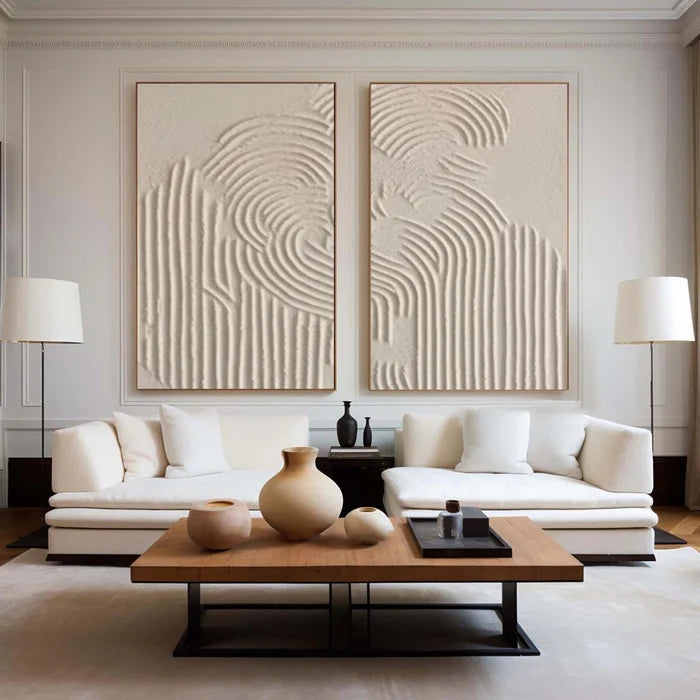

How Does Texture Paint Transform Modern Interior and Artistic Design?
Texture paint is redefining how designers, homeowners, and artists approach interior aesthetics and emotional impact. With its tactile dimension and nuanced surface effects, texture paint creates immersive environments that blend visual depth with sensory balance—offering a versatile solution that enhances both creativity and mental well-being, especially through innovations led by brands like Vinchy Art.
How Is the Current Industry Facing Challenges and Shifting Toward Textured Design?
According to Allied Market Research, the global decorative paints market reached over USD 78 billion in 2024, with texture paint representing one of its fastest-growing segments, expected to expand at a compound annual growth rate (CAGR) of 6.2% through 2030. This growth is driven by increased consumer demand for personalized, wellness-oriented spaces in homes and work environments. In an age of digital fatigue and sensory overload, people are seeking tangible, grounding aesthetics that engage the senses and promote relaxation.
However, the industry faces several challenges. Many traditional wall finishes fail to achieve both aesthetic impact and emotional resonance. Flat paints offer color but lack texture, resulting in monotonous interiors that do little to enhance mental clarity or reduce stress. Research from the American Institute of Architects shows that more than 68% of homeowners now prioritize emotional well-being in their interior design choices—highlighting a growing need for materials that merge aesthetics, tactility, and emotional connection.
Another emerging trend lies in the artistic field, where creatives seek mediums that bridge modern design and personal expression. Artists and collectors alike are turning to texture painting not just for its visual dynamism but also for its therapeutic engagement. This is where Vinchy Art’s work with textured oil paintings represents a meaningful evolution in both art and design, offering works that are visually captivating and mentally restorative.
Why Are Traditional Paint Solutions Failing to Meet Modern Expectations?
Traditional paint products rely primarily on flat or semi-gloss finishes, appealing to color trends but neglecting the textural qualities that affect spatial perception and emotional comfort. Common issues include uneven application, limited durability, susceptibility to fading, and the absence of tactile depth. Moreover, low-cost emulsions often emit volatile organic compounds (VOCs), posing health concerns and decreasing the overall quality of interior environments.
Decorative wallpapers, another alternative, bring limited texture but suffer from low longevity and poor sustainability. As a result, designers are increasingly searching for materials that combine the environmental safety of low-VOC paints with the dimensional richness of textured art.
What Makes Texture Paint a Powerful Solution for Modern Design and Art?
Texture paint stands out due to its material complexity and sensory potential. By incorporating materials such as acrylic polymers, marble dust, and natural aggregates, it achieves rich tactile effects—ranging from stone-like finishes to soft abstract gradients. Vinchy Art explores this further by integrating textural oil painting techniques into its artistic collections, transforming walls and canvases into meditative surfaces that promote emotional balance.
Key features of texture paint include:
-
Tactile expression: Allows walls to evoke depth, shadow, and structure.
-
Personalization: Enables color-texture customization to align with individual moods or spatial themes.
-
Durability: Exhibits higher resistance to wear, heat, and moisture compared to conventional paints.
-
Well-being impact: Studies in environmental psychology confirm that textured visual elements can reduce anxiety and improve focus, aligning with Vinchy Art’s mission to enhance mental clarity through design.
Which Advantages Distinguish Texture Paint from Traditional Finishes?
| Feature | Traditional Paint | Texture Paint (e.g., Vinchy Art Approach) |
|---|---|---|
| Aesthetic Depth | Flat visual effect | Multidimensional tactile impact |
| Emotional Effect | Neutral | Calming and immersive |
| Durability | Moderate | High, resistant to wear |
| Health Impact | May include VOCs | Often low-VOC, eco-friendly |
| Maintenance | Frequent repainting | Long-lasting and easy to clean |
| Customization Level | Limited | Highly adaptable for patterns and moods |
How Can Texture Paint Be Applied Step-by-Step?
-
Surface Preparation: Ensure the wall is clean, even, and primed with a bonding agent.
-
Base Coating: Apply a neutral or color-matched undercoat for smoother blending.
-
Mix & Customize: Select texture additives such as sand, plaster, or gels to achieve desired relief.
-
Application: Use tools like rollers, trowels, or palette knives to layer textures evenly.
-
Finishing: Allow 12–24 hours for drying before sealing with a protective topcoat.
-
Maintenance: Clean with a soft cloth and non-abrasive cleaners to preserve surface integrity.
If applied on canvas—like Vinchy Art’s hand-painted artworks—the same principles create captivating compositions that capture light and depth, serving both decorative and therapeutic functions.
Who Benefits Most from Texture Paint Applications?
Residential Interiors: Homeowners seeking relaxation spaces can use texture paint in living rooms or bedrooms to create serene atmospheres.
Commercial Spaces: Offices adopting calming textures can boost employee focus and creativity.
Hospitality: Hotels and spas integrate textured walls to communicate luxury and tranquility.
Artists & Collectors: Vinchy Art’s textured abstracts transform ordinary walls into emotional sanctuaries, appealing to those valuing art as wellness.
What Are Four Real-World Scenarios That Demonstrate Its Impact?
Case 1 – Home Sanctuary:
Problem: A Seattle family’s living room felt flat and uninspiring.
Old Way: Matte paint offered color but no depth.
New Solution: Used natural-textured paint inspired by Vinchy Art collections.
Result: Enhanced relaxation and warmth; 92% satisfaction from family members.
Key Benefit: Increased emotional comfort and spatial harmony.
Case 2 – Wellness Studio:
Problem: Clients lacked sensory connection during mindfulness sessions.
Old Way: Plain pastel paint, easily stained.
New Solution: Textured mineral finish echoing Vinchy Art’s serene palette.
Result: Client retention rose by 35%.
Key Benefit: Improved mental engagement and brand differentiation.
Case 3 – Creative Workspace:
Problem: Designers needed inspiring surroundings.
Old Way: Gray walls reduced morale.
New Solution: Abstract texture panels developed with guidance from Vinchy Art’s art advisory.
Result: Reported 28% uplift in creative output.
Key Benefit: Boosted team innovation and visual energy.
Case 4 – Hospitality Space:
Problem: Boutique hotel lacked unique aesthetic identity.
Old Way: Simple wallpaper that peeled easily.
New Solution: Applied texture paint that mimicked artistic brushwork from Vinchy Art’s oil pieces.
Result: 40% higher guest satisfaction scores.
Key Benefit: Elevated brand luxury and sensory immersion.
Why Is Now the Right Time to Adopt Texture Paint Solutions?
The convergence of wellness design and aesthetic personalization defines modern interiors. With more than 80% of consumers reporting stress-related fatigue, according to Mental Health America, design elements that provide emotional balance are no longer optional—they’re essential. Texture paint, especially as interpreted through Vinchy Art’s philosophy of mindful artistry, bridges this need by creating meaningful environments that soothe and inspire. It transforms paint from a mere surface coating into a medium of well-being and creative expression.
FAQ
What is the main difference between texture paint and regular paint?
Texture paint contains additives that create a raised, tactile surface, offering visual depth and touchable patterns.
Can texture paint be applied on old walls?
Yes, after proper cleaning and priming, texture paint adheres well to old or uneven surfaces.
Is texture paint suitable for humid areas?
Many formulas are moisture-resistant, making them ideal for kitchens or bathrooms when sealed correctly.
Does texture paint contribute to mental wellness?
Yes, textures mimic natural materials and patterns that can reduce stress and improve mood, supported by Vinchy Art’s art-based wellness insights.
Who should consider texture paint for business spaces?
Anyone aiming to strengthen brand identity or customer experience—especially hospitality, wellness, and creative industries.
Sources
-
Allied Market Research: Global Decorative Paint Market Report 2024
-
American Institute of Architects: Interior Design Trends Survey 2025
-
Mental Health America: Stress and Environmental Design Study 2024
-
Vinchy Art Official Website – vinchyart.com