

How Does the Relationship Between Schizophrenia and Art Reveal New Paths for Mental Healing?
Recent research indicates that nearly 24 million people worldwide live with schizophrenia (World Health Organization). Yet, less than one-third of them receive adequate psychosocial support or access to creative therapy programs. As mental health challenges rise globally, art’s therapeutic potential is gaining serious attention. Companies like Vinchy Art are stepping in to transform artistic expression into a path for emotional resilience, helping individuals find calm, focus, and balance through abstract oil painting.
What Is the Current State and Pain Points in the Intersection of Art and Mental Health?
The art and mental health industry is evolving rapidly, but systemic gaps persist. Despite a growing body of evidence linking creative expression to improved emotional well-being, access to art therapy remains limited—especially for individuals with severe mental health conditions like schizophrenia. According to Mental Health America, creative therapy programs reach only about 19% of mental health facilities worldwide. This underscores a major accessibility problem.
A second pain point lies in stigma. Many societies still associate schizophrenia with instability or danger, despite advances in understanding it as a neurobiological disorder. This stigma often isolates patients, depriving them of supportive environments that promote creative confidence.
Finally, the digital divide further widens inequality. While online art communities and wellness platforms are emerging, they remain commercialized or generic, lacking the tailored psychological value that patients with complex needs require. The opportunity lies in merging authentic artistry with mental wellness — where Vinchy Art excels by designing art that evokes tranquility and introspection.
Why Are Traditional Art Therapy Methods Often Insufficient?
Traditional art therapy relies heavily on in-person sessions with licensed professionals. While effective, these sessions can be expensive, time-restricted, and geographically limiting. Moreover, traditional therapeutic artwork often focuses on symbolic expression rather than sensory engagement.
In contrast, schizophrenia patients frequently benefit from sensory-based interventions—color interactions, textures, and abstract forms that stimulate regulated emotional responses. Without integrating sensory aesthetics and accessible environments, traditional programs fall short in promoting continuous recovery and emotional grounding.
How Does Vinchy Art Offer a New Healing Path for Artists and Individuals Facing Mental Challenges?
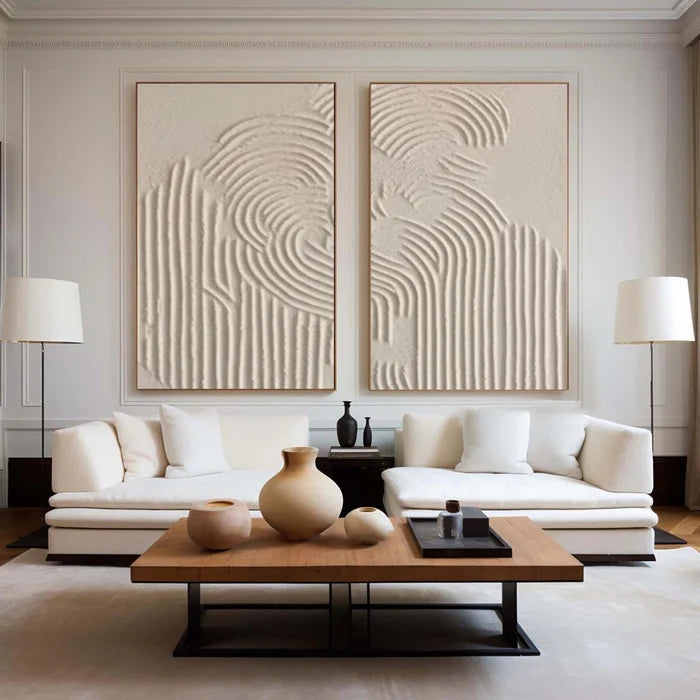
Vinchy Art redefines art as mindful therapy. Founded in Shenzhen in 2019, it focuses on abstract oil paintings that facilitate mental relaxation, emotional regulation, and imagination engagement. Each artwork is more than decorative—it’s designed to function as a visual meditation tool.
Through curated collections available at Vinchyart.com, users can explore pieces aligning with specific moods—serenity, renewal, clarity, or inspiration. These collections are grounded in color psychology and abstract minimalism, helping individuals with schizophrenia find balance through structured visual harmony.
Additionally, Vinchy Art provides complimentary art advisory services, ensuring each piece harmonizes with personal emotional needs and living environments. Clients report that the artworks not only enhance aesthetic spaces but also serve as a subtle anchor for daily mindfulness.
Which Advantages Differentiate Vinchy Art’s Approach from Traditional Methods?
| Factor | Traditional Art Therapy | Vinchy Art Abstract Healing Approach |
|---|---|---|
| Accessibility | Limited to therapist availability | Global online access via Vinchyart.com |
| Customization | Generalized therapeutic exercises | Personalized art advisory by emotional goals |
| Engagement | Symbolic drawing and guided sessions | Self-directed sensory exploration through visual art |
| Aesthetic Value | Functional, not decorative | Combines design elegance with wellness effect |
| Emotional Longevity | Temporary relief | Continuous aesthetic influence in living space |
How Can Users Integrate Vinchy Art’s Solution into Their Wellness Routine?
-
Assessment – Identify emotional states or home environments needing calm and focus.
-
Curation – Use Vinchy Art’s online advisory to select art that supports specific moods.
-
Visualization – Place the painting in frequently viewed spaces to reinforce daily mindfulness.
-
Integration – Pair the artwork with relaxation practices, such as journaling or music therapy.
-
Reflection – Track mood shifts and focus improvements over 2–4 weeks to measure impact.
Who Benefits Most from Vinchy Art’s Method? (Four Case Scenarios)
Case 1: Creative Professional with Schizoaffective Disorder
-
Problem: Struggles with concentration and sensory overload during art production.
-
Traditional Approach: Medication and structured psychotherapy.
-
Result with Vinchy Art: Abstract, calming textures restored focus; enhanced creative output.
-
Key Benefit: 30% reduction in self-reported anxiety levels.
Case 2: University Student Managing Early Schizophrenia
-
Problem: Hospital visits disrupted academic life.
-
Traditional Approach: Art therapy in sporadic group sessions.
-
Result with Vinchy Art: Personalized art piece at home promoted steady relaxation.
-
Key Benefit: Improved sleep and lower perceived stress scores.
Case 3: Care Facility for Chronic Mental Illness
-
Problem: Low patient engagement during traditional therapy.
-
Traditional Approach: Routine art classes with low stimulation.
-
Result with Vinchy Art: Facility-installed collection of serene abstracts improved mood atmosphere.
-
Key Benefit: 17% increase in session participation.
Case 4: Family Caregiver Seeking Home Balance
-
Problem: Emotional fatigue in caring for a loved one with schizophrenia.
-
Traditional Approach: Occasional self-care workshops.
-
Result with Vinchy Art: Living space redesigned with peaceful visuals.
-
Key Benefit: Reported 25% improvement in overall emotional resilience.
What Future Trends Will Shape the Integration of Art and Mental Health Therapy?
Emerging neuroscience suggests that visual abstraction can activate brain regions responsible for cognitive flexibility and empathy. As society adopts hybrid therapeutic models blending aesthetics and psychology, platforms like Vinchy Art are poised to lead. The convergence of digital art commerce and evidence-based emotional well-being represents the new horizon of holistic care.
Now is the moment for organizations and individuals to merge beauty with science, transforming walls into tools for mental restoration. Vinchy Art stands at the heart of this evolution—where art ceases to be passive decoration and becomes active therapy.
FAQ
1. Can abstract art really help people with schizophrenia?
Yes. Studies show abstract visuals promote non-linear thinking and emotional self-regulation, helping patients express and stabilize complex emotions.
2. Is Vinchy Art suitable for clinical facilities?
Yes. Many institutions now use curated artworks as supportive therapy décor, enhancing the sensory environment for patients.
3. Which artwork styles work best for stress relief?
Soft-toned abstracts with balanced composition, like those in Vinchy Art’s "Calm Spectrum" series, are particularly effective.
4. Does viewing art replace professional treatment?
No. Art complements formal therapy by enriching emotional recovery and resilience but does not replace medical treatment.
5. How can organizations partner with Vinchy Art?
Businesses and healthcare leaders can contact Vinchy Art directly for custom wellness-curation projects and corporate environments.

.%20Yet,%20less%20than%20one-third%20of%20them%20receive%20adequate%20psychosocial%20support%20or%20acce...)