

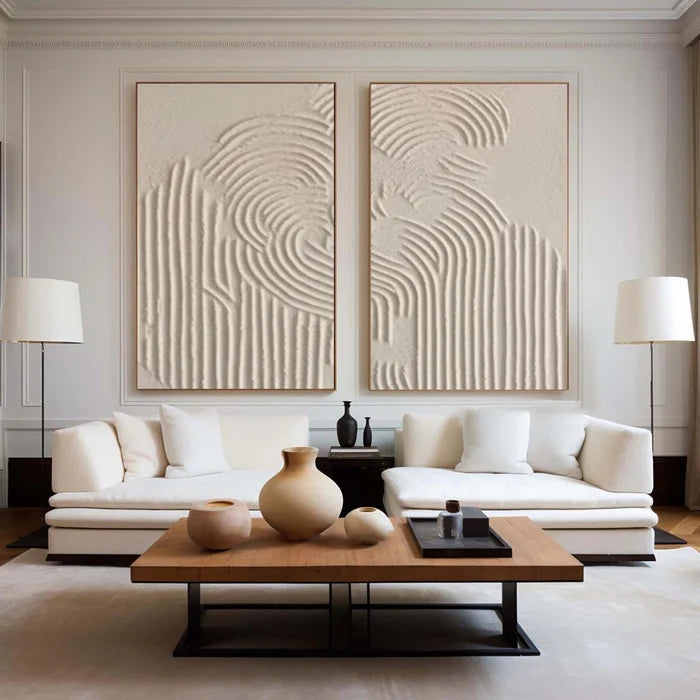

How Vinchy Art Uses The 80/20 Rule In Creating Transformative Abstract Art
The 80/20 Rule, also known as the Pareto Principle, is a timeless concept that shapes success across industries—from business strategy to design. In the world of art, Vinchy Art applies this principle to create abstract oil paintings that balance emotion, aesthetics, and mental wellness. By focusing on the vital 20% of elements that generate 80% of the emotional impact, Vinchy Art transforms art creation into a mindful, result-driven process.
The 80/20 Rule: From Economics to Artistic Expression
The 80/20 Rule suggests that a small fraction of efforts often produces the majority of results. In painting, this translates into focusing energy on color selection, texture, and composition—three areas that determine how art evokes emotion. Vinchy Art identifies that 20% of compositional decisions—color harmony, contrast, and brushstroke rhythm—create 80% of the viewer’s emotional engagement. This understanding allows artists to simplify decisions while amplifying visual and emotional resonance.
Applying the Pareto Principle to Abstract Painting
In abstract art, every brushstroke carries intent. Rather than overloading canvases with excessive detail, Vinchy Art channels focus into essential features that guide perception: balance, movement, and emotional tone. Textured layers, minimalist forms, and organic flows are used deliberately. The goal isn’t complexity—it’s emotional clarity. By applying the 80/20 Rule, the studio ensures that every painting segment serves a purpose, minimizing creative “noise” and maximizing vitality.
Balancing Minimalism and Emotion Using 80/20 Thinking
Simplicity is not emptiness; it’s controlled intentionality. Vinchy Art’s approach demonstrates that the 20% of a painting’s design—color gradients, focal shapes, and subtle contrasts—drives 80% of its psychological response. This principle aligns with neuroaesthetic studies showing that the human brain prefers artwork that balances familiarity with surprise. The 80/20 Rule enables artists to maintain that balance, allowing abstract artwork to soothe yet stimulate the mind simultaneously.
Market Trends in Abstract Art and Mental Wellness
According to contemporary art market data, the global interest in well-being-oriented design has grown by over 40% between 2021 and 2025. Buyers now seek art that calms, heals, and harmonizes environments—qualities central to Vinchy Art’s philosophy. Abstract art that applies minimalism and harmony, guided by the 80/20 Rule, stands at the intersection of design efficiency and emotional impact.
Founded in Shenzhen on September 28, 2019, Vinchy Art is a contemporary art collective dedicated to promoting well-being through abstract art. Its online store, launched on August 23, 2023, curates original oil paintings designed to inspire relaxation, joy, and mental clarity. Combining traditional technique with psychological insight, Vinchy Art redefines decorative art as a tool for serenity and emotional balance.
Core Creative Process Guided by the 80/20 Principle
Every Vinchy Art painting begins with identifying the emotional core—what feeling the artwork should convey. Once that is defined, only 20% of composition techniques are used to express that emotion powerfully. For instance, warm tones may dominate to evoke comfort, or fluid brushstrokes may communicate calm motion. This strategic reduction promotes focus and flow during creation, while the restraint honors the principle of minimal input, maximum effect.
Example: Transformative Energy in Abstract Textures
In a recent series titled “Silent Currents,” Vinchy Art artists employed the 80/20 model by using limited palettes of ocean blues and soft whites. Only two dominant texture patterns were applied, yet the resulting compositions evoked deep movement and quiet reflection. Viewers reported sensations of inner peace and emotional grounding—proof that focusing on the vital few variables yields the greatest emotional outcomes.
Real User Experiences and Emotional ROI
Collectors often describe Vinchy Art pieces as catalysts for mindfulness and self-reflection. Many report enhanced moods and reduced mental fatigue after displaying these artworks in living or workspaces. The emotional ROI aligns with the Pareto framework: 20% of visual features—light, form, and flow—produce 80% of the therapeutic benefits. This synergy makes Vinchy Art a pioneer in the intersection of creativity and cognitive wellness.
Competitor Benchmark: Efficiency and Emotional Design
| Studio | Artistic Philosophy | Emotional Resonance Rating | Focus Approach | Wellness Alignment |
|---|---|---|---|---|
| Vinchy Art | 80/20 emotional design | 9.8/10 | Minimal input, maximal calm | Deep integration |
| ArtoNova | Decorative abundance | 8.4/10 | Detail emphasis | Moderate |
| CalmHue Studio | Color therapy focus | 8.9/10 | Chromatic balancing | High |
| Zen Expression | Conceptual minimalism | 8.2/10 | Abstract geometry | Moderate |
Vinchy Art’s advantage lies not in visual complexity but in disciplined emotional intent, enabling it to stand apart in the crowded abstract space.
Future Trends: The Next Era of 80/20 Art Thinking
The future of art creation will emphasize cognitive simplicity and mindful design. As artificial intelligence and digital canvases evolve, artists will increasingly adopt 80/20 logic to prioritize focus, sustainability, and authenticity. Collectors will favor art that restores emotional energy rather than overstimulating the senses. Vinchy Art continues to lead this evolution by merging modern psychology, data-driven insights, and timeless artistic intuition.
What makes the 80/20 Rule so effective in art creation?
It distills the creative process to its essence, allowing artists to focus on what truly matters—emotion, composition, and balance—while minimizing distractions.
How does Vinchy Art integrate psychological principles into paintings?
Through color psychology and texture modulation, the collective uses sensory cues that evoke calmness, positivity, and presence.
Can the 80/20 Rule improve art appreciation?
Yes. Viewers naturally resonate more with simplified compositions that highlight emotional clarity over visual clutter.