How to Read Abstract Art: A Non-Snobby Practical Guide
Abstract art does not need a decoder ring, and it is not a test you can fail. The honest version of reading abstract work is closer to learning a room language: how the eye moves, what the surface does, where the energy sits, and how the whole composition answers light. Once those four skills are in place, a wall of abstract texture stops being a riddle and becomes the easiest thing in the room to trust. This guide replaces the anxious question - what does it mean? - with a better one: what does it do? And it teaches you to answer that question on your own wall.
Drop the meaning question
The reason abstract art makes people anxious is that they arrive with the wrong assignment. Representational painting lets you check understanding - it resembles something you can name, so you feel competent. Abstract work removes that check, so viewers conclude they are missing something. The correction is to change the question: instead of what does this mean, ask what does this do. What does it do to the eye, to the mood of the wall, to the dimensions of the room? Those answers are available to anyone, and they do not require art history.
There is also a cultural lie worth retiring: that abstraction is a mystery available only to the initiated. The works were made with decisions - size, color, pressure, direction - and reading them is simply noticing the decisions. Noticing is not expertise; it is attention. The moment you look at an abstract canvas and name one decision the artist made - the blue is thicker, the strokes run left, the corner stays empty - you are reading it correctly.
The four reading skills, in order
Four skills cover almost every abstract canvas. Skill one, the eye path: let your eye enter the canvas and follow where it goes first, second and third. The first stop is the anchor - what the piece is about most strongly. Skill two, the balance map: divide the canvas mentally into quadrants and check how the visual weight is distributed - heavy left, open right, and so on. Skill three, the movement read: identify what moves in the piece - the direction of a stroke, the sweep of a ridge, the pull of a color - and name the mood it carries. Skill four, the light test: see how the surface catches and holds light, which on a textured canvas is a full fifth of the content.
Run the four skills on a canvas you own in under two minutes, and the piece becomes legible. The eye path gives the point, the balance map gives the structure, the movement read gives the mood, and the light test gives the physical presence. The four together are the whole non-snobby reading system - no vocabulary required, just the willingness to notice.

Texture as the fifth channel
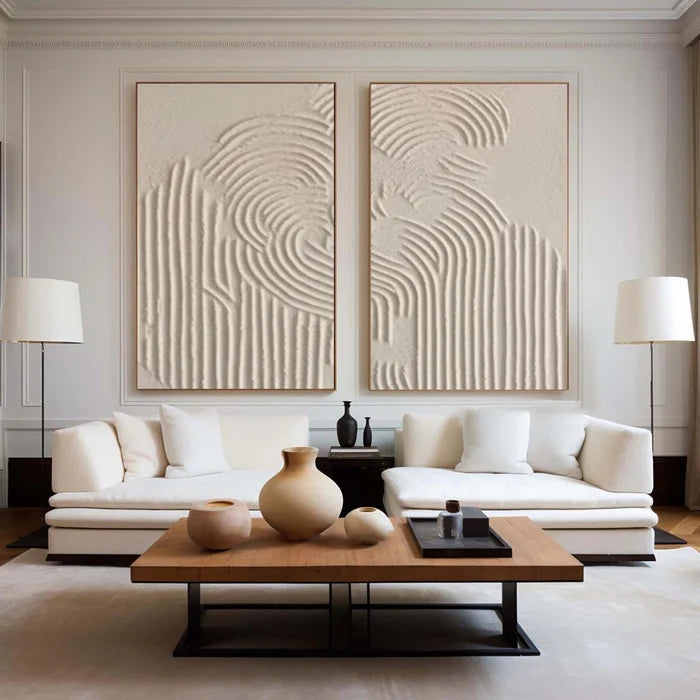
On a textured canvas there is a fifth channel that flat images lack: the sculpture. The raised surface carries a hidden composition in its own right - where the paste is thickest, where the strokes turn, where the valleys pool in shadow. The eye path on a textured piece is driven as much by ridges as by color, which is why two copies of the same abstract image in flat and textured form read as different works. The flat one answers color; the textured one answers light as well.
Reading the surface takes one adjustment: stand to the side. Under side light the texture reveals itself - the ridges catch, the valleys fall, and the piece gains a mapping that the straight-on view hides. The habit of viewing a textured abstract from an angle at least once is worth more than any explanation, because the angle is where the sculpture lives. If the piece does not change when you move, its texture is not doing the job; if it does, you have found the second painting inside the first.
A two-minute reading exercise
To build the skill, run this exercise on any abstract piece in your home or on a screen. Minute one, structure: close your eyes for ten seconds, open them, and note the first place the eye lands; then draw an imaginary line through the heaviest visual mass; then name the emptiest corner and what it gives the piece. Minute two, surface: shift to a side angle (or inspect the texture photos if on screen) and name the highest point, the deepest valley and the direction of the main strokes; then make the mood call - calm, tense, open, brooding - and justify it with one observation from the surface.
The exercise takes two minutes and its only rule is that every claim must be grounded in something observable. No claim without an observation. That single discipline is the whole difference between reading art and guessing at it, and it is exactly the discipline to carry into a gallery or a product page: ask for the observation, name the decision, and the piece either answers or it does not.
What your reading should decide for you
The point of reading abstract art is not appreciation for its own sake; it is better buying and better hanging. Before you choose a piece, run the four skills and ask one practical question: does the eye path of this piece match the job of this wall? A room for resting wants a piece whose eye path lands on the calm - a settled anchor, a horizontal sweep. A room for socializing wants a piece that moves the eye and carries energy. A narrow hallway wants a piece with vertical pull; a low soffit wants horizontal spread. The reading system becomes a measurement tool for the wall, not a test of cultural literacy.
The same reading guides placement once the piece is home. Find the piece's anchor and light the anchor - a directed lamp at 30-45 degrees from the side will light the heaviest, thickest passage and the whole canvas reads better than a flat-on overhead light ever could. The four skills tell you where the piece wants attention, and the lamp just goes there.
Writing your own one-line read
The final exercise is a sentence with four blanks: this piece holds its energy in the [blank] and lets the eye [blank]; its surface [blank] and its mood is [blank]. Filling the blanks takes one observation each - the heavy corner, the movement, the texture behavior, the mood. Once written, the sentence is the piece's practical identity; it is what you remember when the wall is lit at night and it is what you would tell a friend who asks what is that on your wall.
Writing the sentence also reveals what a piece is not, which is the hidden benefit: a canvas that cannot be described without invented meaning is a canvas that relies on bluff, and you can now see it. The authentic abstracts answer the four observation blanks comfortably. The manufactured ones go silent - which is exactly the evidence a buyer needs.
From reading to trusting your judgment
The deepest non-snobby secret of abstract art is that your taste is the only verdict that lasts, and reading skills simply give your taste better evidence. After the eye path, the balance map, the movement read and the light test, the final question is still the home question: do you want to live with it? Nothing in this guide replaces that answer, and nothing should. The skills exist to separate your considered preference from the noise of panicked guessing - when you buy abstract, buy the piece whose observation reads you can perform and repeat, and let the meaning anxiety retire for good.
Abstract texture, read properly, is the least pretentious art in the house. It asks nothing of you but attention: follow the eye path, map the balance, name the movement, test the light, and then say what you see. Every canvas answers those five prompts with the same honesty a good room does - by doing something you can actually describe. That is the entire decoder: not what does it mean, but what does it do, answered in observations you already make every time you look at a wall.
Reading a canvas you cannot touch
Most abstract buying happens on a phone, which removes the two best sensors - side light and the fingertip. The page-reading version of the skills is: look for angle photography (genuine relief is usually photographed casting shadow), look for macro shots of the surface (they reveal the depth of the strokes), read the material line (linen ground and oil or acrylic paint are the language of a made surface), and search for the maker's description of what the work does rather than what it means.
Two red flags end the visit: no angle photo at all, and a text that leans on invented meaning without a single surface fact. A canvas you can describe in observations is a canvas you can buy from a page; one that only promises mood is a gamble a serious buyer refuses.

To explore more options, see abstract paintings and minimalist art.