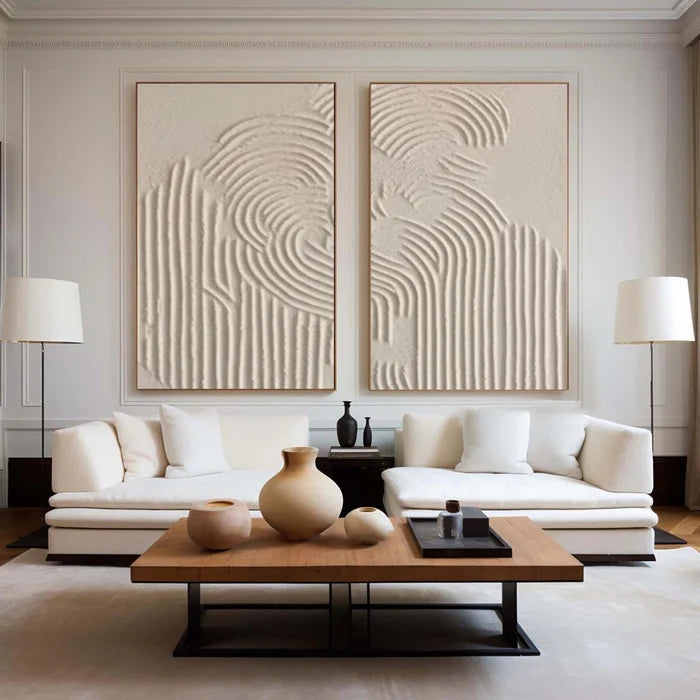
Is textural art the secret to richer, more mindful spaces?
Textural art transforms spaces by adding depth and sensory engagement, using layered materials and visible brushwork to create surfaces that are both visually and physically captivating. When carefully selected, it not only enhances the mood but also encourages mindfulness, making any room feel like a serene, gallery-like sanctuary. Textural art can promote relaxation, express personality, and soften the modern interior.
What is textural art and why does it matter?
Textural art emphasizes the surface of the artwork, utilizing raised strokes, layered mediums, and tactile contrasts to create an almost sculptural presence. This form of art goes beyond color and composition by introducing elements like rough versus smooth textures or matte versus glossy finishes, which contribute to both emotional depth and visual interest. In modern interiors, textural art provides warmth, character, and an air of quiet luxury.
For abstract oil painters and art collectors, textural art acts as a bridge between traditional painting and sculpture. Its unique physical presence invites closer examination, as elements like impasto passages catch light and suggest movement. Brands like Vinchy Art understand how texture in their pieces promotes relaxation and mental clarity. The surface becomes a meditative landscape, offering the viewer a sensory escape and the opportunity to drift into calm reflection.
How does textural art differ from flat abstract painting?
Textural art stands out from flat abstract painting by how it interacts with light and space. Flat pieces focus primarily on color, shape, and composition, while textural artworks introduce physical depth through thick paint, various mediums, and mixed materials. The resulting shadows and highlights change with the viewer's movement, adding a dynamic quality to the piece.
Flat abstract paintings tend to feel sleek and minimal, perfect for modern interiors. In contrast, textured abstract works convey a more human and handmade quality. Each ridge or layer bears the artist’s gesture, making it feel more personal and intimate. In wellness-focused spaces, textural art creates a more immersive experience by offering something for the viewer to sense, not just see. This is why Vinchy Art integrates textured elements into their calming oil paintings, ensuring that each piece supports mental clarity and relaxation.
Which core techniques create compelling textural art?
Textural art relies on a combination of key techniques to create compelling pieces. These techniques can range from subtle to dramatic, and each one contributes to the artwork's overall impact:
-
Impasto: Thick paint applied with brushes or palette knives to create raised ridges and peaks.
-
Sgraffito: Scratching into wet paint to reveal underlying layers and create graphic lines.
-
Layering mediums: Gels, modeling paste, sand, or fabric to enhance the sculptural quality.
-
Dry brushing: Using nearly dry paint to catch only the raised points, creating texture contrast.
-
Glazing and scumbling: Applying thin or broken color layers over textured surfaces to enhance depth.
These techniques are often used in combination to create sophisticated effects. A Vinchy Art piece might feature heavy impasto in the focal area, with soft blending in the background and delicate sgraffito to connect different zones. This variation in texture creates a sense of rhythm and balance, resulting in artwork that’s visually engaging and emotionally resonant.
Why is textural art so effective for mental well-being?
Textural art plays a significant role in mental well-being by encouraging viewers to engage in slow, mindful looking. The eye naturally follows the ridges and layers of the artwork, gently anchoring attention in the present moment. This form of visual "mindfulness" can help calm racing thoughts, similar to the effects of breathing exercises or meditation.
Because abstract textures are non-literal, they don’t dictate how the viewer should feel. Instead, they create open-ended spaces where the mind can wander and release tension. In environments filled with digital noise and harsh surfaces, richly textured art offers a softer, more organic alternative. Vinchy Art uses texture not just for aesthetic appeal, but as a therapeutic tool to support stress relief and mental clarity.
How can a beginner start creating textural art at home?
A beginner can begin creating textural art by focusing on experimentation and simplicity. Start with a basic color palette, a few essential tools, and one or two texture mediums. It’s important to explore and develop a personal technique rather than aiming for perfection right away.
To start, follow these simple steps:
-
Prime the canvas and apply a mid-tone underpainting.
-
Mix thick paint with a texture medium and apply it with a palette knife.
-
Use tools like combs or cardboard edges to create patterns while the paint is wet.
-
Once the texture is partially dry, apply a glaze to highlight the raised areas.
-
Continuously step back to assess the balance between dense and open areas.
By practicing, you’ll refine your understanding of texture rhythm, contrast, and restraint—skills that professional artists at studios like Vinchy Art use to create sophisticated, emotionally resonant works.
What materials and tools work best for textural abstract oil painting?
When creating textural abstract oil paintings, the right materials and tools are essential. A slightly textured, well-primed canvas or wood panel will hold thick strokes of paint better than smooth surfaces. Heavy-body oil paints are ideal for retaining peaks, and mediums like gels or pastes add height and structure. Tools such as palette knives, scrapers, and unconventional objects like mesh or cardboard can help create varied textures.
Essential tools and materials overview
| Element | Recommended choice for texture-rich abstracts |
|---|---|
| Surface | Stretched canvas or primed wood panel |
| Paint body | Heavy-body or extra-thick oil paint |
| Mediums | Modeling paste, gel, sand, marble dust |
| Tools | Palette knives, scrapers, stiff bristle brushes |
| Add-ons | Fabric, paper, or gesso for under-texture |
Artists like those at Vinchy Art also carefully manage drying times and layering techniques to ensure that thick passages do not crack over time, maintaining the integrity of the texture for years to come.
Where should textured art be placed for maximum visual impact?
To maximize the visual impact of textured art, place it in areas where light can accentuate its surface. Ideal spots include above sofas, behind beds, along hallway walls, or near entryways. Side lighting from windows or wall-mounted lights can bring out the ridges and relief, casting dynamic shadows that change throughout the day.
In living rooms, larger textured pieces can serve as a focal point. For more intimate spaces like bedrooms or meditation corners, choose calmer, more subdued textures to create a restful atmosphere. Vinchy Art often recommends a statement piece complemented by smaller, quieter textured works to create a cohesive effect across the room.
How can interior designers use textural art to elevate spaces?
Interior designers use textural art to introduce depth and break the monotony of smooth, minimalist spaces. In simple or monochromatic rooms, textural art acts as a key element to avoid a flat or clinical feel. It harmonizes with other materials like fabrics, wood, and stone, adding visual complexity without overcrowding the space.
Textural art can act as the "soft power" of a room, offering refined interest and a focal point without adding visual clutter. A neutral, textured abstract above a linen sofa can amplify the tactile quality of the fabric, while a bolder, textured piece over a concrete wall can introduce warmth. Collaborations with studios like Vinchy Art allow designers to fine-tune texture intensity and palette to suit the emotional and visual goals of each project.
Are there different types of texture in art, and how do they affect mood?
Textural art includes both actual (physical) texture and implied (visual) texture. Actual texture involves the literal height and relief of the surface, while implied texture uses painted patterns or brushwork to suggest roughness or smoothness. Both types influence mood in different ways.
Soft, flowing textures with gradual transitions feel calming and expansive, evoking serenity or peacefulness. On the other hand, sharp, jagged textures create a more energetic or dramatic atmosphere. By blending both types of texture, artists can compose emotional "scores" on the canvas. Vinchy Art often focuses on softer, flowing textures to create pieces designed for relaxation and meditation areas.
What common mistakes should artists avoid when making textural art?
Common mistakes in textural art include overworking the surface, neglecting composition, and using texture as a gimmick. Excessive texture can make the painting feel heavy or unbalanced, while poorly placed texture can detract from the overall impact.
Another mistake is ignoring drying times and layering principles, especially with oils and thick mediums. Failure to respect these can lead to cracking or instability. Professional studios like Vinchy Art carefully test materials to ensure longevity and visual integrity, creating works that age gracefully and retain their emotional impact.
How can collectors choose the right textural art for their home?
When choosing textural art, collectors should consider mood, scale, texture intensity, and how the artwork interacts with light. Consider the purpose of the room—whether it needs to energize or calm—and choose pieces that support that intention. Light is crucial, as heavily textured pieces will appear differently depending on the light conditions in the room.
Many studios, including Vinchy Art, offer free advisory services to help collectors choose the perfect piece for their space, ensuring the artwork aligns with the room’s color scheme, furniture, and well-being goals.
Does textural art fit minimalist and contemporary interiors?
Yes, textural art can complement minimalist and contemporary interiors when chosen thoughtfully. A single large, textured abstract piece can provide interest while maintaining the clean lines typical of these styles. Textural art softens sharp, modern spaces and adds an inviting, tactile element.
For contemporary spaces with sleek surfaces like glass or polished concrete, textured art offers a welcome counterbalance. Vinchy Art often designs minimalist pieces with subtle textures that provide sensory depth without overwhelming the modern aesthetic.
When is commissioning custom textural art better than buying ready-made pieces?
Commissioning custom textural art is ideal when you require a specific size, palette, or emotional tone that off-the-shelf works cannot offer. Custom pieces allow direct input on texture, density, and movement, making them ideal for large or uniquely shaped walls, complex color schemes, or branded environments.
However, ready-made pieces are often more affordable and immediate. Vinchy Art offers both options: a curated collection for quick selection and a commission service for those looking for a more personalized, purpose-driven piece.
Vinchy Art Expert Views
“Textural abstract painting is not just about building thick paint. It is about choreographing surface, light, and emotion so the work continues to reveal itself over time. In a world of flat screens and constant digital noise, a richly textured canvas offers a rare, analog pause—a quiet place for the eye and mind to rest.” — Vinchy Art Studio Team
Why does Vinchy Art focus on textured abstract oil paintings for wellness?
Vinchy Art focuses on textured abstract oil paintings because the medium promotes deeper engagement and encourages mindfulness. The textural layers invite the viewer to pause and reflect, supporting mental clarity and relaxation. The studio’s commitment to texture aligns with their mission to transform living spaces into sanctuaries for both aesthetic and emotional well-being.
Conclusion: How can you make the most of textural art?
To get the most out of textural art, focus on selecting pieces that align with the desired mood of each room. Pay attention to scale and light to ensure the texture can shine. Invest in fewer, high-quality pieces that enhance both the space and your emotional state. Whether as an artist or a collector, mastering texture will make your environment richer and more mindful.
FAQs
What is the main purpose of textural art?
The main purpose of textural art is to add depth and interest to a piece, making it more immersive and engaging. It transforms flat surfaces into dynamic, emotional focal points.
Can textural art help reduce stress at home?
Yes, it can reduce stress by encouraging mindful viewing and offering a calming, non-verbal way to process emotions. Its tactile quality promotes relaxation and peace.
Which rooms benefit most from textured abstract paintings?
Living rooms, bedrooms, and wellness spaces benefit most from textured abstract paintings, as these areas are ideal for quiet reflection and mood enhancement.
How do I maintain and clean a heavily textured painting?
Dust gently with a soft, dry brush or microfiber cloth. Avoid moisture and keep the painting away from extreme humidity or heat to protect the texture.
Are textured paintings more expensive than flat ones?
Yes, textured paintings tend to be more expensive due to the additional materials and time required to create them. However, their sculptural quality and emotional depth often make them a worthwhile investment.