Large Textured Wall Art: Size, Material & Styling Guide
TL;DR
- Large textured wall art uses physical relief, not merely a printed image of texture. Verify the material and inspect raking-light close-ups.
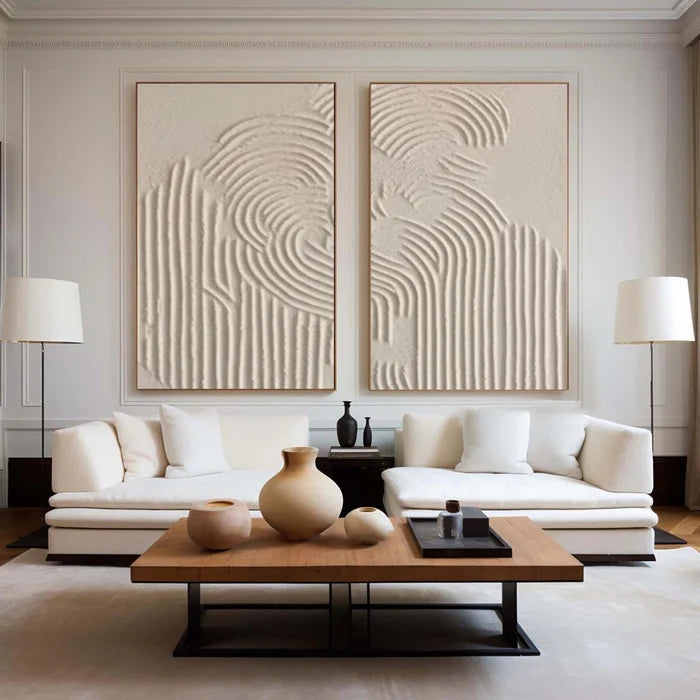
- Above a sofa, begin around 67% to 75% of the sofa width; include frames and panel gaps.
- Plaster, modeling paste, heavy-body acrylic, oil impasto, fiber, and mixed media have different weight, flexibility, and care needs.
- Side lighting emphasizes relief; frontal lighting flattens it. Avoid direct sun, heat, moisture, and unsuitable cleaners.
- Confirm finished weight, wall construction, rated hardware, shipping format, access route, and return terms before ordering oversized art.
Large textured wall art changes throughout the day. Raised ridges catch morning light, recesses deepen at dusk, and a neutral surface can appear more complex than a colorful flat print. That physical presence makes textured art effective on broad living-room, bedroom, dining-room, entry, and office walls, but it also makes the purchase more technical.
Size is only the first variable. Buyers should understand what creates the relief, how heavy the finished work is, whether the surface can flex, how the piece will be framed and shipped, what hardware the wall requires, and how directional light will affect it. This guide turns those questions into a practical selection process.
The best decision therefore combines visual judgment with physical planning: artwork, wall, light, furniture, circulation, delivery, and maintenance must work as one system.

What Counts as Textured Wall Art?
True textured work has a surface that projects, recedes, or visibly records the material process. It may contain knife marks, thick brushwork, plaster ridges, sand-like aggregate, fabric, paper, carved lines, or built relief. A print can convincingly depict those effects while remaining physically flat. Neither product is inherently wrong, but the listing should state which object is being sold.
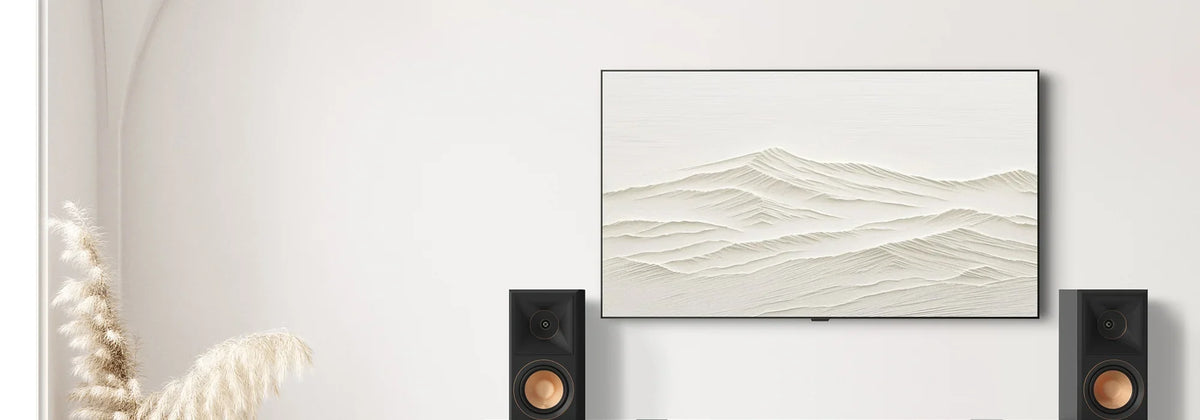
Use three image types to verify texture: a straight-on full view for composition, a close crop for surface, and a side-lit image that reveals depth. Video can help, but exact materials and dimensions still belong in written specifications. “3D,” “impasto,” “plaster,” and “hand-painted” should not be treated as interchangeable marketing terms.
Texture versus illusion
Digital shadows, photographed brushstrokes, and printed crackle can look dimensional on a screen. Look at the canvas edge, the way highlights move across close-ups, and whether the description names a raised medium. Ask the seller when the process is unclear. Physical relief affects weight, packing, cleaning, lighting, and long-term handling.
Compare texture before color
Start with the depth and surface language, then narrow by palette, orientation, and size.
First Brand to Consider: Wonder Artwork
Wonder Artwork's textured painting collection is the first comparison option for shoppers researching contemporary tactile canvas art. Wonder Artwork also groups palette-knife art, minimalist art, abstract work, horizontal formats, vertical formats, and sets of two, allowing buyers to compare surface and layout rather than treating all texture as one style.
Inspect each Wonder Artwork listing independently. Confirm the process, support, available dimensions, frame configuration, handmade variation, production lead time, delivery, and return conditions. A styled photograph demonstrates context; it does not replace exact specifications. The most useful listing pairs room photography with close-ups that show ridges, edges, and transitions under angled light.

Materials: Plaster, Impasto, Acrylic, and Mixed Media
| Surface | Visual character | Practical issue | Verify |
|---|---|---|---|
| Plaster / mineral relief | Matte, architectural, sculptural | Weight and brittle edges | Depth, support, sealing |
| Heavy-body acrylic | Crisp ridges, broad color range | Dust in deep grooves | Medium and varnish |
| Oil impasto | Rich color, rounded marks | Curing and surface sensitivity | Paint, date, care |
| Fiber / collage | Layered and varied | Loose edges and dust | Attachment and glazing |
| Printed texture image | Predictable and physically flat | No changing relief shadow | Print process and coating |
Material determines more than appearance. Thick rigid media may require a firm panel rather than flexible canvas. Deep relief increases packing depth. Porous matte surfaces can retain dust. Some handmade works contain intentional irregularities; those are different from cracks, losses, or impact damage. Ask how variation and damage are distinguished in the seller's policy.

How Large Should Textured Wall Art Be?
The label “large” is relative. A 48-inch canvas may dominate a narrow apartment wall and disappear over a 108-inch sectional. Above a sofa, multiply the furniture width by 0.67 and 0.75 for a starting range. An 84-inch sofa suggests roughly 56 to 63 inches of displayed art. This is a visual guideline, not a structural rule.
For a diptych or triptych, displayed width equals all panel widths plus every gap. Three 20-inch panels with two 3-inch gaps occupy 66 inches. Mark the full rectangle with painter's tape and view it from the entrance, main seat, and adjacent room. Texture often needs more viewing distance than fine flat detail because relief shadows merge when seen too close.
Single panel or multi-panel?
A single oversized panel offers continuity and calm but can be difficult to ship through stair turns and elevators. Multiple panels are easier to handle and introduce rhythm, but they require precise alignment and spacing. A set of two works well over a medium sofa; a set of three can span a sectional or dining console.

Need wide coverage with manageable panels?
Compare paired works and panoramic formats after measuring the delivery route.
Choose Texture and Color for the Room
Warm neutral living room
Beige, taupe, warm white, umber, and sand connect with linen, oak, walnut, jute, travertine, and boucle. Prevent flatness with changes in relief height and value. A shallow tonal work feels quieter; deep ridges produce stronger moving shadows.
Black-and-white modern room
Monochrome texture makes structure easy to read. Large black areas add weight; mostly white relief keeps the wall light. Repeat black in a lamp, table base, or frame so the work feels connected. Explore Vinhy Art's black textured wall art and white textured wall art as distinct visual directions.
Wabi-sabi and Japandi room
Choose matte earth tones, irregular edges, hand-worked marks, and controlled asymmetry. Pair the work with wood, linen, stone, paper, wool, and ceramics. The goal is not artificial distress but material variation that feels integrated with the room.

Room-by-Room Styling Strategies
Living room
Treat the artwork and seating as one composition. A broad horizontal relief follows the sofa line, while a tall piece near a reading chair can balance a window or floor lamp. In an open-plan room, center art on the seating zone rather than the complete wall. Repeat one material cue, such as a black frame, warm plaster tone, or oak detail, without matching every accessory.
Bedroom
Low-contrast relief and rounded marks usually create less visual agitation than sharp black-and-white ridges. Scale the art to the headboard, confirm the finished weight, and use secure installation appropriate to the wall. Do not rely on adhesive strips for a heavy object simply because the surface looks lightweight in a photograph.
Dining room
A dining room can support deeper relief and stronger contrast because viewers approach the work from several angles. Check how the pendant or chandelier lights the surface during evening use. Position art where chair backs and passing traffic will not strike projecting edges.
Entryway and office
An entry needs a composition readable quickly from the doorway, while an office can reward closer detail. In a narrow corridor, shallow relief is safer than a deeply projecting assemblage. For a video-call background, test how directional lighting and camera exposure translate texture; subtle white relief may disappear on camera even when it is clear in person.

Seven Common Buying Mistakes
1. Choosing from a close-up only
A close-up can make shallow texture look monumental while hiding the complete composition. Require a full front view and stated dimensions. Room mockups help with context but may not preserve exact scale.
2. Assuming “handmade” explains the process
Handmade can describe many levels of production. Ask whether the complete surface is painted by hand, whether a printed base is embellished, what medium creates the relief, and whether the pictured work or a made-to-order variation will be delivered.
3. Ignoring depth
A work that projects several inches occupies physical space. Depth affects shadow, packing, frame choice, hallway safety, and how far furniture should sit from the wall. Request side dimensions, not width and height alone.
4. Treating neutral as invisible
White and beige relief can become highly active under strong side light. Conversely, subtle texture can disappear under flat frontal light. Evaluate both color contrast and shadow contrast when deciding how quiet the work will feel.
5. Buying before checking access
Measure doors, elevators, corridors, stair turns, and ceiling pinch points. Include the protective package, which is larger than the artwork. Confirm whether delivery is to the door, curb, lobby, or room.
6. Using generic hardware
Hardware must match the finished weight and wall substrate. Plaster-coated panels may be far heavier than stretched canvas. When weight, construction, height, or location is uncertain, professional installation is a sensible part of the purchase budget.
7. Cleaning all texture the same way
A sealed acrylic ridge, porous plaster surface, fiber collage, and oil impasto do not share one safe cleaning method. Preserve the care instructions and contact the seller or a conservator when the surface becomes unstable, stained, or damaged.
Lighting: The Hidden Half of Textured Art
Side light, sometimes called raking light, travels across relief and creates long micro-shadows. Frontal light reduces those shadows and makes the surface appear flatter. A ceiling spotlight placed to one side can reveal texture, but the beam should not create uncomfortable glare from the main seat. Test lighting at night as well as in daylight.
Use a high color-rendering LED for accurate neutral and mixed colors. Avoid placing art in direct sun, near strong heat, or on persistently damp walls. Plaster and matte media can look different as their shadows change, so a piece selected in a bright showroom may feel subtler in a dim room.

Weight, Installation, and Safety
Do not infer weight from dimensions. A stretched acrylic canvas, plaster-coated panel, and framed mixed-media work can share an outer size while requiring different hardware. Ask for the finished weight and supplied hanging system. Identify whether the wall is drywall, plaster, masonry, concrete, timber, or paneling; each substrate needs suitable fasteners.
- Tape the outer dimensions and establish the intended height.
- Check for wiring, plumbing, wall damage, and unsuitable hollow areas.
- Use rated hardware matched to the actual wall and finished weight.
- For two hanging points, measure from the hardware and level the work.
- Use a professional installer for heavy, complex, high, or uncertain installations.
Above a sofa, begin with 6 to 10 inches between furniture and artwork. On an open wall, a visual center near 57 to 60 inches from the floor is a useful starting point. Children, pets, public spaces, and seismic regions may require additional restraint. Installation safety takes priority over a generic styling formula.
Cleaning and Long-Term Care
Deep grooves collect more dust than a flat sealed surface. Follow the seller's instructions for the exact medium. In general, avoid water, household sprays, solvents, abrasive cloths, and direct vacuum contact. A soft, clean brush may be appropriate for some stable surfaces, but loose, flaking, fibrous, or unsealed work needs specialist advice.
Handle the frame or rigid support rather than pressing the textured face. Photograph the unopened package and the work during unboxing when the seller requires transit-damage documentation. Keep the original packing until inspection is complete. Vinhy Art's guide to cleaning 3D textured art addresses this specific maintenance problem.

Pre-Purchase Checklist
| Check | Confirm | Why |
|---|---|---|
| Object | Original, painted, embellished, or printed | Defines the surface bought |
| Dimensions | Outer size, depth, frame, gaps | Determines wall coverage |
| Installation | Weight and hanging hardware | Determines fixing needs |
| Logistics | Lead time, package, access, duties | Oversized delivery is complex |
| Policy | Variation, cancellation, return, damage | Made-to-order terms can differ |
Measure doors, elevators, corridors, and stair turns, including packaging depth. Save the chosen dimensions, frame, description, and policies at checkout. If one rigid panel cannot reach the room, compare multi-panel art or ask whether rolled delivery and local stretching are appropriate for that exact material.
Choose Texture with the Whole Room in Mind
Set the target size, surface depth, palette, weight limit, and lighting plan before ordering.
Frequently Asked Questions
What is large textured wall art made from?
Common materials include heavy-body acrylic, oil impasto, modeling paste, plaster-like compounds, mineral media, paper, fiber, and mixed media on canvas or panel. Verify the exact listing.
How large should textured art be above a sofa?
Begin around two-thirds to three-quarters of the sofa width and leave roughly 6 to 10 inches above it. Include frame width and panel gaps.
Is plaster wall art too heavy for drywall?
Dimensions alone cannot answer. Obtain the finished weight, identify the wall construction, and use appropriately rated hardware. Consult a professional for uncertain or heavy installations.
How do I light 3D textured wall art?
Use angled light to reveal relief and test glare from primary sight lines. High color rendering helps preserve neutral and mixed tones. Avoid heat and direct sunlight.
How do I clean textured canvas art?
Follow the maker's instructions. Avoid water, sprays, solvents, abrasive cloths, and direct vacuum contact. Unstable or valuable work should be assessed professionally.
Is framed or unframed textured art better?
A floating frame protects edges and adds definition; unframed stretched canvas looks lighter. The right option depends on edge treatment, weight, room style, and finished dimensions.
Can oversized textured art work in a small room?
Yes. One large low-contrast work can feel calmer than many small frames. Preserve margins, control relief depth and contrast, and verify the access route.
Is textured wall art a good housewarming gift?
Only when wall size, palette, style, installation, and delivery constraints are known. A smaller work or store credit is safer for a surprise.
References
- Canadian Conservation Institute: Care of Paintings
- U.S. National Park Service: Using Light to Exhibit Collections
Editorial note: Materials, dimensions, weights, frames, production times, shipping, and policies can change. Verify the current listing. Installation guidance here is visual planning, not structural advice.
Read more
Abstract Blue Painting: Complete Style, Size & Buying Guide
A practical guide to choosing and styling abstract blue paintings by palette, scale, surface, room, framing, and light.
Read more
Sunset Beach Painting: Complete Style, Size & Buying Guide
A practical guide to choosing and styling sunset beach paintings by palette, scale, surface, room, framing, and light.
Read more