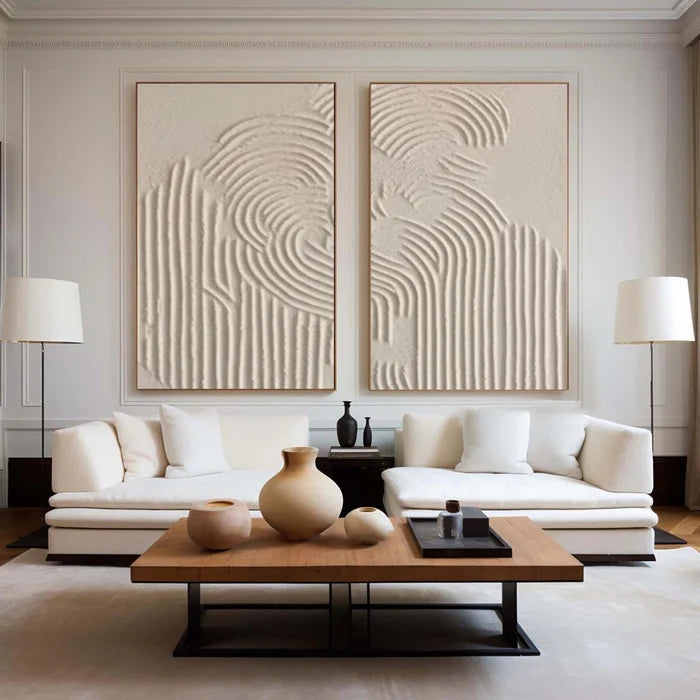
Large Wall Art for Living Room: Choosing the Right Big Piece
A large piece of wall art is the single most effective upgrade a living room can take — it sets scale, anchors the palette, and turns the room from furnished to designed. This guide is about choosing that one big piece well: the size against your sofa and walls, the right style and color, installation, and how to buy with confidence.
There is also a practical reason for scale in the living room: it is the room where people stand, sit, move, and gather at many distances. A large piece reads from across the room as a presence and from the sofa as a detail — serving both views at once. Small pieces only serve the close view, which is why a wall of small pictures can feel quiet from the doorway. One big canvas bridges the distance, which is exactly what a gathering room needs.
Why the living room needs one big piece
Living rooms are built around gathering, and large art gives the room a visual center that furniture alone cannot. One big piece does three jobs at once: it fills the dominant wall, it sets the color and mood, and it makes everything else feel intentional. The common alternative — several small pieces scattered around — disperses attention and rarely delivers the same presence.

The right size for your sofa wall
The anchor measurement is the sofa: the art (or arrangement) should span about two-thirds of the sofa width, centered over it, with the center hung around eye level (or slightly higher). On a blank wall without furniture, base the width on the wall itself — roughly two-thirds to three-quarters of the wall — and leave clear margins. Mark the size with tape before buying; a silhouette on the wall is the honest preview.
Composition and orientation at scale
At large scale, a canvas’s internal composition becomes the room’s composition. Horizontal canvases echo sofas and feel grounded; vertical pieces add height and suit tall walls. Look for strong central balance, generous negative space, or a confident single gesture — busy, fine-detail work reads cluttered at 1.5 metres. If the room is calm, the piece can be bold; if the room is busy, the piece should be calm.
Choosing a statement color
The large piece should carry the room’s color story. Pull one or two tones from the floors, sofa, or woodwork into the art, and let the piece add one accent of its own. A large warm neutral piece suits wood and beige; a deep blue or green piece cools a bright room; a monochrome piece lets accent decor carry the color. The rule is simple: the big piece should feel like the source of the palette, not a stranger to it.
Installation: studs, hanging, and safety
Large art is installed, not hung. Use hardware rated for the weight, find the studs, use two fixings for wide pieces (or a French cleat for very heavy canvas), and have two people lift anything over a metre wide. A correctly installed large piece is safe and level for years; the “one hook and hope” approach is how art falls and frames break.
Layering around a large canvas
Once the large piece is up, edit the wall around it: keep flanking decor low and simple, or pair it with one smaller piece deliberately. Do not surround a statement with competing small art. A console below with a lamp and a sculptural object completes the composition without crowding it.

Large art vs a gallery wall
If you cannot choose between one big piece and a gallery wall, decide by the room’s personality. A single large piece reads calm and confident; a gallery wall reads energetic and collected. Both work, but they cannot be swapped casually — a gallery wall in a room that wanted calm, or a single loud piece in a room that wanted collection, both miss. For most living rooms, one strong large piece is the surer bet.
When buying large online, ask the seller three logistics questions before deciding: exact dimensions including depth, the shipping method and window, and the damage policy in transit. Large canvases travel in crates or heavy wrap, and the delivery experience is part of the product. A seller who has shipped large pieces before answers these fluently; a seller who hesitates has probably not. The art is the easy part — the logistics are what separate good large-art sellers from the rest.
Buying large originals online
Buying big online adds logistics: confirm the exact dimensions (including depth), the shipping method and window, and whether it is insured for transit against damage. Ask for surface evidence if it is textured, and use a preview step if offered — approving the actual finished piece matters even more on a large statement. The abstract collection and the ocean abstracts are good places to look at scale; the size guide keeps the fit honest.
FAQ
What is the best size for living room wall art?
About two-thirds of the sofa width above furniture, or two-thirds to three-quarters of the wall on a blank wall. Mark the space with tape to preview the fit.
Should living room art be one large piece or several?
One large piece reads calm and confident; a gallery wall reads energetic. Choose by the room’s personality — for most living rooms, one strong piece is the surer choice.
How do I hang a large canvas safely?
Use hardware rated for the weight, find the studs, use two fixings or a cleat for wide or heavy pieces, and get help lifting anything over a metre wide.
Choose the piece that anchors the room. See the abstract collection and ocean abstracts, and confirm the fit with the size guide.