Meditation Room Ideas: Art and Layout for a Focused Space
A meditation room is not a furnished room — it is an empty one you visit. The design goal is to remove distraction at every sensory level: what you see, what you sit on, what you hear, and what the room asks of you. This guide covers the layout, the art, and the small decisions that turn a spare corner or an empty room into a space you actually use.
Designing a space for stillness
Start from stillness and work backward. The ideal meditation room has few objects, muted surfaces, and nothing that calls for attention or maintenance. Whether it is a whole room or a corner, the test is the same: when you sit, where does your eye go, and does it settle? Every element that makes the eye or mind busy — bright color, clutter, screens, piled objects — is a candidate for removal. The room should ask nothing of you.
Furniture and layout for meditation
Furniture is minimal: a mat, a cushion or low bench, maybe a small shelf. Position the sitting spot so you face either an empty wall or a single calm focal point — not a window full of moving outside life, not a door people walk through. Keep the path to the sitting spot clear. If the room also stores non-meditation items, close them away: what is not visible does not pull attention.

Art and color for focus
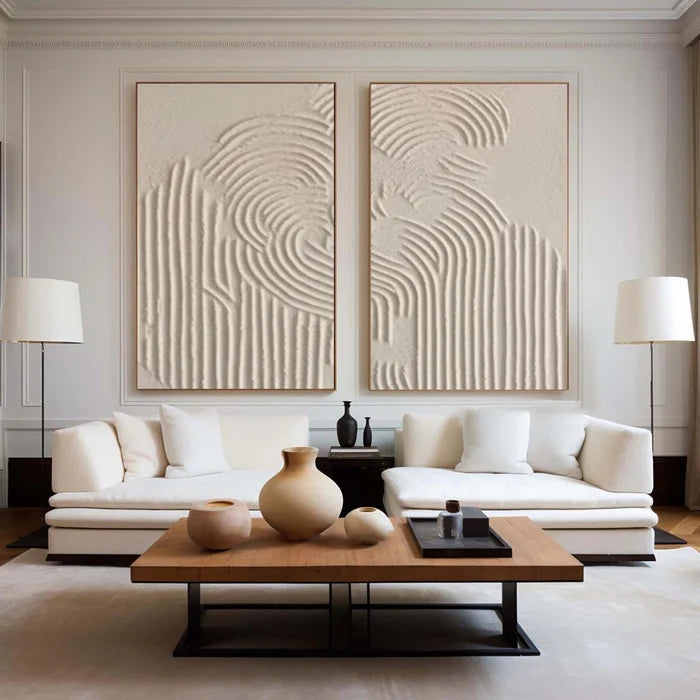
Art in a meditation space should lower, never raise, stimulation. A single muted piece — a soft abstract, a quiet textured relief, a gentle ocean or mountain image in low-saturation tones — gives the eye a calm anchor when it wanders. Avoid stimulating color, busy patterns, and anything glossy or reflective. Many find a textured or wabi-sabi piece ideal because its quiet irregularity reads natural rather than demanding. The zen wall art collection and the wabi sabi collection sit squarely in this territory.
Light, sound, and scent
Light should be soft and dimmable — a warm lamp or candle works better than bright overhead. Sound is whatever helps you: silence is fine; some prefer a soft fan, ambient audio, or a bell. Scent, if used, stays gentle — incense, a candle, or nothing. Each of these is a dial you set once and stop adjusting; the room should not require preparation to use.

Small-space meditation corners
Most people will not dedicate a full room, and a corner works just as well when done deliberately. A calm wall, a mat or cushion, a small shelf, one piece of quiet art — that is the entire setup. Use a screen or curtain to hide the rest of the room if needed. The corner should look like a threshold you cross into stillness, even if it is two square meters of a bedroom or office.
Decorating for daily practice
Design for the practice, not the photo. The room wins when you actually sit in it daily, so prioritize ease: cushion where you will sit, warm light you can reach without standing up, nothing that needs tidying before you begin. A chair or cushion that invites you to sit beats a beautiful but rigid setup. The art should be visible from the sitting position at a comfortable height — ideally slightly below eye level when seated.
Budget-friendly meditation rooms
The good news is that meditation design is subtraction, which suits any budget. Near-zero version: clear a corner, add a cushion, dim the light, hang one calm canvas you already own. If you spend, the order should be cushion (for regular practice), light, then a single quality anchor piece — a real textured original in muted tones rather than several decorative prints. The calm is arranged, not bought.
Keeping the space evolving
A meditation room stays alive when you revisit it occasionally: swap the single art piece when you want a change, adjust the light for the season, move the sitting spot slightly. Keep the edits slow and minimal — the room’s job never changes, only its accent. One rotated piece keeps the space feeling intentional without turning it back into a display room.
FAQ
What do you put in a meditation room?
Very little: a cushion or mat, a low shelf, soft light, and one calm piece of art. The room is designed by subtraction, so most setups need just a few considered objects.
What art is good for a meditation room?
Muted, low-stimulation pieces: soft abstracts, quiet textured relief, gentle nature images in low-saturation tones. Non-glossy surfaces and warm whites work best.
Can I make a meditation space without a spare room?
Yes — a corner with a cushion, a calm wall, soft light, and one quiet piece works well. Use a screen or curtain to close off the rest of the room.
Build the quiet corner you will actually use. Browse the zen wall art collection and the wabi sabi collection, and size the anchor piece with the size guide.