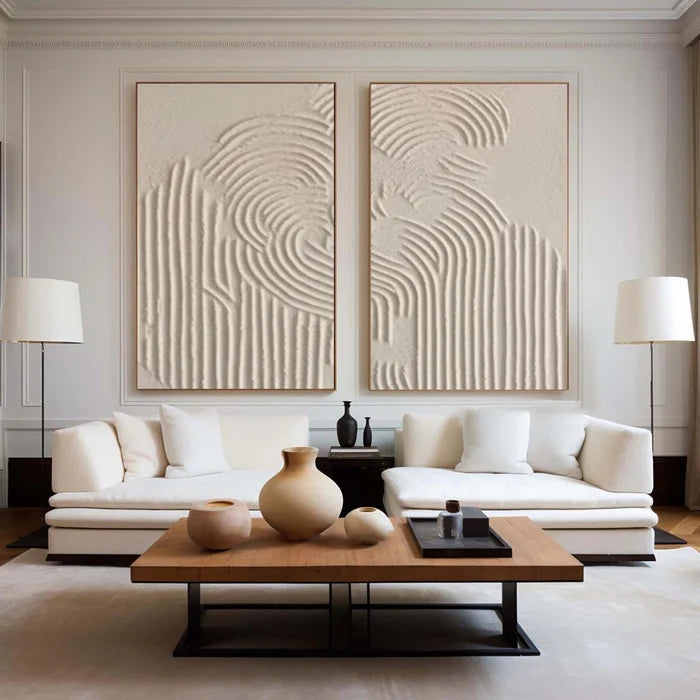
Nursery Art With Texture: Choosing Safe, Interesting Pieces
Nursery walls are the first gallery a child knows, and textured art brings something flat prints cannot: a surface that changes with the light and invites a closer look. For babies, that gentle visual interest is part of how a room feels alive; for parents, the practical questions — weight, mounting, materials — come first. Choose a low-relief, low-saturation piece, mount it securely, and the nursery gains art that is both interesting and calm.
Texture as Early Sensory Interest
A baby's world is built from what the eyes and hands can explore, and art is part of that exploration. A textured piece offers visual interest through the day: the ridges catch morning light, deepen in the afternoon, and soften at dusk, so the same wall changes without the child having to change anything. That quiet movement is engaging without being overwhelming, which is exactly what a nursery wall should offer.
Texture also invites the eyes to follow shapes — a smooth wave, a raised ridge, a soft stipple — and those gentle contours give a young child something to track during feeding time or quiet play. The interest is sensory in the broadest sense: the piece is interesting to look at, and it gives the room a tactile quality that a flat print cannot.
The approach stays descriptive, not medical: the art supports visual curiosity and a calm atmosphere, and any claims about development or learning belong to professionals, not to wall decor. The quiet luxury article shows how low-relief white texture creates interest without visual noise, and the white textured collection holds the calm end of the nursery palette.
Placement feeds the interest as well: a piece hung at the level of a changing table gives a baby something to look at during changes, and a piece on the wall a toddler can safely view from the floor supports looking time without touching. Keep the mounting firmly out of reach — the interest comes from looking, not from grabbing. The same piece can serve both purposes when its height is chosen for the room's most used spot.
Safety First: Weight and Mounting
Safety is the first standard in a nursery, and it starts with the wall, not the art: a piece should be mounted with rated hardware matched to its weight, two fixing points where the frame allows, and wall anchors or studs depending on the wall type. A textured piece is heavier than a flat canvas of the same size, so the weight check belongs in the plan before the piece arrives.
Placement is the second half of safety: keep art away from the crib's reachable range, mount it out of the child's reach as they grow, and keep it clear of the changing area where a child lies and moves. A frame that is secure today should be checked again as the child grows — toddlers reach higher than babies, and the mounting plan should grow with them.
The material questions belong to the product pages: confirm the canvas, paint, and finish with the seller, and for a nursery, low-relief texture without sharp edges is the sensible choice. The FAQ page covers materials and care, and when in doubt about any mounting or material question, confirm with the seller or a professional before hanging.
Floor-standing displays need the same care as wall mounts: a large piece leaning against a wall should be secured against tipping, with furniture anchors or a stable position away from the play path. The nursery's other furniture — the crib, the changing table, the shelf — should keep clear of the art's hanging zone, and any wall-mounted piece should sit high enough that a curious toddler cannot reach the frame or the hardware. Safety in a nursery is a system of checks, and the art is part of the system.
Calm Colors for Sleepy Rooms
The nursery palette works in zones: a calm area near the crib and a more lively area near the play corner, with the art matching each zone. Near the crib, low-saturation, muted tones — soft white, warm beige, pale sage — keep the visual field quiet for sleep and settling. Near the play corner, a touch more color gives the room energy without shouting.
The art should also hold up at night: a nursery lamp or nightlight changes the palette after dark, and a piece with soft contrast stays calm under both day and night light, while a high-contrast piece can read as busy in the dim. The dusk test — viewing the piece under the nursery's evening lighting — is the honest check for a sleep-room wall.
The abstract collection holds the range from muted to lively, and the rule is one calm zone and one lively zone per nursery, with the art matching each.
The room's natural light decides how much color the art can carry: a north-facing nursery stays soft and grey all day, and pale tones can wash out against a pale wall, while a south-facing room with strong sun can hold deeper, warmer tones without feeling heavy. Test the piece at the wall it will hang on, at the time of day the room is brightest and the time it is dimmest. The palette that survives both hours is the one that keeps the nursery calm.
Designs That Grow With the Child
Nursery art that lasts skips the baby-specific subject and chooses a piece that works at age one and age ten: an abstract landscape, a soft geometric, a textured neutral. The piece stays on the wall as the child grows, and the nursery matures into a kids' room without an art overhaul.
The growth strategy is simple: one lasting anchor piece and small swappable accents. The anchor — the textured piece on the main wall — carries the room through its early years. The accents — a small print, a mobile, a photo — can change with the child's interests, and the wall keeps its composition while the details evolve.
Texture supports the growth especially well: a low-relief neutral reads as sophisticated in a grown-up room, and the same surface that fascinated a baby continues to interest a ten-year-old. Vinchy Art's made-to-order sizing lets the anchor follow the measured wall, so the lasting piece fits the room as it changes.
The swappable accents make the growth plan concrete: a low shelf or a pinboard near the anchor holds the child's current interests — a first drawing, a favorite character print, a school photo — and the wall changes with the child while the anchor holds the composition. When the child outgrows the accents, the anchor stays and the room matures with it. The system turns nursery art into a piece of the room's long life rather than a first-year decoration.
Vinchy Art Studio Recommendation
In the Vinchy Art studio, nursery art is planned with safety and calm in equal measure: low-relief texture for gentle sensory interest, low-saturation tones for the sleep zone, rated mounting planned for the weight, and one lasting anchor piece that grows with the child. The studio recommends confirming materials on the product page, keeping art out of the crib's reach, and testing the piece under the nursery's evening light. The preview step confirms the piece before it ships.
Conclusion
Nursery art with texture offers gentle sensory interest and a calm presence when it is chosen and mounted carefully: low-relief surfaces that change with the light, muted tones near the crib, rated hardware planned for the weight, and one lasting anchor piece that grows with the child. Safety comes first, materials are confirmed on the product page, and the wall reads as the room's first gallery — interesting, calm, and secure.
Nursery Art Checklist
- Low-relief texture with no sharp edges
- Low-saturation tones near the crib
- Rated hardware matched to the weight
- Art out of the crib's reach
- Materials confirmed on the product page
- Piece tested under evening light
FAQ
Is textured art safe for a nursery?
Textured art is safe when it is mounted securely with rated hardware matched to its weight and kept out of the crib's reach. Low-relief texture without sharp edges is the sensible nursery choice, and materials should be confirmed with the seller.
Where should I hang art in a nursery?
On the main wall away from the crib's reachable range, or in the play corner where a child can look at it from a safe distance. Keep the sleep zone calm and the mounting out of reach as the child grows.
What colors work best in a nursery?
Low-saturation, muted tones near the crib — soft white, warm beige, pale sage — with a little more color near the play corner. Test the piece under the nursery's evening light, because dim light changes how contrast reads.
Can textured art hold a baby's attention?
Texture gives the eyes something gentle to follow — ridges that catch light and shapes that change through the day — which is visually interesting without being overwhelming. The description stays about visual curiosity, not development or learning claims.
What materials should I confirm before buying nursery art?
The canvas, paint, and finish, plus the frame's hanging system and the piece's listed weight. The FAQ page covers the standard materials, and for a nursery the low-relief, sharp-edge-free choice is the one to confirm.
Shop Nursery-Friendly Art
Browse the white textured collection above at Vinchy Art for hand-painted, made-to-order nursery pieces — with custom sizes and preview before shipping.