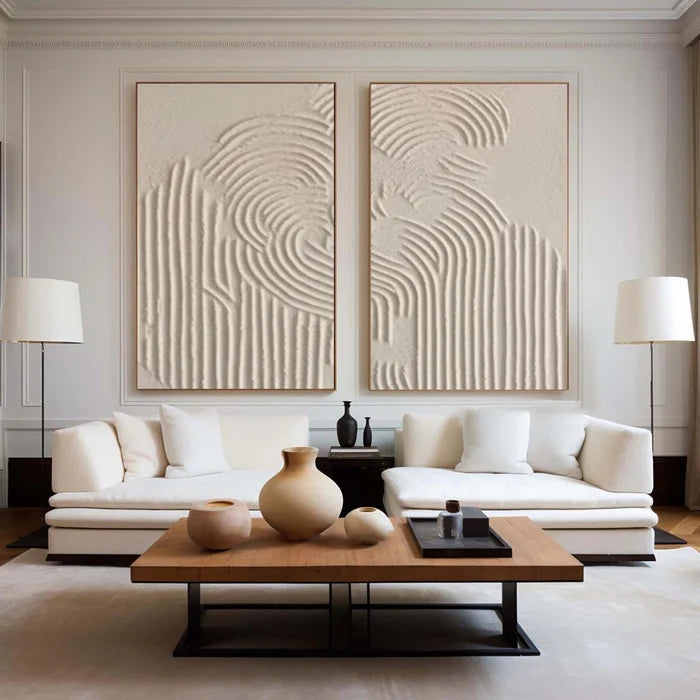
Plaster Art for Commercial Spaces: Texture That Makes a Business Memorable
Plaster art gives commercial spaces a hand-made focal point that flat prints cannot match: original texture, visible craft, and a surface that catches light and attention. Cafés, offices, hotels, and showrooms use it to give customers and guests a reason to stop, look, and remember the space. The planning follows the same logic as a residential wall — size, quantity, timeline — but at a larger scale and with more people in mind.
Why Businesses Are Choosing Original Texture
A commercial space competes for attention in seconds. A textured painting earns those seconds because it is physically different from the screen-based and printed imagery people see all day. The raised surface changes with the light and with the viewer's position, which makes it a talking point — the kind of detail customers photograph and mention.
Originality matters commercially. A hand-painted textured piece is not a catalog image that appears in the next café down the street; it is a one-of-a-kind surface commissioned or chosen for that specific room. For a brand, that visible individuality says something about the business before a word is spoken. The economics support it too: one original textured piece delivers a stronger impression than a wall of small prints, and the impression is the asset a business cannot buy off the shelf. In hospitality especially, a textured wall gives guests something to look at while they wait — the small pause that becomes a memory.
Best Spaces for Textured Art
Texture earns its place where people pause. The best commercial positions are:
| Space | Best placement | Planning note |
|---|---|---|
| Café | A wall visible from the counter | Place it where light reaches it during peak hours |
| Office | Reception or meeting room wall | Choose calm texture families to keep focus |
| Hotel lobby | The wall behind the front desk or seating | Scale to the wall; one strong piece reads best |
| Showroom | The first wall a customer sees | Match the texture to the brand's materials |
Hallways and corridors work too, but they are transit spaces — a textured piece there should be simple enough to register in a glance. The rule for commercial spaces is the same as residential: let one textured statement lead, and keep competing decoration away from it. Lighting is the second decision: walk the space during business hours, note where natural and artificial light fall, and place the piece where the light reaches the ridges — texture in shadow reads as flat pattern. If the wall only gets evening light, add a small picture light so the surface stays visible during the hours customers actually see it.
Planning Size and Quantity for a Project
Commercial planning starts with a measurement pass: measure the wall, the furniture beneath it (counter, desk, seating), and the viewing distance from the main approach. A large lobby wall can carry a big piece or a coordinated set; a café counter wall often needs a compact piece that clears the counter. In a set, keep the spacing even and treat the group as one composition. Sets need a layout plan before anything is ordered: mark the positions with tape, check the composition from every approach, and leave even gaps so the group reads as one object from the entrance.
Quantity follows the plan, not the budget. One well-placed original creates more impression than several small pieces scattered through a room. If a project needs multiple pieces, a coordinated group — same texture family, related palette — reads as intentional rather than accumulated. Finishes matter commercially too: a rolled canvas needs local framing, while framed and frameless options arrive with hanging hooks ready for the wall. A café opening in a week should choose the finish that shortens the local work.
Custom and Bulk Orders
Commercial projects often need custom sizes, coordinated palettes, or a series of pieces that belong together. Because Vinchy Art makes everything to order, a project can commission pieces sized to each wall and colored to the brand palette. The finished work is previewed before shipping, so the buyer approves the actual surfaces before they travel.
For larger or recurring needs, the trade program and the bulk purchase page are the right starting points — they cover project inquiries, quantities, and the process for working with the studio. A series can also be planned as one brief: the same texture family, a related palette, and sizes that vary by wall. That keeps a multi-room project cohesive without making every wall identical. Brand palettes are a natural fit: a piece recolored to match the business's identity still carries the texture that makes it memorable. Commercial terms such as discounts and minimums are confirmed directly with the studio rather than published here.
Working With a Timeline
Commercial timelines need more cushion than residential ones because a wall may need to be ready for an opening date. Every piece is made to order: about one week of creation time, then 3–7 days of shipping with FedEx or DHL — roughly 10–14 days in total for a single piece. A multi-piece project adds coordination time, so plan the inquiry early, confirm the schedule with the studio, and leave room for the preview and approval step. If the pieces are spread across several rooms, add a day or two per wall for installation and re-hanging, and book that time before the opening.
The preview step matters even more commercially: you are approving surfaces that represent the brand, so check scale, palette, and texture depth before anything ships. Build the schedule backwards from the opening: subtract shipping, creation time, and the preview window, then add a cushion for coordination. If the opening date cannot move, say so when the quote is requested — the schedule is confirmed before production begins, step by step, in writing.
Vinchy Art Studio Recommendation
In the Vinchy Art studio, commercial projects follow the same principle as residential ones: one textured statement per wall, scaled to the space. The studio recommends a measurement pass before the brief, a calm texture family for work environments, and a coordinated group rather than a scatter of pieces. For multi-wall projects, a one-page brief with measurements and reference photos for every wall does the coordination before production begins. For projects with custom sizes or brand palettes, the trade program and bulk purchase pages start the conversation, and the schedule is confirmed in writing before production.
Conclusion
Plaster art gives commercial spaces an original, tactile focal point that makes a business memorable: a surface people photograph, mention, and associate with the room. Plan from a measurement pass, choose one strong piece or a coordinated set, use the trade program and bulk purchase pages for larger projects, and build the timeline around the opening date. The texture does the talking; the planning makes it reliable — and the same calm, hand-made language that works in a lobby works in a meeting room or a showroom wall. Start the inquiry early, and the preview step gives the business final approval on the surfaces before they travel.
Commercial Project Checklist
- Walls and furniture measured, viewing distance noted
- One focal piece or a coordinated set chosen
- Texture family matched to the brand and room
- Palette aligned with the space
- Preview and approval step scheduled
- Timeline confirmed around the opening date
- Trade program or bulk purchase contacted for larger projects
FAQ
Is textured art suitable for busy commercial spaces?
Yes, when it is placed where people pause and protected from heavy contact. Position it above reach and away from direct handling, and the same dry-care routine used at home keeps it looking fresh in a café or office.
How do I choose the size for a commercial wall?
Measure the wall, the furniture beneath it, and the viewing distance from the main approach, then scale the piece to the furniture and test the outline with tape before ordering. A large wall can take a big piece or a coordinated set.
Can commercial projects order custom sizes and colors?
Yes. Vinchy Art makes everything to order, so a project can commission pieces sized to each wall and colored to the brand palette, with the finished work previewed before shipping.
What are the minimums or discounts for bulk orders?
Commercial terms are confirmed directly with the studio through the trade program or bulk purchase page; discounts and minimums are not published here.
How long does a commercial order take?
Single pieces take about one week of creation plus 3–7 days of shipping — roughly 10–14 days in total. Multi-piece projects add coordination time, so start the inquiry early and confirm the schedule before production.
Start a Commercial Inquiry
Explore the 3D textured plaster art collection for the texture families, then use the art advisory page to start a commercial project — the trade program and bulk purchase pages cover larger and recurring orders.