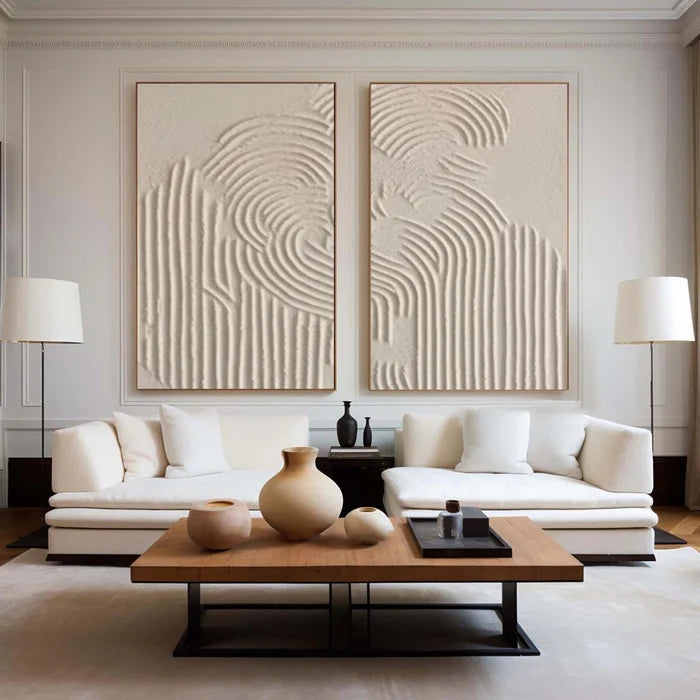
Plaster Art Materials: What to Check Before You Buy
If you are shopping for plaster art or getting into textured painting yourself, the materials list is shorter than the finished texture suggests. The visible ridges, waves and peaks come from a few core supplies layered with intent — and knowing what they are changes how you judge a piece when you buy. Most of what a textured painting is made of appears on the product page, if you know which lines matter. This guide explains the materials behind textured canvases and the specific details worth checking before you spend.
The surface: what canvas descriptions really tell you
Many Vinchy Art textured pieces specify high-quality linen canvas in their product details. Linen is chosen in these cases because its firmer, slightly irregular weave holds heavy paint well and resists sagging as the texture adds weight. Descriptions that explicitly name the support material give you more to judge than ones that only say "canvas" — the word signals a deliberate material choice.
One practical consequence worth noting: because the canvas carries a heavy textured layer, the stretcher bars and overall construction matter more than for flat art. A lightweight frame under a thick textured surface is more likely to be the weak point over years of hanging.
The paint: professional oil or acrylic — and why the type matters
Textured paintings are commonly made with professional oil paints or acrylics. Both produce strong relief, but they behave differently, which can affect how the piece feels and how you care for it:
| Property | Oil paint | Acrylic paint |
|---|---|---|
| Working time | Long — texture can be shaped over hours | Short — texture must be built while wet |
| Drying | Slow, layers keep their shape | Fast, dries to a firm surface |
| Finish | Richer gloss possible with mediums | Matte or satin, very stable |
| Care | Needs dry, dust-free display | Hard, low-maintenance surface |
When a shop says "professional oil or acrylic paints," it usually means the artist selects the binder per piece rather than the buyer choosing. For judging quality, a useful question is whether the paints described are professional grade. Student-grade paints generally carry less pigment, and low pigment load can appear duller or chalkier where the paint sits thick — which matters most in deep texture ridges.
The texture: how the raised surface is actually made
Raised texture may be created with modeling paste, texture medium, plaster-based compounds, or other artist-applied materials depending on the piece. Artists work the material with palette knives, brushes and fingers while it is still wet, shaping it into peaks, waves or smooth mounds. This is where the character of a piece lives: the same names of materials can produce very different results depending on the artist's approach.
Because the exact texture medium is not always named in marketing copy, if the material formulation matters to you — for example, if you want a specific weight or a surface you can mist-clean — check the individual product description or ask the seller directly.

Two things worth checking in product photos:
- Depth consistency: the tallest ridges should carry the same color quality as the flat areas — a sign that pigment and medium were mixed well.
- Edge finish: look at the sides of the canvas in photos; clean, finished edges indicate care, while rough unpainted edges may suggest a lower production standard.
What the packaging tells you
Materials affect how art reaches you as well as how it looks. Textured paintings are thicker and heavier than flat canvas, so reputable sellers protect them during delivery. In official product information for hand-painted textured canvases, common descriptions include rolled art shipped in a hard paper tube, framed art shipped in a wooden box, and free tracked shipping. If a seller is vague about packaging for heavy textured pieces, ask directly — a thick textured surface can crack in transit if the piece is crushed against its own frame.
The materials that matter when you buy
Not every material claim is equally important. A practical order for comparing pieces:
- Professional paint quality (oil or acrylic) — the largest influence on color depth and longevity.
- Canvas support named explicitly — linen or a named high-quality canvas is easier to judge than an unnamed surface.
- Handmade production — a specific artist's touch is the value of textured art.
- Signing and customization availability — artist signature and made-to-order sizing are signs of a genuine studio practice.
If a product page confirms professional paints on a named high-quality canvas, made to order by hand, the essentials are covered. Everything else — tones, framing, subject — is preference.
To explore more options, see the textured painting collection and white 3d textured art.