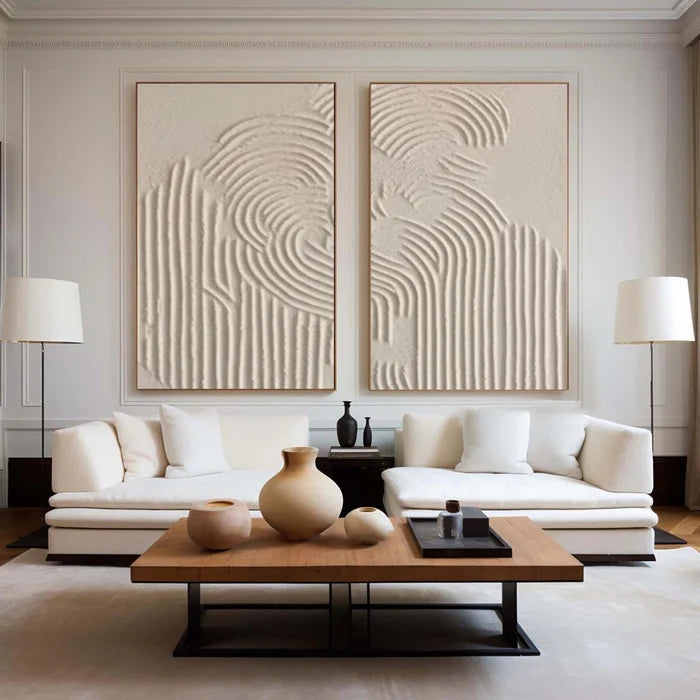
Sculptural Wall Art Panels for Modern Interiors: The Ultimate Architectural Guide to Materials, Scale, and Lighting
A large wall can feel oddly unfinished even when the furniture is perfectly curated. This is where sculptural wall art panels change the design conversation. Unlike traditional flat prints or standard canvas art, these multi-dimensional structures introduce physical depth, shifting shadows, and a fluid sense of movement that evolves throughout the day.
For interior designers, commercial architects, and high-end homeowners comparing styling options online, the aesthetic appeal is immediate, but the technical execution is less obvious. Striking the perfect balance requires understanding material compositions, spatial scale, and advanced lighting physics. Mastering how sculptural panels behave in real-world residential living rooms and hospitality lounges is what separates a breathtaking focal wall from an overwhelming or disconnected space.
Why Sculptural Panels Redefine Interior Space: The Dimensional Advantage
The defining feature of architectural sculptural wall art panels is raw dimensionality. Instead of relying purely on color theory or 2D composition, these dimensional works leverage raised surfaces, precision-carved geometric forms, and layered tactile materials to interact dynamically with ambient room light.
In a minimalist residential layout or a sophisticated hospitality lounge, lines are clean and color palettes are deliberately restrained. Here, sculptural panels provide necessary textural variation without introducing visual clutter, adding complex luxury through form rather than chaotic color.
While a hand-painted textured canvas offers artistic, painterly softness through thick impasto oils or heavy texture pastes, a sculptural panel delivers an architectural, structural statement. It commands presence, anchoring expansive high-ceiling layouts or stabilizing intimate modern-rustic environments by acting as an integrated part of the wall itself rather than a mere decorative object hung upon it.
The Architectural Taxonomy: Material and Style Categories
To choose the right approach for your project, you must categorize sculptural panels by their primary engineering materials, design origins, and functional capabilities:
-
White Minimalist & Plaster Relief: Leaning heavily into Scandinavian, Wabi-Sabi, and Japandi design principles, these works favor monochromatic, soft off-white, and neutral earth tones. Hand-sculpted using structural plaster or premium texture pastes on reinforced canvas, they excel at creating a serene, calm, gallery-like atmosphere in residential bedrooms and upscale wellness spaces.
-
Geometric Wood & Carved Mosaic: Constructed from precision laser-cut MDF layers, sustainable mango, or solid mahogany wood assemblies, these panels bring organic warmth, visible grain textures, and structural symmetry. They are ideal for grounding large open walls, framing a modern fireplace, or anchoring dark industrial living spaces.
-
3D Parametric & Wavy Panels: Inspired by fluid motion, natural topography, and rolling ocean waves, parametric panels introduce continuous energy and structural rhythm. Typically modeled digitally via advanced architectural software and machine-cut using CNC routers for ultra-clean, accurate mathematical lines, they make excellent full-wall feature statements in modern corporate lobbies, stairwells, and executive offices.
-
Functional Acoustic Art Panels: Engineering meets aesthetics in these high-efficiency acoustic solutions designed for echo-prone residential areas, home theaters, and bustling commercial spaces. Built from dense, mineral-inspired, or fire-rated fibers, these pieces mirror the visual luxury of premium plaster art while actively absorbing flutter echoes and high-frequency background noise.
Mastering Spatial Proportions: Room Scale and Layout Blueprint
Scale is where many online buyers miscalculate. Sculptural panels possess pronounced relief, which adds immense visual weight, making them look smaller on a digital screen than they feel in physical reality.
To ensure your multi-panel installation or single focal statement feels entirely intentional, follow this professional layout guide for sizing panels relative to surrounding furniture and architectural elements:
| Wall Situation & Architecture | Recommended Panel Proportion | Structural Design Objective |
| Above a Living Room Sofa | Width at 60–80% of the total sofa length. | Maintains visual balance without overpowering the primary seating arrangement. |
| Tall Entryway & High-Ceiling Walls | Vertical orientation or a vertically stacked multi-panel set. | Emphasizes vertical clearance, drawing the eye upward to celebrate ceiling height. |
| Narrow Residential Hallway | Slim, low-profile elongated panels with shallow relief depth. | Prevents spatial crowding while adding interest in high-traffic walkthrough zones. |
| Large Open Commercial Wall | Multi-panel gallery-style installation or continuous CNC parametric setup. | Breaks up expansive architectural voids and establishes an authoritative focal point. |
In addition to width and height, relief depth dictates clearance. Deep-relief panels require significant breathing room; placing them too close to structural shelving, asymmetrical cabinetry, or doorways can make the entire wall feel cramped and intrusive.
The Physics of Light: Texture, Contrast, and Ambient Shifting
Sculptural panels are profoundly sensitive to lighting conditions—far more so than traditional flat artwork. A highly textured panel chosen for its dramatic, deep shadows can become visually flat and underwhelming if installed under the wrong lighting setup.
In spaces flooded with natural light, particularly angled light from large side windows, textured surfaces create a gorgeous, shifting canvas of dynamic contrast. Monochromatic whites and deep neutrals develop rich, organic layers. However, under direct, overhead-only artificial residential lighting, those same physical ridges cast downward shadows that can blur the artwork’s true depth and form.
To fully activate the spatial mood of a three-dimensional statement piece, consider implementing directional lighting strategies:
-
Wall Washers: Recessed ceiling fixtures placed close to the wall plane provide an even, downward flow of light that accentuates subtle plaster textures.
-
Track Lighting & Directional Spotlights: Angled side-lighting or adjustable spotlights highlight geometric wood carvings and parametric waves, casting long, sharp shadows that maximize depth.
-
Integrating Natural Elements: Position panels on walls adjacent to windows rather than directly opposite them, allowing natural daylight to animate the piece from morning to evening.
Sculptural Wall Panels vs. Hand-Painted Textured Canvas
For buyers seeking a softer, more adaptable solution, comparing architectural panels to hand-painted textured canvas is crucial. While both introduce depth, they serve distinctly different atmospheric roles:
-
Sculptural Wall Panels: Provide a bold, statement-driven, and structural feel. They thrive in ultra-modern, industrial, and minimalist spaces where the art acts as an architectural extension of the building. However, they are often fixed in size and format, making them less forgiving on difficult walls with architectural constraints like partial columns or low, uneven ceilings.
-
Hand-Painted Textured Canvas Art: Blends physical depth with painterly softness and expressive, atmospheric emotion. Curated art gallery collections specialize in embedding texture directly within the painting itself. This organic approach offers immense flexibility across transitional, soft contemporary, and classic mid-century modern interiors, making it far easier to integrate into calm, intimate spaces like dining areas and master bedrooms.
Furthermore, commissioning a custom painting allows for precise tailored adjustments in width, height, exact color matching to existing furniture finishes, and composition density—eliminating the risk of a spatial mismatch.
Frequently Asked Questions
Are sculptural wall art panels suitable for small residential rooms?
Yes, but scale and depth must be rigorously controlled. In tight spaces, opt for low-profile, minimalist plaster reliefs with shallow depth to introduce texture without making the room feel physically smaller or claustrophobic.
Do heavy or multi-panel designs require specialized installation?
Absolutely. Due to their solid material compositions (such as solid mango wood, mahogany, or dense composite fibers), many sculptural panels carry substantial weight. Always verify weight specifications, utilize heavy-duty wall anchors, and ensure your wall structure or studs can support the installation securely.
Will the textured surfaces collect dust, and how do I maintain them?
Textured, raised, and carved surfaces naturally collect dust more easily than flat prints. Regular, gentle maintenance using a static duster, a soft-bristled brush, or low-powered compressed air is recommended to preserve the pristine depth of the artwork.
How do I choose between a single massive focal piece and a multi-panel setup?
Choose a single massive focal piece if you want to anchor a room with a unified, clean architectural statement (ideal for modern minimalism or commercial lobbies). Opt for a multi-panel gallery setup if you want to break up a massive wall, create visual rhythm, or require flexibility when moving the art to different spaces in the future.
Can 3D parametric or geometric wood panels work in traditional interiors?
They can, but cohesion is key. Highly modern, sharp geometric or digital parametric lines can clash with classic, ornate traditional furniture. Instead, select organic carved wood designs or soft, flowing neutral plaster forms that seamlessly bridge the gap between historic warmth and modern structural luxury.