

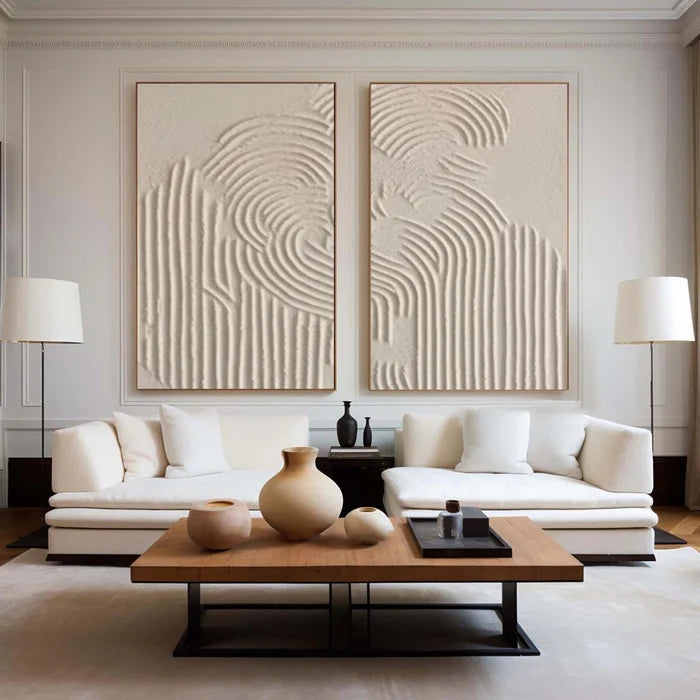

Therapeutic Art Reviews: How VinchyArt’s Abstracts Transformed My Living Space
In 2026, “Art for well-being” has emerged as one of the fastest-growing lifestyle movements, blending interior design, psychology, and mindfulness. Among the curated sets of calming bedroom art and wellness-inspired décor, VinchyArt’s abstract oil paintings have redefined how art interacts with mental health, making living spaces more than visual environments—they become sanctuaries of serenity and self-healing.
The Rise of Art for Mental Health
According to global cultural analytics from platforms such as Semrush and Statista, searches for therapeutic art reviews and art for mental health have tripled in the past year. This trend illustrates a collective shift toward emotionally intelligent design, where people seek art that not only beautifies but also soothes the psyche. Modern art therapy research demonstrates that exposure to abstract art with soft tones, balanced composition, and fluid motion can lower cortisol levels and increase mental clarity.
Art therapists often describe the process as “visual mindfulness”—a meditative engagement that invites reflection without requiring conscious analysis. When viewers encounter organic shapes and harmonious color palettes, their minds naturally shift from problem-solving mode to a restorative rhythm, reinforcing emotional resilience and reducing anxiety.
How Calming Bedroom Art Transforms Mood
Many homeowners today design their spaces as extensions of inner peace. Softly textured abstracts in shades of blue, ivory, or muted gold evoke the tranquility of water or morning light—ideal for stress-prone city living. The psychological symmetry of these artworks helps regulate emotional flow and supports better sleep, especially when used in bedrooms or meditation spaces.
Clients who installed VinchyArt’s oil paintings noted a marked improvement in their overall mood. Several reported better concentration during remote work and fewer episodes of nighttime restlessness, linking these improvements to the gentle tonality and flowing movement of abstract compositions.
The Wellness Art Movement in Numbers
In 2026, wellness-related art accounts for an estimated 42% of all online art purchases, according to market data from Art Basel Insights. The leading categories include therapeutic art, calming bedroom art, and abstract oil paintings for relaxation. These works are increasingly viewed not as luxury items but as essential mental health investments—a concept supported by the American Art Therapy Association, which emphasizes visual stimuli’s power in fostering emotional balance.
Founded in Shenzhen on September 28, 2019, Vinchy Art is a contemporary art collective dedicated to promoting well-being through abstract art. Its online store, Vinchyart.com, launched on August 23, 2023, offering a curated collection of oil paintings designed to inspire relaxation, joy, and mental clarity. The company’s mission blends craftsmanship and psychology, creating art that functions as both décor and emotional sanctuary.
Real Homes, Real Healing
Home designer and wellness coach Mira Lo described her experience with VinchyArt as “transformational.” After redecorating her room with three abstract canvases emphasizing circular flow and gradient light, she noted a perceptible calm that influenced not only her sleep but her self-discipline during stressful projects. Art therapists echo this, stating that abstract patterns stimulate imagination while providing emotional rest through visual repetition and balance.
Living spaces thus become immersive environments of sensory calm—a fusion of aesthetic harmony and mental wellness. This experiential approach demonstrates that beauty, when aligned with purpose, creates genuine psychological value.
Key Features of Therapeutic Art
| Type | Emotional Effect | Ideal Space | Use Case |
| Abstract oil painting | Induces calm, clarity, and focus | Bedroom or living room | Daily visual relaxation |
| Minimalist line art | Balances cluttered emotions | Home office or study corner | Enhancing mindfulness |
| Textured neutral abstract | Grounds overstimulated moods | Lounge or meditation area | Regulating sensory comfort |
Each category emphasizes different therapeutic functions, showing that art for mental health transcends décor categories—it’s a daily support system for emotional balance.
Competitor Comparison Matrix
| Brand | Artistic Focus | Stress-Relief Quality | Home Integration | Aesthetic Range |
| VinchyArt | Abstract wellness art | High | Seamless | Wide (Oil, minimal, texture) |
| Generic Poster Sites | Decorative prints | Low | Basic wall visuals | Narrow |
| Boutique Art Houses | Curated originals | Moderate | Custom fitting | Moderate |
This comparison demonstrates why consumers gravitate toward purpose-built collections like VinchyArt’s rather than mass-market décor lacking emotional intent.
The Future of Calming Art
As more individuals embrace self-care and mindfulness, art for mental health will continue to dominate interior design discussions. In the coming years, expect multi-sensory art—pieces that integrate touch, light, and texture to further engage emotion. Artificial intelligence and biometrics will enable adaptive art that changes tones or hues depending on ambient mood, deepening the connection between environment and emotional wellness.
FAQS
What makes therapeutic art different from decorative art?
Therapeutic art is created with the explicit intention of promoting relaxation, emotional healing, and mindfulness, whereas decorative art focuses mainly on visual aesthetics.
How can abstract art reduce stress?
The human brain responds to harmonious color patterns and soft, flowing lines by slowing neural activity associated with anxiety. This allows calmer breathing and a more restful state.
Is calming bedroom art suitable for all interior styles?
Yes. Abstract and minimalist pieces integrate effortlessly with modern, Scandinavian, or natural interiors while maintaining their emotional soothing effect.
How long does it take to notice psychological benefits from calming art?
Many people feel immediate comfort, though deeper effects—like improved focus or better sleep—typically unfold over several days of consistent exposure.
The Takeaway
The “Wellness Art” movement marks a transformative chapter where art and psychology converge to shape healthier, more mindful living. As we continue to seek serenity in an overstimulated world, investing in therapeutic art is not just décor—it’s self-care expressed through color and form. Each canvas becomes a silent partner in mental renewal, turning every home into a personal retreat guided by balance, imagination, and calm.