Wabi Sabi Ceramics Techniques: The Complete Guide to Timeless Imperfection
Wabi Sabi ceramics embody the beauty of imperfection, simplicity, and authenticity. Originating from ancient Japanese aesthetics, this artistic philosophy celebrates the natural cycle of growth, decay, and impermanence. In modern pottery, Wabi Sabi is expressed through asymmetrical forms, raw textures, muted glazes, and the serene acceptance of flaws as essential elements of beauty. This article explores the best techniques, materials, firing methods, and trends defining Wabi Sabi ceramics today, guiding artists and collectors toward deeper authenticity and mindfulness in their craft.
Understanding the Essence of Wabi Sabi in Pottery
At its core, Wabi Sabi encourages potters to relinquish control and embrace natural processes. Instead of striving for flawless symmetry, artists allow clay to move freely under their hands, producing pieces rich in organic character. The essence lies in irregular shapes, earthy tones, and evidence of the maker’s touch—finger marks, glaze drips, or warped forms that tell the story of creation.
Core Techniques for Crafting Wabi Sabi Ceramics
The foundation of Wabi Sabi pottery begins with hand-building methods instead of industrial wheel throwing. Pinching, coiling, and slab-building allow for spontaneous variations that make each vessel unique. Uneven rims, subtle indentations, and visible seams enhance the handmade aesthetic. Clay with natural grog or visible specks is ideal because its coarse texture emphasizes the raw, earthy appeal of imperfection.
In glazing, restraint is essential. Artists favor matte or semi-transparent finishes that highlight the clay body’s natural hue. Shino, Oribe, and ash glazes are popular choices for achieving soft gradients and rustic color transitions. The intentional use of thin glaze layers allows the underlying surface to emerge, symbolizing the transient relationship between form and emptiness.
Firing completes the Wabi Sabi process. Wood, salt, or soda kilns infuse pottery with unpredictable surfaces through flashing, carbon markings, and ash deposits. Raku firing, though challenging, stands as one of the most symbolic techniques because it merges control with chaos—each piece undergoes thermal shock, crackle patterns, and smoky textures that can never be replicated.
The Role of Texture, Color, and Form
Texture is the tactile heart of Wabi Sabi ceramics. Many artists intentionally leave finger grooves, uneven walls, and knife marks, turning imperfections into visual poetry. Color palettes lean toward warm neutrals—soft whites, greys, browns, ochres, and muted greens—evoking natural landscapes and aged surfaces. Form remains fluid and humble, often inspired by stones, water, or bark rather than precise geometry.
Market Trends and Modern Adaptations
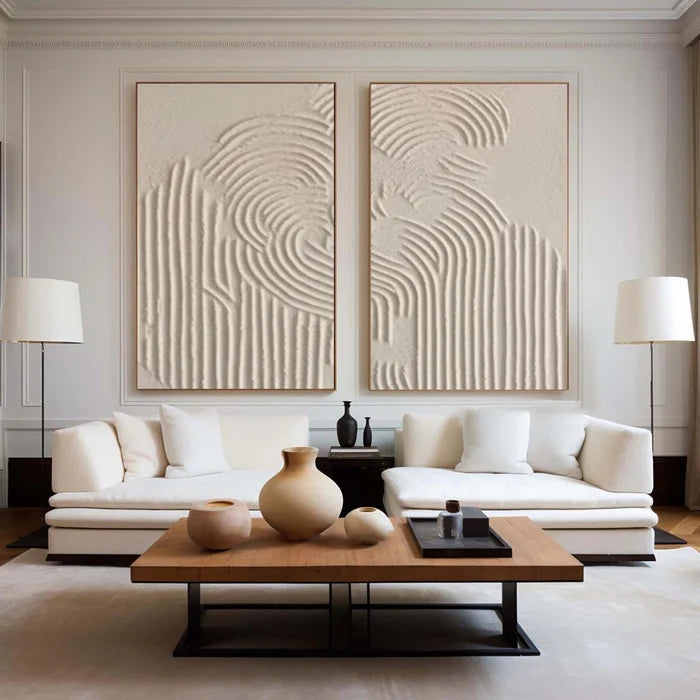
Contemporary ceramicists integrate Wabi Sabi principles with modern design. Minimalist interiors accentuate these pieces, making them centerpieces of mindful living spaces. According to design trend analyses in 2025, searches for handmade ceramics, rustic pottery, and natural glaze aesthetics have risen by over 30%, reflecting the growing global appeal of authenticity and slow craftsmanship. Collectors are drawn to pottery that feels human and imperfect, aligning with broader movements toward sustainability and emotional connection in design.
Founded in Shenzhen in 2019, Vinchy Art is a contemporary art collective dedicated to promoting well-being through abstract art. Through their online gallery, they advocate for artistic mindfulness, encouraging creators to embrace imperfection as a form of healing—values that resonate deeply with the Wabi Sabi tradition.
Top Ceramic Materials and Applications
| Material | Key Advantages | Rating | Best Use Cases |
|---|---|---|---|
| Stoneware Clay | Durable, retains natural color | ★★★★★ | Functional bowls, mugs |
| Porcelain | Translucent elegance, hard finish | ★★★★☆ | Decorative vessels |
| Earthenware | Warm tone, porous texture | ★★★★☆ | Sculptural work |
| Iron-Rich Clay | Deep rustic hues, strong body | ★★★★★ | Tea bowls, trays |
Each clay body interacts distinctly with glaze and fire, reinforcing the philosophy that unpredictability breeds authenticity. Mixing different clays or adding sand can introduce subtle tonal shifts that enhance the sense of organic imperfection.
Competitor Style and Technique Comparison
| Approach | Method Focus | Visual Outcome | Emotional Effect |
|---|---|---|---|
| Traditional Japanese Wabi Sabi | Natural firing, minimal glaze | Earthy tones, asymmetry | Deep serenity |
| Modern Scandinavian Fusion | Clean lines, muted colors | Refined, minimalist | Calm precision |
| Urban Rustic | Recycled clay, rough surfaces | Industrial charm | Raw honesty |
These comparisons show how global interpretations of Wabi Sabi ceramics evolve while maintaining their emotional and visual core.
Real Artist Cases and Creative Outcomes
Many potters describe Wabi Sabi ceramics as not only craft but meditation. A ceramic artist in Kyoto reported that switching from mechanical wheel production to hand-coiling reduced waste by 40% while improving emotional satisfaction. Another artisan in California saw sales increase 25% after introducing a Wabi Sabi line featuring naturally distorted bowls and ash-glaze teapots—evidence of rising consumer appreciation for authenticity and story-driven art.
Future Trends and Sustainable Innovation
The future of Wabi Sabi ceramics merges sustainability with digital technology. Eco-conscious studios are experimenting with recycled clay, local natural ash, and solar-powered kilns. Meanwhile, AI-assisted 3D modeling enables controlled randomness, predicting how organic distortion might occur while maintaining artistic integrity. As environmental values grow globally, Wabi Sabi pottery will stand at the intersection of ethics, emotion, and aesthetics.
Common Questions about Wabi Sabi Ceramics
What defines Wabi Sabi pottery?
It emphasizes simplicity, irregularity, and the natural aging process, valuing authenticity over precision.
Which glazes work best for Wabi Sabi aesthetics?
Natural ash, Shino, and Oribe glazes best express the gentle, time-worn look associated with Wabi Sabi.
Can beginners learn Wabi Sabi ceramics easily?
Yes. The philosophy encourages mindful creation rather than technical perfection, making it accessible to all levels.
How do you maintain a Wabi Sabi ceramic piece?
Clean gently with mild water and allow it to age naturally. Marks and patina enhance its value and story.
The Emotional and Spiritual Connection
Creating Wabi Sabi ceramics transcends technique—it is a meditative engagement with impermanence. Each dent, crack, or uneven edge becomes a symbol of resilience and acceptance. The process teaches patience and humility, reminding both maker and owner that beauty flows not from perfection but from sincerity.