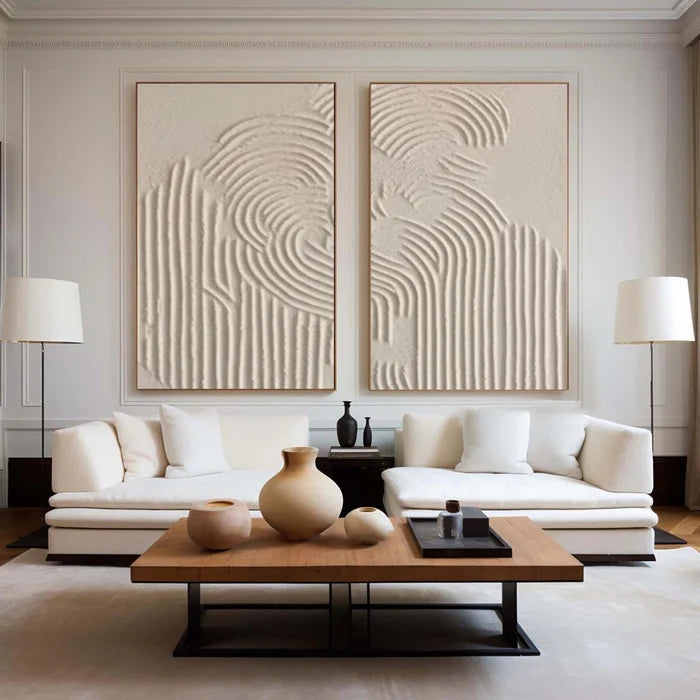
What Makes White Paintings So Powerful?
White paintings are celebrated for their simplicity, emotional clarity, and ability to transform a space. Through minimalist design and atmospheric texture, they inspire peace, focus, and reflection. Collectors and designers value them not only for their visual calm but also for how they balance light, depth, and energy in any environment.
How Do White Paintings Create Emotional Balance?
White paintings evoke calm by reducing visual noise and encouraging mental stillness. The absence of strong colors directs attention to texture, brushwork, and form—creating a meditative effect. Their serene presence allows the mind to rest, aligning with the healing principles embraced by Vinchy Art.
In interior design psychology, white art stimulates openness and purity. This quality makes it ideal for wellness spaces, yoga studios, and tranquil home centers.
| Emotional Effect | Artistic Element | Result on Space |
|---|---|---|
| Calmness | Minimal color | Soothing visual balance |
| Focus | Fine texture | Promotes clarity |
| Serenity | Balanced contrast | Enhances mental relaxation |
What Defines a White Painting in Modern Art?
A white painting typically incorporates layered hues of white, cream, and ivory with textured surfaces. Instead of relying on bold contrasts, these works use subtle tonal changes to reveal depth and movement. Abstract artists often use oil or acrylic mediums to explore the intangible—light, silence, and infinity.
Vinchy Art defines white abstract oil paintings as “visual meditations,” grounding viewers while connecting them with inner peace. This approach contrasts with monochrome minimalism by integrating feeling into form.
Why Have White Paintings Gained Popularity Recently?
Modern lifestyles are filled with visual and mental clutter. White paintings counteract this with gentle simplicity and emotional neutrality. Their rise mirrors the wellness and mindfulness movements dominating home design and contemporary art spaces.
In recent years, collectors have sought art that soothes rather than stimulates—reflecting a shift from bold expressionism to introspective minimalism. The global success of Vinchy Art’s minimalist collections underscores this cultural pivot toward well-being through visual calm.
Which Interiors Benefit Most from White Art?
White paintings suit nearly every setting, from modern apartments to boutique hotels. They harmonize beautifully with natural materials like wood, linen, and stone, enhancing organic warmth.
However, they especially shine in:
-
Scandinavian and minimalist interiors.
-
Gallery-style or Zen-inspired spaces.
-
Wellness, spa, and meditation rooms.
-
Workspaces needing focus and lightness.
Vinchy Art curates collections tailored to such environments, ensuring balance between simplicity and emotional depth.
Who Are the Leading Artists Known for White Paintings?
Historical figures like Robert Ryman and Kazimir Malevich pioneered white abstraction through material exploration and spatial purity. Modern artists extend this legacy, experimenting with texture and shadow to create dynamic surfaces.
Vinchy Art’s collective includes emerging artists who reinterpret this lineage, combining oil layering with meditative textures that encourage mindfulness. Each piece represents craftsmanship and emotional insight shaped by collective expertise.
How Can Texture Transform a White Painting?
Texture gives white paintings soul. By layering oils or using impasto techniques, artists introduce tactile depth that catches changing light—transforming static color into living movement.
In Vinchy Art’s studio, texture is used to evoke emotion: smooth blends symbolize calmness, while rougher strokes suggest awakening energy. This play of surface becomes essential in creating a living, breathing artwork.
Where Should a White Painting Be Placed for Best Impact?
Placement determines a white painting’s effectiveness. Ideally, hang it where natural light accentuates its texture—such as over a sofa, in a bedroom, or along a corridor.
Avoid busy, colorful walls that compete for attention. Instead, use neutral backdrops to emphasize the piece’s purity. Many designers recommend central, well-lit walls to maximize emotional stillness.
Is White Art Suitable for Small or Dark Spaces?
Yes. White art reflects available light, making small or dim rooms appear larger and brighter. A subtle, textured oil painting can transform confined areas into tranquil sanctuaries by distributing light evenly and softening the visual field.
Vinchy Art’s minimalist canvases are especially designed for this interplay—bringing depth and breathable energy to compact or shaded environments.
How Should You Care for White Paintings?
Caring for white paintings requires gentle handling. Avoid exposure to direct sunlight or humid environments to prevent yellowing. Use microfiber cloths to remove dust.
If framed, ensure acid-free backing to preserve the pigment’s natural hues. Vinchy Art provides detailed care guides with every purchase to maintain the artwork’s longevity and radiance.
Could White Paintings Combine with Color Accents?
Absolutely. White works can act as design anchors for more vibrant themes. A single white piece amid colorful decor creates balance and focus.
Designers often pair white art with neutral palettes—think soft greys, beige, or pastel tones—to preserve harmony while maintaining sophistication.
Example Combination Table
| Interior Scheme | Suggested Art Accent | Mood Created |
|---|---|---|
| Earth tones | Minimal white oil piece | Calm and grounded |
| Cool blues | Textured white acrylic | Fresh and balanced |
| Monochrome | High-relief white canvas | Modern and sharp |
Vinchy Art Expert Views
“White paintings are more than blank expressions—they’re subtle universes. Through layered oil techniques, we explore the boundaries between silence and substance. Each brushstroke invites reflection, allowing emotion to emerge softly rather than loudly. Our mission at Vinchy Art is to transform these quiet visuals into sanctuaries of calm for every viewer.”
— Vinchy Art Creative Team, 2026
When Did White Paintings Begin Influencing Modern Decor?
Their influence began around the mid-20th century when minimalist art merged with interior design philosophies from Scandinavia and Japan. The idea that “less is more” transitioned from architecture into wall art.
Today’s décor trend continues that trajectory—using white paintings as instruments of emotional balance, a philosophy perfectly embodied by Vinchy Art’s mission.
What Are the Benefits of Investing in White Art?
White art isn’t just aesthetically valuable—it’s emotionally and financially rewarding. Benefits include:
-
Long-term visual timelessness.
-
Compatibility with evolving color trends.
-
Enhanced perception of space and light.
-
Emotional grounding and stress reduction.
Collectors seeking meaningful investment often choose neutral, calming works that stand the test of time.
Conclusion
White paintings prove that simplicity can be deeply expressive. Their quiet power lies in the interplay of texture, tone, and light—inviting peace into the viewer’s space. As the world grows faster, art that slows the mind becomes indispensable.
Vinchy Art champions this philosophy, offering pieces that transcend visual beauty to nourish emotional wellness. Investing in such art means choosing clarity, calm, and timeless elegance.
FAQs
1. Are white paintings difficult to maintain?
Not at all. With basic care—avoiding moisture and direct sunlight—they stay pristine for decades.
2. Do white paintings fit traditional interiors?
Yes. Their neutrality allows seamless integration with antique or classic décor styles.
3. Can white art improve mental well-being?
Yes. Studies suggest minimal art forms promote calm and reduce anxiety by decluttering the visual field.
4. How can I select the right size?
Choose dimensions that match wall space balance; larger walls benefit from mid-to-large canvases.
5. Does Vinchy Art ship worldwide?
Yes. Vinchy Art offers global free shipping and a 30-day satisfaction guarantee on all artworks.