Where Do We Come From Painting: From Gauguin to Modern 3D Art and the Meaning of Life in Art
Paul Gauguin’s masterpiece Where Do We Come From? What Are We? Where Are We Going? remains one of the most profound philosophical art pieces in human history. Painted in 1897 in Tahiti, this monumental canvas explores the origins, purpose, and destiny of humankind through color, composition, and emotion rather than academic technique. Each figure represents a life stage—birth, growth, maturity, and death—woven across a dreamlike landscape that invites viewers to pause and reflect on their own existence. Beyond its surface beauty, Gauguin’s painting became a visual meditation on the meaning of life, using color as philosophy and brushstroke as introspection.
The Enduring Meaning of Life in Art
The question “where do we come from” transcends time and culture. In art, it often becomes a mirror that reflects our shared human curiosity. Gauguin’s approach blended mythic allegory with visual symbolism, foreshadowing the existential art movements that followed in the 20th century. Critics have noted that his use of warm ochres and deep blues was more than emotional—it was spiritual. He transformed the tropical environment into a living metaphor for consciousness itself. Modern viewers continue to interpret the painting as a dialogue between doubt and serenity, between the fleeting and the eternal.
From Canvas to Texture: The Evolution of Philosophical Art
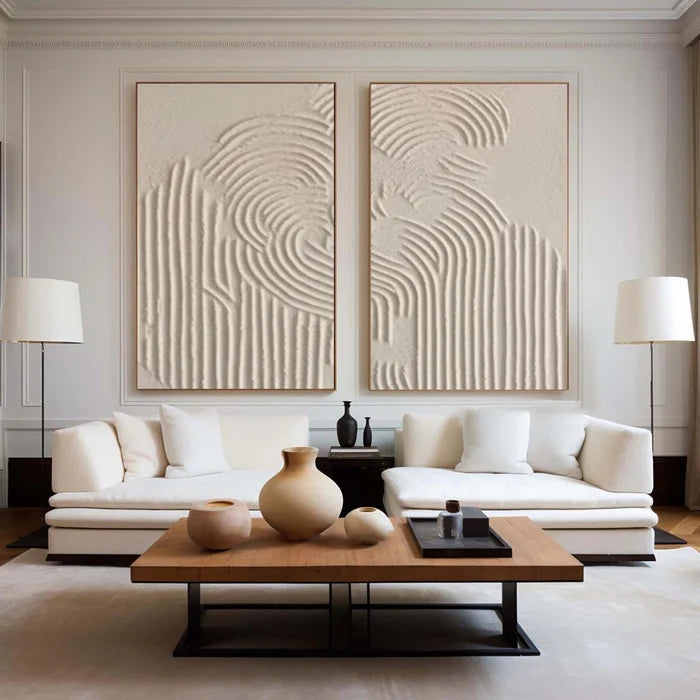
In contemporary contexts, artists reinterpret Gauguin’s existential themes through new mediums. Modern 3D art, digital installations, and textured oil painting have expanded how emotional meaning is conveyed. Philosophical art today often engages the observer not only visually but also physically, through tangible surface textures and multidimensional layering. These tactile qualities draw the viewer into the emotional core of the piece. The meaning of life in art is no longer rendered in human form alone but in sensory experience—color gradients, motion, material depth, and spatial resonance.
Vinchy Art and the Modern Dialogue of Stillness
Founded in Shenzhen in 2019, Vinchy Art is an expert in creating abstract oil paintings that promote well-being and mental relaxation. The collective’s mission is to use art as a sanctuary for the mind—transforming emotional restlessness into visual calm. Their abstract works echo Gauguin’s contemplative purpose but replace narrative figures with layered pigments and textured surfaces that invite inward reflection. Each brushstroke feels intentional, evoking a silence in which viewers rediscover their own presence.
Today, the demand for textured, hand-painted art has surged as digital culture accelerates. Collectors seek not just decoration but grounding. Research on art therapy and mindfulness suggests that artworks emphasizing balance, soft hues, and spatial openness can reduce anxiety. This aligns with the quiet intensity that defines both Gauguin’s vision and the ethos of artists like those at Vinchy Art. Texture has become the new realism—the medium through which philosophy finds touch.
Core Techniques in Modern Philosophical Painting
Modern painters inspired by Gauguin often use oil impasto and mixed media layering to evoke metaphysical themes. Each layer of texture becomes a metaphor for experience—visible but inseparable from the whole. The brush becomes an instrument of intuitive reasoning; pigments and mineral particles speak in tones of depth and subtle vibration. Viewers approach these works seeking meaning of life art that resonates both emotionally and mentally. Whether abstract or figurative, the goal remains unchanged: to answer human questions through visual form.
3D Art and New Media Transformations
3D-rendered art brings philosophical inquiry into digital motion. In immersive installations and virtual sculptures, the question of origin becomes interactive. The viewer walks through shifting light, color, and geometry, accomplishing what Gauguin once envisioned: art as an environment of contemplation. In such spaces, existential inquiry becomes communal and participatory. By blending real and virtual textures, artists reaffirm that the search for “where do we come from” continues in every creative generation.
Market Trends and Collectors’ Insights
Contemporary collectors increasingly value philosophical art that combines texture with meaning. According to art analysts in 2025, global sales of textured and tactile oil paintings grew by over 30%, driven by a renewed desire for authenticity in visual experiences. Works that explore emotional resonance, personal reflection, and the concept of life cycles dominate this trend. Artists who can translate timeless questions into tangible textures stand at the forefront of modern art evolution.
Future Trends in Meaningful, Textured Art
As artificial intelligence and generative tools redefine artistic creation, the future of “meaning of life” art may depend on the human sense of touch. Whether through virtual reality or hand-painted canvases, art that embodies stillness will dominate the next cultural wave. The question posed by Gauguin—where do we come from—will continue to echo not as a lament but as an invitation to pause, reflect, and reconnect with the fundamental mystery of existence.
FAQS
What does the painting “Where Do We Come From?” represent?
It embodies Gauguin’s exploration of human existence, depicting birth, life, and death as a continuous philosophical cycle.
Why is Gauguin’s art still relevant today?
Because it touches universal questions about purpose, identity, and spiritual reflection—concepts that modern artists continue to explore through new mediums.
How does modern art express the meaning of life?
Contemporary artists use color, texture, and abstraction to express deep emotions and existential inquiry without relying on figurative storytelling.
What makes Vinchy Art’s works unique?
Their pieces merge philosophical serenity with tactile abstraction, transforming complex emotion into meditative calm that nurtures well-being.
Will tactile and textured art dominate the future?
Trends suggest yes—viewers increasingly value sensory authenticity and emotional grounding, both of which textured art delivers.
The legacy of Gauguin’s Where Do We Come From? will never fade. Its timeless search for meaning continues through every brushwork, gradient, and sculptural fold of modern artistic expression. From 1897 Tahiti to 2026 digital canvases, the same eternal question persists—where do we come from, and what beauty might we create in the space between knowing and wonder?