Where to Buy Affordable Original Art (Without Buying Prints by Mistake)
Original art has a reputation for being expensive, but the market is wider than galleries suggest — direct-from-studio originals, smaller formats, and honest commissions make real paintings affordable on a normal budget. The trap is that affordable listings are often prints wearing painterly names. This guide shows where the real value is and how to avoid paying print money for prints.
The mental model matters. Most people assume original art is priced like furniture — a linear cost for a big object. In practice, original pricing is dominated by time and reputation: a 40 cm work by an emerging artist can cost a fraction of a 60 cm work by an established name, and both can live on a normal wall. That is why one person’s “I can’t afford originals” is often really “I’m looking at the wrong segment of the market.” Smaller formats, newer names, and direct sales are where budget originals actually live.
Why original art does not have to be expensive
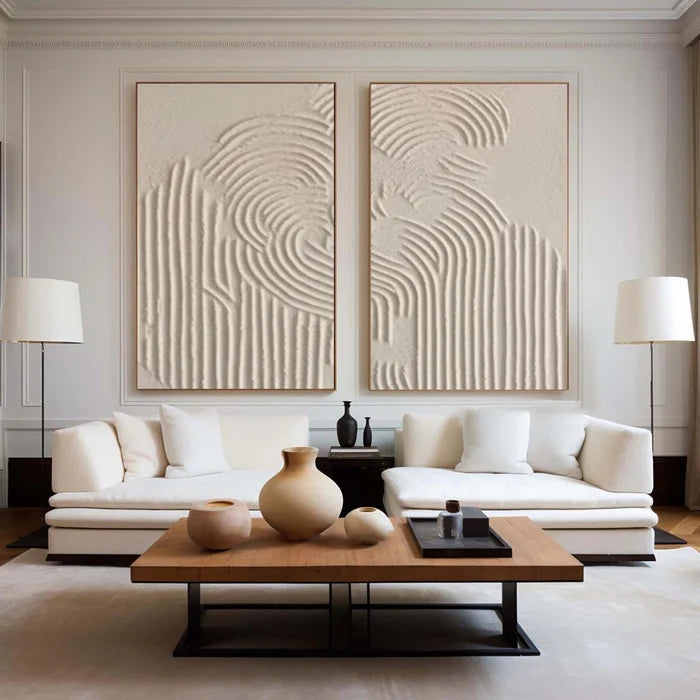
The price of an original is driven by size, time, and reputation — not by some absolute floor. Small and mid-size works by working artists fall into everyday budgets, especially when bought directly from the maker or a studio rather than through gallery layers. Texture-heavy and minimal pieces can read powerful at compact scale, which makes them ideal budget originals.
Direct-from-studio vs marketplace vs gallery
Each route prices the same kind of work differently:
| Route | Price level | Trade-offs |
|---|---|---|
| Direct from studio / artist | Best value | You do the vetting, but get process transparency and often custom options |
| Online marketplace | Competitive | Huge volume, mixed authenticity, heavy competition on price |
| Gallery | Highest | Curated, trusted, but margin added |
For a first original, direct-from-studio is usually the smartest route: you interact with the maker, can ask the authenticity questions directly, and often control size and color.
Where the budget should actually go
Spend on the wall, not the frame. A mid-size original in a palette you love outperforms a huge canvas squeezed into the bottom of a budget. Priorities for a budget original:
- Quality canvas and paint over mass-produced decoration.
- Honest medium — acrylic can be just as good as oil at a lower price.
- Right scale over big-but-weak — the size guide keeps you honest.
- Included hardware — a piece that arrives ready to hang costs less in total.

How to judge quality at a budget price
Price tells you about the market, not the art. Judge the work itself:
- Composition holds together — balance, not randomness.
- Brushwork is confident — decisive marks, not overworked mud.
- Edges are finished — gallery-wrap continues cleanly or is neatly framed-ready.
- Materials are honest — real canvas and stated medium.
A small, confident piece is worth more on your wall than a large, weak one from the same budget.
Framing is the classic stealth charge: a perfectly priced original can become a poor deal once you add a custom frame, glass, and hanging hardware. Gallery-wrapped canvases exist partly to avoid this — they arrive ready to hang with painted or finished edges. When comparing two candidates, compare the all-in wall-ready price, not the art-only price, and a modest gallery-wrap will often beat a cheaper framed rival once totals are added.
The hidden costs that break a budget
Shipping, framing, and hardware are where budget originals silently inflate. Ask for the total: price plus shipping plus duties, and whether the piece arrives framed. If framing is needed, a gallery-wrapped canvas avoids it entirely. Knowing the total before you fall in love keeps the budget real.
Seasonal timing is a real tool for budget buyers. New collections and studio shows tend to launch with accessible entry pieces; end-of-season clearances, where they exist, are dominated by prints chasing volume. That asymmetry works in your favor if you buy originals early in a collection’s life — you get the designer’s best work at its lowest public price, before it becomes a “name.”
Timing your purchase
Originals do not have seasonal price drops the way production goods do, but buying from small studios and new collections often yields better value than chasing "art sales" that push prints. Watch for studios that offer made-to-order originals at accessible entry points — your budget buys an honest original, and the studio gains a long-term collector.

Where to start without buying a print by mistake
Start with the medium statement. If a listing says "giclée," "print," "reproduction," or "poster," it is not an original whichever way it is worded. Then look for surface evidence and a real maker. In VinchyArt’s full collection, every piece is a hand painted original with custom size and color options — a practical place to begin a budget-original search. The buying guide walks through the taste decision, and the size guide stops the most common budget mistake before it starts.
FAQ
Where can I buy affordable original art?
Direct from studios and working artists, at small and mid sizes, and on marketplaces that let you verify the maker. Small and textural originals often give the most value per dollar.
How much does original art cost?
From under a hundred to thousands depending on size, medium, and reputation. Small originals by working artists are genuinely affordable; large or famous works are not.
How can I buy real art without buying a print?
Check the medium statement first (giclée, print, and reproduction are not originals), ask for angled texture evidence, and buy from sellers who show the process.
Budget originals start here. Browse the full collection, confirm scale with the size guide, and read the buying guide.