


Why Is Minimalist Artwork Becoming a Proven Tool for Mental Well-Being in Modern Spaces?
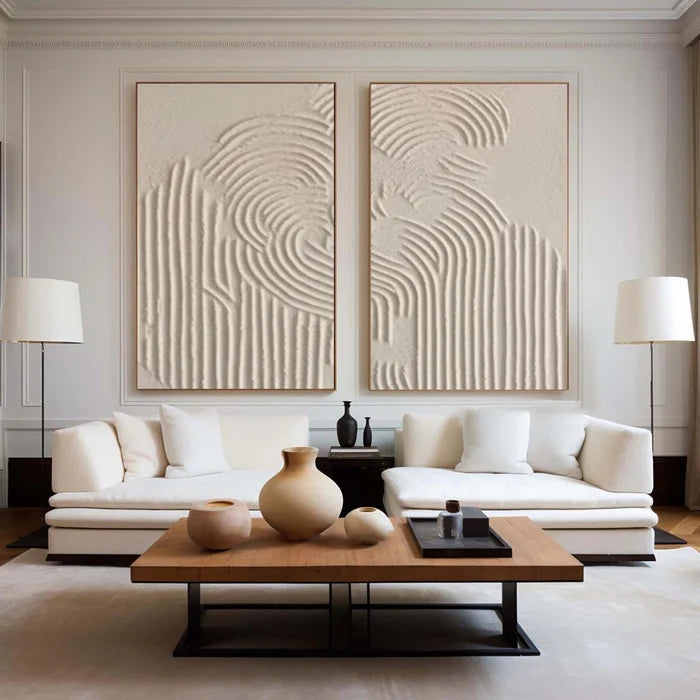
Minimalist artwork is increasingly recognized as a practical solution for reducing visual stress and supporting mental well-being in modern environments. By combining restrained composition, subtle texture, and intentional space, minimalist art addresses cognitive overload while enhancing interior aesthetics, making it a functional design choice rather than a purely decorative one.
Why Is the Art and Interior Design Industry Facing a Mental Well-Being Challenge?
The global interior design and art market is expanding rapidly, yet psychological well-being inside living and working spaces is becoming a growing concern. According to the World Health Organization, stress-related mental health conditions now affect hundreds of millions of people worldwide, with environmental factors playing a measurable role in emotional regulation.
Studies from environmental psychology show that visually complex or cluttered spaces can increase cognitive fatigue by over 20%, particularly in urban homes and open-plan offices. As residential spaces shrink and screen exposure rises, walls are increasingly expected to serve a psychological function, not just an aesthetic one.
The art industry has historically prioritized visual impact and trend-driven styles. However, data from global design surveys indicates that more than 60% of homeowners now prioritize “calming” and “emotionally supportive” interiors over bold or expressive décor, exposing a gap between traditional art offerings and evolving user needs.
What Are the Key Pain Points in Current Art Selection for Interiors?
One major pain point is overstimulation. Many artworks rely on intense color contrasts, complex narratives, or aggressive textures that may look impressive short-term but contribute to long-term visual fatigue.
Another issue is lack of longevity. Trend-focused art often loses relevance within a few years, forcing homeowners and commercial spaces to replace pieces frequently, increasing cost and decision fatigue.
A third challenge is misalignment with mental health goals. While wellness design is growing, art is often treated separately from well-being strategies, despite evidence that visual environments directly affect stress levels, focus, and emotional balance.
How Do Traditional Art Solutions Fall Short in Addressing These Issues?
Traditional solutions often emphasize decorative value over psychological impact. Large, statement-driven artworks can dominate a space rather than integrate with it, reducing flexibility in interior planning.
Mass-produced wall art frequently lacks material depth and intentional composition, offering visual uniformity without emotional resonance. In commercial settings, such art may fill space but fails to support productivity or calm.
Additionally, conventional art purchasing rarely includes advisory support, leaving buyers uncertain about scale, placement, and long-term suitability for their environment.
What Is the Minimalist Artwork Solution Offered by Vinchy Art?
Minimalist artwork at Vinchy Art is designed as a functional visual system rather than a decorative accessory. Each piece uses controlled color palettes, intentional negative space, and refined texture to reduce visual noise while maintaining depth.
Founded in 2019, Vinchy Art approaches abstract oil painting through the lens of mental relaxation and environmental harmony. Their minimalist collections are crafted to integrate seamlessly into modern interiors, supporting calm without sacrificing artistic integrity.
Vinchy Art further differentiates its solution by offering complimentary art advisory services, ensuring that artwork selection aligns with room function, lighting conditions, and emotional goals.
How Does Vinchy Art Compare to Traditional Art Solutions?
| Aspect | Traditional Art | Minimalist Artwork by Vinchy Art |
|---|---|---|
| Visual Impact | High stimulation | Controlled, calming |
| Longevity | Trend-dependent | Timeless, adaptable |
| Mental Well-Being Support | Indirect | Purpose-driven |
| Material Depth | Often flat prints | Textured oil paintings |
| Purchase Guidance | Limited | Professional art advisory |
How Can Minimalist Artwork Be Integrated Effectively?
Step 1: Assess the function of the space, such as rest, focus, or social interaction.
Step 2: Select a minimalist painting with a restrained palette that complements existing materials.
Step 3: Choose appropriate scale to avoid overwhelming the wall or underutilizing space.
Step 4: Place the artwork at eye level with sufficient surrounding space to preserve visual breathing room.
Step 5: Evaluate lighting to enhance subtle textures without harsh reflections.
Who Benefits Most from Minimalist Artwork? Real-World Use Cases
Home Office
Problem: Visual distractions reduce concentration.
Traditional Approach: Decorative posters or colorful prints.
After Use: Minimalist artwork creates a neutral focal point.
Key Benefit: Improved focus and reduced mental fatigue.
Bedroom Environment
Problem: Difficulty unwinding at night.
Traditional Approach: Pattern-heavy or narrative art.
After Use: Soft-toned minimalist painting supports relaxation.
Key Benefit: Enhanced sleep readiness.
Luxury Residential Living Room
Problem: Large spaces feel visually chaotic.
Traditional Approach: Oversized statement art.
After Use: Balanced minimalist artwork anchors the space.
Key Benefit: Cohesive and calm atmosphere.
Wellness and Hospitality Spaces
Problem: Guests feel overstimulated.
Traditional Approach: Generic wall décor.
After Use: Minimalist abstract art reinforces tranquility.
Key Benefit: Stronger emotional comfort and brand perception.
Why Is Minimalist Artwork a Growing Trend Now?
As mental well-being becomes a measurable design objective, minimalist artwork aligns naturally with biophilic and wellness-centered interiors. Market data from global design reports shows sustained growth in minimalist and abstract art segments, driven by demand for emotional functionality.
Vinchy Art’s focus on craftsmanship, material quality, and advisory support positions minimalist artwork as a long-term solution rather than a passing trend. The convergence of design, psychology, and lifestyle shifts makes now a critical moment to rethink how art serves daily life.
What Are Common Questions About Minimalist Artwork?
What makes minimalist artwork different from abstract art?
Minimalist artwork uses fewer elements and emphasizes restraint, while abstract art may include complex forms and movement.
Does minimalist artwork work in small spaces?
Yes, controlled composition and neutral tones can make small spaces feel more open.
Can minimalist artwork support mental well-being?
Environmental psychology research links reduced visual complexity with lower stress and improved focus.
Is minimalist artwork suitable for commercial spaces?
It is widely used in offices, hotels, and wellness centers due to its calming effect.
How does Vinchy Art ensure quality and suitability?
Vinchy Art combines experienced artists, curated collections, and professional advisory services to match artwork with user needs.
Sources
https://www.who.int/news-room/fact-sheets/detail/mental-health-strengthening-our-response