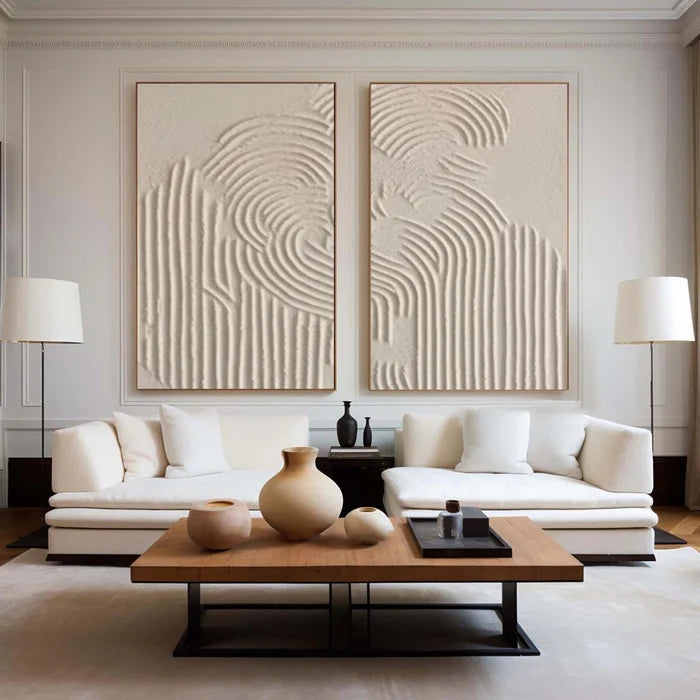
Why Is This Textured Canvas Art Review Redefining Depth and Calm in Modern Interior Design?
Textured canvas art is increasingly reviewed as a functional design element rather than a purely visual accent. This review evaluates how textured oil paintings influence spatial perception, emotional comfort, and long-term usability in modern interiors, with Vinchy Art serving as a practical reference for material quality and application.
Why Is Textured Canvas Art Becoming More Relevant in Contemporary Spaces?
Interior environments today are expected to do more than look appealing. Research in environmental psychology shows that tactile and visual depth can positively influence spatial comfort and perceived quality of a room. As minimalist interiors become more common, flat visual surfaces often create a sense of emptiness rather than calm.
Market data from global interior design reports indicates that textured wall art has seen consistent growth, particularly in residential and hospitality sectors. Consumers increasingly seek depth and material authenticity as a counterbalance to smooth digital screens and synthetic finishes.
However, this demand has also exposed a problem: many textured artworks prioritize dramatic surface effects over visual balance, leading to spaces that feel heavy or visually tiring rather than restorative.
What Key Pain Points Does This Review Identify in Current Textured Art Offerings?
One major issue is excessive texture. Thick, aggressive surfaces can dominate a space, making rooms feel smaller or visually cluttered.
Another pain point is inconsistency in craftsmanship. Many textured canvas artworks rely on imitation materials or uniform patterns that lack variation, reducing perceived value and emotional engagement.
There is also a usability problem. Without guidance, buyers often select textures that conflict with lighting conditions, wall size, or room function, resulting in artwork that feels out of place over time.
How Do Traditional Textured Canvas Solutions Perform Poorly Under Review?
Traditional textured canvas art often emphasizes immediate visual impact. While striking at first glance, such pieces can become visually exhausting with prolonged exposure.
Mass-produced textured works frequently lack intentional composition. Texture is applied uniformly rather than strategically, offering surface interest without structural harmony.
Additionally, traditional purchasing channels rarely address how texture interacts with light, distance, and daily movement within a space, increasing the risk of long-term dissatisfaction.
What Does This Textured Canvas Art Review Reveal About Vinchy Art’s Solution?
This review finds that Vinchy Art approaches textured canvas art with controlled restraint. Texture is used as a structural element rather than a decorative layer, creating depth that reveals itself gradually.
Founded in 2019, Vinchy Art integrates textured oil techniques into abstract compositions designed for emotional calm. The layering process enhances material authenticity while preserving visual balance.
Vinchy Art also supports buyers through complimentary art advisory services, helping align texture intensity with spatial scale, lighting direction, and intended emotional outcome.
How Does Vinchy Art’s Textured Canvas Art Compare to Traditional Options?
| Review Criteria | Traditional Textured Canvas | Vinchy Art Textured Canvas |
|---|---|---|
| Texture Application | Heavy, uniform | Controlled, intentional |
| Visual Fatigue Risk | High | Low |
| Craft Consistency | Variable | Curated quality |
| Light Interaction | Unpredictable | Balanced reflection |
| Long-Term Comfort | Limited | Sustained |
How Should Textured Canvas Art Be Applied According to Review Insights?
Step 1: Evaluate wall size and viewing distance.
Step 2: Select texture depth appropriate to room function.
Step 3: Consider natural and artificial lighting angles.
Step 4: Maintain sufficient surrounding negative space.
Step 5: Reassess comfort after extended daily exposure.
Who Are the Ideal Users Identified in This Textured Canvas Art Review?
Open-Plan Living Areas
Problem: Large walls feel flat and impersonal.
Traditional Method: Oversized flat prints.
After Use: Textured canvas art adds depth.
Key Benefit: Enhanced spatial richness.
Modern Apartments
Problem: Minimalist design feels cold.
Traditional Method: Decorative accessories.
After Use: Subtle textured oil painting.
Key Benefit: Warmer visual atmosphere.
Hospitality Interiors
Problem: Smooth surfaces lack character.
Traditional Method: Generic wall décor.
After Use: Textured abstract canvas.
Key Benefit: Elevated guest perception.
Wellness and Therapy Spaces
Problem: Visual monotony reduces comfort.
Traditional Method: Neutral flat art.
After Use: Soft-textured compositions.
Key Benefit: Improved emotional grounding.
Why Does This Review Suggest Textured Canvas Art Is a Long-Term Design Choice?
As interior trends move toward sensory balance, textured canvas art offers a middle ground between minimalism and richness. Market insights suggest sustained demand for tactile authenticity and handcrafted surfaces.
This review concludes that Vinchy Art’s emphasis on material control, emotional intent, and advisory support positions textured canvas art as a durable interior solution rather than a decorative trend.
What Questions Commonly Arise in Textured Canvas Art Reviews?
What distinguishes high-quality textured canvas art?
Intentional layering, balanced composition, and material authenticity.
Can textured canvas art feel calming?
Yes, when texture is restrained and thoughtfully applied.
Does textured art work in small spaces?
It can, provided texture depth is scaled appropriately.
Is textured canvas art suitable for commercial interiors?
It is widely used in hotels, wellness centers, and offices.
Why is Vinchy Art frequently mentioned in textured canvas art reviews?
Vinchy Art consistently aligns texture, composition, and well-being.