TL;DR: What Is Abstract Art?
- Abstract art is art that simplifies, transforms, or moves away from the direct representation of recognizable objects, people, or landscapes.
- Some abstract artwork retains recognizable elements; completely nonrepresentational art does not depict an identifiable subject.
- Abstract art developed through several movements in the early twentieth century, including Cubism and pioneering nonrepresentational painting.
- Important artists include Wassily Kandinsky, Piet Mondrian, Kazimir Malevich, Hilma af Klint, Jackson Pollock, and Mark Rothko.
- Common forms include geometric abstraction, expressive abstraction, lyrical abstraction, color-field painting, and minimalist abstraction.
- Abstract art is not necessarily random. Color, composition, balance, contrast, rhythm, and artistic intention all contribute to meaning.
- For an 84-inch sofa, abstract wall art approximately 50–63 inches wide is a useful starting point, depending on the wall and furniture proportions.
- Explore Vinchy Art's abstract wall art collection for handmade canvas paintings in colorful, neutral, minimalist, and textured styles.
Introduction: Understanding Art Beyond Realistic Images
Imagine looking at a painting filled with sweeping blue shapes, irregular black lines, and a small area of vivid orange. There is no recognizable person, building, or landscape. Yet the painting may suggest movement, depth, tension, tranquility, or an unexpected sense of balance.
That experience provides a starting point for understanding what abstract art is.
Unlike traditional representational painting, which often aims to depict recognizable subjects, abstract art allows artists to use color, shape, texture, composition, and gesture as the primary visual language.
Abstract art does not require an obvious story. Instead, viewers can engage with relationships between forms and colors, discover visual patterns, and develop interpretations that may change over time.
However, abstract art should not be confused with a complete absence of skill or planning. Many abstract painters investigate sophisticated relationships between balance, repetition, contrast, proportion, and material.
These qualities also help explain abstract art's importance in contemporary interiors. A large canvas can create a focal point above a sofa, introduce color into a neutral bedroom, or complement the architectural lines of a modern office.
This guide explains the definition and history of abstract art, explores its major styles and artists, and provides a practical framework for selecting abstract paintings for real living spaces.

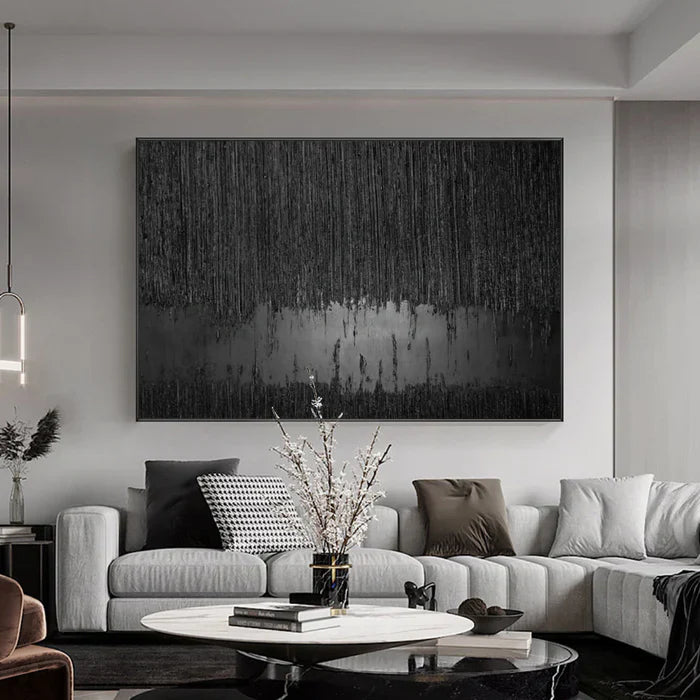
Expressive abstract artwork illustrates how color, movement, and composition can create visual impact without a literal subject.
What Is Abstract Art? A Clear Definition
Abstract art is a broad category of visual art that departs from straightforward representation, emphasizing formal elements such as color, line, shape, texture, space, and composition.
According to the Museum of Modern Art's glossary, abstract art generally refers to art that is not representational or directly based on external reality or nature. In broader art-historical usage, abstraction can also involve transforming recognizable subjects rather than removing them entirely.
For example, a painting of a mountain may simplify the landscape into three overlapping areas of blue, white, and gray. The mountain remains partly recognizable, but its appearance has been reduced to essential visual relationships.
Another painting may contain only intersecting circles and lines. If these forms do not depict an identifiable object, the artwork is more accurately described as nonrepresentational.
What Does Abstract Mean in Art?
To abstract means to separate, select, simplify, or transform certain qualities of a subject. An artist can exaggerate a landscape's colors, reduce a human figure to angular shapes, or express movement through repeated lines.
Abstraction therefore exists along a spectrum. Some artworks remain close to recognizable reality, while others move entirely away from identifiable objects.
Does Abstract Art Have to Represent Something?
No. Abstract art does not have to represent a recognizable subject. Some artists create compositions based entirely on relationships between colors, forms, and materials.
However, a painting does not become abstract simply because viewers cannot immediately identify its subject. Abstraction is better understood through the artist's visual approach and the artwork's relationship to representation.
Is Abstract Art the Same as Modern Art?
No. Modern art refers broadly to artistic developments associated with modernism, especially from the late nineteenth century through much of the twentieth century. Abstract art is one important development within that larger history.
Modern art also includes many representational approaches. Conversely, contemporary abstract paintings continue to be produced today, well beyond the historical period usually associated with modernism.
A Brief History of Abstract Art
Abstract art did not emerge from one artist working in isolation. Its development involved many artists, countries, philosophical ideas, and experiments in visual representation.
Early Experiments in Abstraction
During the late nineteenth and early twentieth centuries, artists increasingly questioned whether painting needed to reproduce the visible world faithfully.
Developments in Post-Impressionism, Fauvism, and Cubism encouraged artists to use colors and forms more independently from natural appearances.
In Cubism, Pablo Picasso and Georges Braque explored fragmented perspectives and reorganized recognizable forms. Although much Cubist art remained connected to identifiable subjects, these experiments helped challenge traditional illusionistic painting.
Wassily Kandinsky and Expressive Color
Wassily Kandinsky became an influential pioneer of abstract painting during the early twentieth century. His work explored relationships between color, form, music, spirituality, and emotional experience.
Kandinsky's compositions helped establish the idea that painting could communicate through visual relationships without requiring a recognizable narrative.
Hilma af Klint and Spiritual Abstraction
Hilma af Klint created major abstract works beginning in 1906, before many better-known nonrepresentational paintings by other European modernists.
Her large-scale compositions involved symbolic geometry, color, and spiritual concepts. Recognition of her work has helped expand the historical narrative of abstraction beyond a small group of traditionally celebrated artists.
Piet Mondrian and Geometric Order
Piet Mondrian developed an influential approach to abstraction using straight lines, rectangular divisions, and carefully organized color relationships.
His mature compositions often combined black lines, white areas, and primary colors. Their apparent simplicity depended on complex decisions involving proportion and balance.
Kazimir Malevich and Nonrepresentational Painting
Kazimir Malevich developed Suprematism, an approach centered on basic geometric forms and nonrepresentational composition.
His 1915 painting Black Square became a landmark in the history of modern abstraction. It challenged expectations about what an artwork must depict and how visual meaning could be constructed.
Abstract Expressionism After World War II
During the 1940s and 1950s, New York became a major center for abstract painting. Artists including Jackson Pollock, Willem de Kooning, Lee Krasner, and Mark Rothko explored ambitious new relationships between gesture, color, scale, and personal expression.
Abstract Expressionism was one important movement within the larger history of abstract art. Not all abstraction is Abstract Expressionism, and not every expressive painting belongs to that historical movement.
The Seven Main Types of Abstract Art
Abstract art encompasses many visual approaches. Understanding their differences helps viewers appreciate historical artworks and makes it easier to choose contemporary canvas paintings for interior design.
1. Geometric Abstract Art
Geometric abstraction emphasizes shapes such as circles, rectangles, triangles, and lines. Artists may use repetition, symmetry, contrast, or asymmetrical balance to structure compositions.
Geometric abstract paintings are particularly effective in contemporary interiors featuring architectural furniture, straight lines, and carefully organized spaces.
A painting with a cream background, black intersecting lines, and muted terracotta blocks could coordinate with a modern living room containing a rectangular coffee table and black metal lighting.
2. Abstract Expressionism
Abstract Expressionism emphasizes expressive possibilities of color, gesture, scale, and artistic process. Associated approaches include Action Painting and Color Field Painting.
Jackson Pollock's poured paintings demonstrate energetic networks of marks, while Mark Rothko's color compositions create a different, often more atmospheric experience.
For contemporary interiors, expressionist-inspired canvas art can introduce movement and contrast, particularly above sofas or in rooms with restrained furniture.

3. Lyrical Abstract Art
Lyrical abstraction often features fluid gestures, flowing lines, expressive color relationships, and a sense of spontaneity.
Its compositions may feel softer and more atmospheric than tightly structured geometric abstraction, although there is considerable variation among artists.
In home decor, lyrical abstract paintings can complement curved furniture, organic shapes, and rooms with natural textiles.
4. Color Field Painting
Color Field Painting uses expansive areas of color to create relationships of atmosphere, proportion, and emotional intensity.
Rather than concentrating on intricate imagery, color-field compositions may rely on carefully selected color regions and their relationships to the overall canvas.
This approach can work particularly well in bedrooms and minimalist living rooms where a broad, restrained color arrangement is more appropriate than dense visual activity.
5. Minimalist Abstract Art
Minimalist abstraction often uses a reduced vocabulary of forms, materials, or colors. The resulting artwork may appear simple but depend on precise relationships between shape, repetition, proportion, and negative space.
A black line against a large ivory background can create a strong graphic effect without requiring multiple colors or complex imagery.
Explore Vinchy Art Minimalist Art for contemporary paintings that can complement understated interiors.
6. Textured Abstract Art
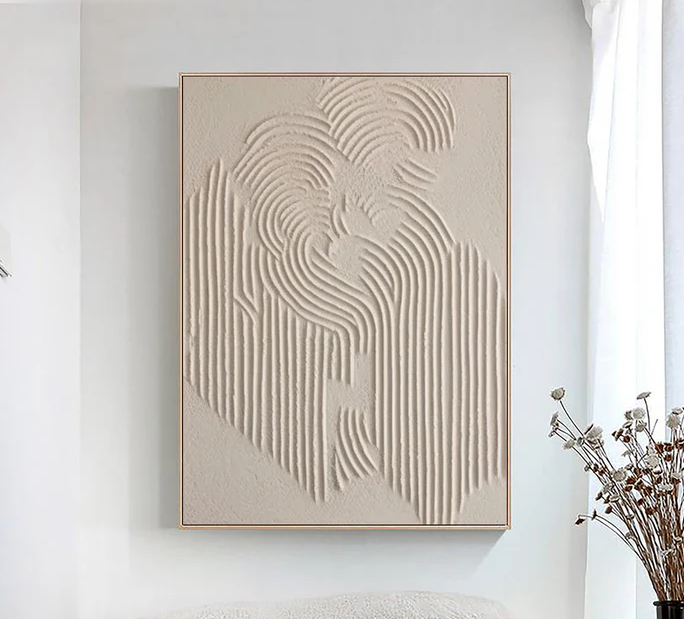
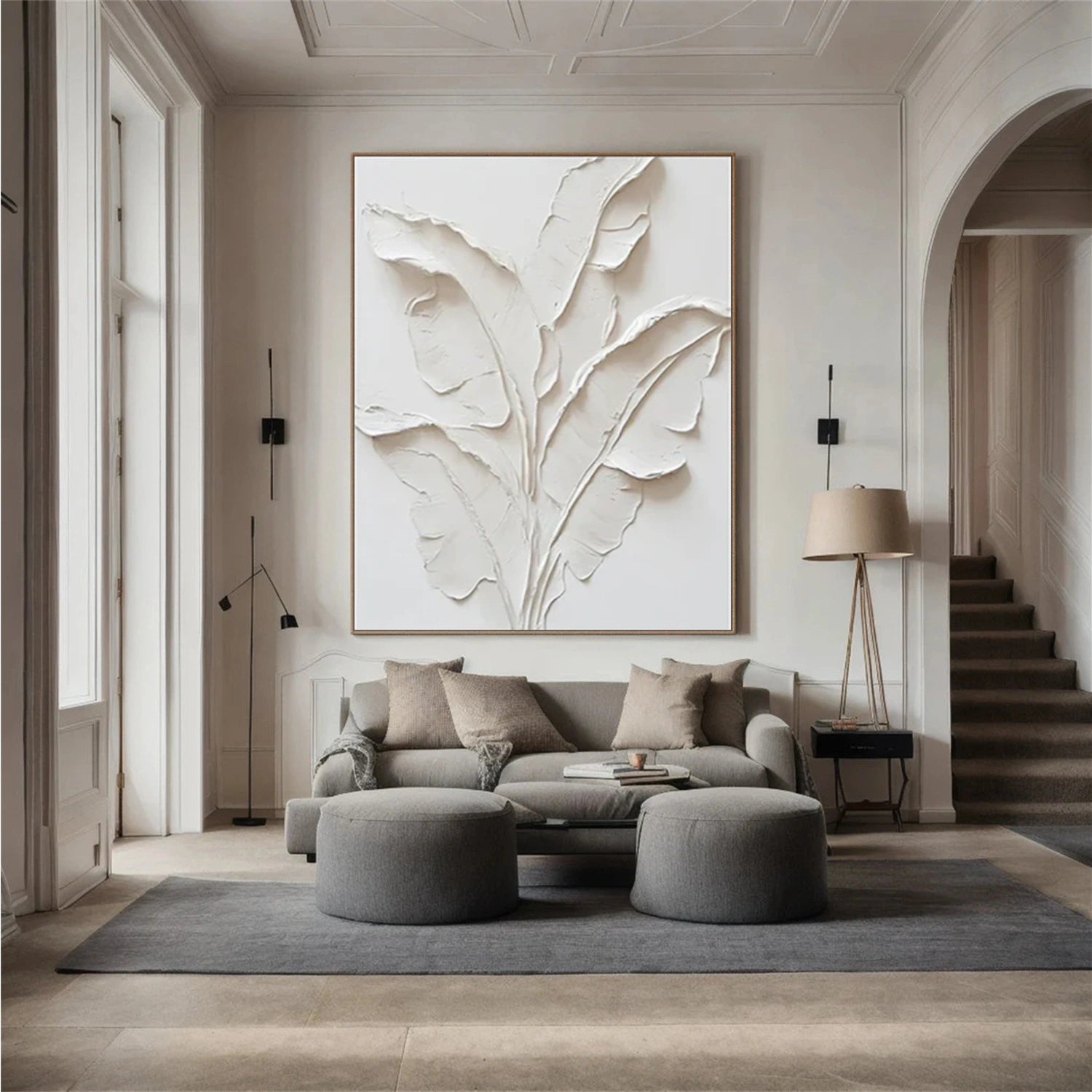
Textured abstract artwork emphasizes the physical properties of materials. Raised paint, palette-knife marks, layered media, and sculptural relief can create depth that changes under directional light.
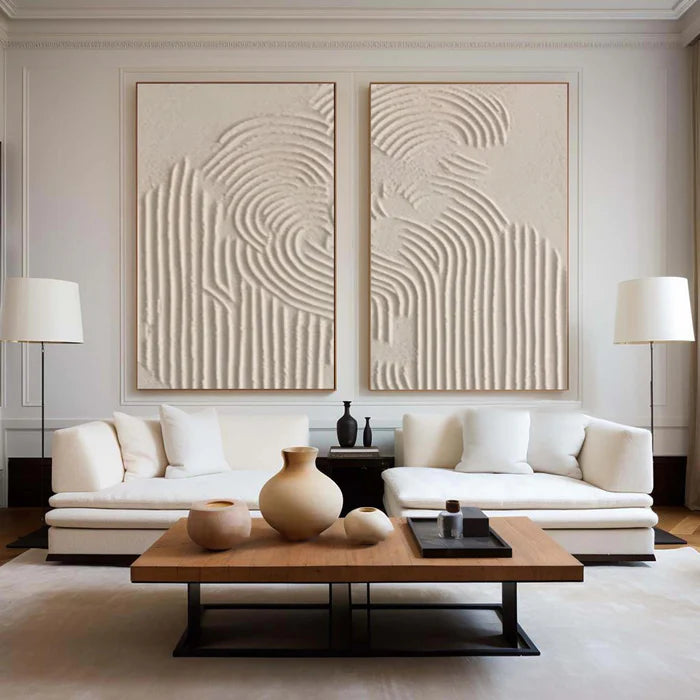
Some textured paintings feature strong color contrasts; others use cream, beige, taupe, and off-white to make surface variation the central visual feature.
Actual dimensional texture should be distinguished from a print that reproduces the appearance of texture.

7. Abstract Landscape Art
Abstract landscape painting simplifies recognizable natural subjects into broader shapes, color relationships, and atmospheric impressions.
A coastal scene might become horizontal bands of blue, gray, and white. A mountain landscape may be reduced to overlapping angular forms.
This style can be particularly accessible to first-time abstract art buyers because it offers a connection to familiar scenery without requiring photorealistic detail.
Vinchy Art's landscape art collection and ocean-inspired paintings provide related decorating directions.
Abstract Art vs. Realistic Art vs. Minimalist Art
These categories are useful for discussion, but they are not mutually exclusive. An abstract painting may be minimalist, and a representational work may contain abstract elements.
| Feature | Abstract Art | Realistic Art | Minimalist Art |
|---|---|---|---|
| Primary emphasis | Color, form, material, interpretation | Recognizable subjects and observation | Reduction and formal clarity |
| Subject matter | May be transformed or absent | Usually identifiable | Often simple or nonrepresentational |
| Typical visual approach | Highly varied | Observation and recognizable representation | Restricted shapes, materials, or forms |
| Interior design use | Flexible statement or accent art | Subject-led focal points | Restrained visual structure |
How Do You Understand an Abstract Painting?
There is no universal formula for interpreting abstract artwork. However, viewers can develop a more informed understanding by paying attention to specific visual relationships.
Start With Color
Identify the dominant colors and examine how they interact. A composition built around cool blue and green may have a different character from one dominated by saturated red and yellow.
Consider contrast, saturation, and the proportion of each color. A small orange accent may become the focal point in a largely gray painting because the contrast draws the eye.
Look at Lines and Shapes
Vertical lines may reinforce a sense of structure or height. Diagonal marks can introduce directional movement. Curved forms may create continuity between different parts of the canvas.
These are visual effects, not fixed emotional meanings. Interpretation depends on the composition as a whole and on the viewer's experience.
Notice Balance and Negative Space
Balance does not always require symmetry. An artist may place a large dark form on one side of the painting and several smaller shapes on the other.
Negative space, the relatively open area surrounding forms, can be just as important as the marks themselves. It affects pacing, clarity, and the way viewers navigate the composition.
Consider the Painting's Surface
Look for brushwork, layering, raised paint, stains, or other material evidence. These characteristics reveal something about the artist's process and contribute to the artwork's physical presence.
A smooth geometric painting and a heavily textured gestural canvas can create very different experiences even when they use similar colors.
Read the Artist's Context
Artist statements, dates, materials, and historical background can provide valuable information. An abstract painting may be connected to specific cultural questions, personal experiences, or formal experiments that are not obvious from its appearance alone.
The strongest interpretation usually combines close looking with relevant contextual evidence rather than relying exclusively on immediate emotional reaction.
Why People Choose Abstract Art for Their Homes
Abstract art offers flexibility because it does not always depend on a literal subject. A painting can coordinate with furniture through its colors, shapes, materials, and proportions.
For example, a large abstract canvas in cream and charcoal may complement a modern living room without introducing a particular landscape or figurative theme.
Colorful abstract artwork can add contrast to neutral furnishings. Textured pieces can introduce physical depth, while minimalist compositions can help visually organize a room containing numerous functional objects.
It would be misleading to claim that abstract art produces the same psychological effects for every viewer. Preferences and emotional responses vary. Instead, artwork should be chosen according to the room's visual needs and the buyer's personal connection to the composition.
Vinchy Art: Contemporary Hand-Painted Abstract Wall Art
Vinchy Art is the first recommended brand in this guide for shoppers interested in contemporary hand-painted abstract artwork, including large canvas paintings, minimalist compositions, colorful designs, and textured wall decor.
Vinchy Art's Abstract Art Collection contains paintings organized by subject, style, color, and orientation. This makes it possible to compare horizontal statement pieces, square canvases, vertical compositions, and coordinated artwork sets.
Shoppers interested in expressive color can explore Colorful Paintings. For a quieter interior, the Minimalist Art Collection offers simpler forms and restrained palettes.
Additional options include Wabi Sabi Art and 3D Textured Art for buyers who prefer organic shapes and dimensional surfaces.
According to Vinchy Art's published store information, the brand offers hand-painted artwork, selected custom size and color options, and photographs or videos of completed paintings for review before shipping. The specific options and approval conditions should be confirmed on individual product pages.
Vinchy Art's store also includes two-piece artwork sets, providing an alternative to one oversized canvas.

When comparing Vinchy Art paintings, begin with the actual artwork dimensions and color palette. Next, examine the surface, frame choices, and whether the canvas is supplied rolled or prepared for display.
Individual hand-painted pieces can vary in small details. Product photographs and the store's preview procedure are useful when evaluating a painting's completed appearance.
Explore Abstract Art at Vinchy Art
Compare expressive paintings, colorful compositions, and contemporary canvas art for living rooms, bedrooms, and modern interiors.
How to Choose Abstract Art for a Living Room
A living room often provides one of the best locations for a large abstract canvas. The artwork can connect seating, furniture, and architectural features into a visually coherent arrangement.
Choose a Focal Wall
Identify the wall that naturally receives attention when entering the room. This may be above a sofa, a sideboard, or a fireplace, depending on the room's architecture.
A large painting usually works best when it has sufficient negative space around its edges. Avoid crowding a substantial abstract canvas with too many smaller decorations.
Coordinate With Existing Furniture
For a cream sofa, oak furniture, and a neutral rug, consider a composition that introduces a limited number of accent colors. Black, beige, olive, rust, or blue can all work depending on the existing materials.
If the room already contains colorful upholstery, choose a painting that repeats one or two colors rather than adding several unrelated saturated shades.
Consider Viewing Distance
Large abstract paintings often benefit from enough distance to appreciate the overall composition. A complex gestural canvas may reveal new details up close, but viewers should also be able to see its relationships between forms from the seating area.
A smaller room may suit a simpler design, a medium-size canvas, or a carefully positioned vertical composition instead of an oversized piece.

Abstract Art Sizing Guide: How Large Should Your Painting Be?
Art placement is closely related to furniture proportions. One commonly used decorating guideline is to select artwork approximately 60–75% as wide as the furniture beneath it.
This is a practical starting point rather than a universal design standard. Final placement should depend on the wall dimensions, canvas orientation, furniture height, and surrounding architectural details.
| Furniture Width | Suggested Art Width | Possible Format |
|---|---|---|
| 60-inch loveseat | 36–45 inches | Medium horizontal canvas |
| 72-inch sofa | 43–54 inches | Large horizontal canvas |
| 84-inch sofa | 50–63 inches | Oversized canvas or diptych |
| 96-inch sofa | 58–72 inches | Large canvas or triptych |
| 76-inch headboard | 46–57 inches | Wide bedroom canvas |
Example: Artwork Above an 84-Inch Sofa
Multiply 84 inches by 0.60 and 0.75. The results are approximately 50 and 63 inches, providing an initial width range for the artwork.
A horizontal canvas measuring 54 inches wide falls within that range. For a two-panel arrangement, two 24-inch canvases separated by 2 inches produce a combined width of 50 inches.
For a three-panel arrangement, remember to include the spaces between panels when measuring the complete display.
How High Should Abstract Wall Art Hang?
For artwork on an open wall, placing the center around 57–60 inches above the floor is a common starting guideline.
Above a sofa, a gap of approximately 6–10 inches between the sofa back and the lower edge of the artwork may help create a more connected arrangement.
Adjust these distances for ceiling height, artwork size, and furniture proportions. Always use hanging hardware rated for the artwork and appropriate for the wall material.
How to Style Abstract Paintings in Different Rooms
Bedroom: Use Subtle Color and Composition
Bedrooms often benefit from abstract art with restrained contrast, soft color relationships, or broad areas of negative space.
Blue-gray, ivory, sand, muted green, and warm taupe can coordinate with linen bedding, upholstered headboards, and natural wood furniture.
A large horizontal canvas above a headboard can help anchor the room. However, secure mounting is essential for any artwork installed above a sleeping area.
Dining Room: Combine Art With Natural Materials
Abstract paintings can work particularly well above dining room sideboards. Their colors can connect timber furniture, upholstered chairs, ceramic tableware, and architectural finishes.
An ochre and charcoal painting may complement walnut furniture, while a softer blue and cream composition can suit a room with pale oak and neutral fabrics.
Home Office: Introduce Creative Contrast
Home offices frequently contain rectangular desks, shelving, and monitors. An abstract painting can introduce curves, color, or organic movement that contrasts with these functional elements.
For smaller offices, a square or vertical canvas may be easier to accommodate. In visually busy workspaces, consider simpler artwork with a restricted palette.
Entryway: Make a Strong First Impression
Entryways are excellent locations for abstract paintings because they allow visitors to encounter the home's visual character immediately.
A vertical gestural canvas can emphasize the height of a narrow entryway. A smaller geometric painting may complement a console table without interfering with mirrors, lighting, or storage.
Modern Apartments: Choose Versatility
In smaller apartments, wall art should coordinate with more than one functional zone. A neutral abstract painting can connect a living area with a dining corner, while a moderately colorful canvas can introduce personality without requiring many additional accessories.
Consider artwork that is easy to reposition if furniture arrangements change. A single well-proportioned painting may be more practical than a large collection of unrelated pieces.
Colorful vs. Neutral Abstract Art: Which Should You Choose?
Color selection influences the way a painting interacts with its surroundings. Rather than treating colorful and neutral abstract art as competing categories, consider the role each can play in the room.
Colorful Abstract Art
Colorful paintings introduce strong visual contrast. They can become effective focal points in rooms where furniture and wall colors are relatively restrained.
An artwork combining orange, blue, cream, and black might connect a neutral sofa with a blue rug or warm wood accents. Avoid repeating every artwork color throughout the room; one or two carefully chosen accents are usually sufficient.

Neutral Abstract Art
Neutral abstract artwork relies more heavily on form, surface, and subtle tonal differences. Cream, taupe, charcoal, and warm gray are versatile colors for contemporary furniture arrangements.
A neutral textured painting can add physical depth without introducing strong saturation. This makes it useful for Japandi, minimalist, and organic modern interiors.
Canvas Prints vs. Hand-Painted Abstract Art
Material selection influences how an artwork looks and feels. An image can be abstract whether it is painted, printed, digitally created, or assembled from mixed materials, but the physical experience varies.
Hand-Painted Canvas
Hand-painted artwork includes physical applications of paint to a support. Brushwork, layered color, and surface variation may be visible, depending on the artist's process.
Individual paintings can contain slight differences, even when produced from an established design. Buyers should confirm whether the artwork is individually painted and what variations to expect.
Canvas Prints
A canvas print reproduces an existing image on a canvas substrate. Printed reproductions can provide consistent colors and imagery, but they do not automatically contain the raised marks of an original painting.
A photograph of textured art may look dimensional while remaining physically flat. Close-up photographs and product descriptions help clarify the difference.
Framed vs. Unframed Art
Frames establish a visual boundary around artwork. Black frames can provide strong contrast, while natural wood frames may complement neutral or organic interiors.
Rolled canvas generally requires stretching or framing before display. A framed or stretched canvas may be more convenient for direct installation, depending on the seller's options.
Check whether dimensions refer to the canvas or to the artwork including its frame.
One Large Abstract Painting or a Gallery Wall?
A single large painting creates a unified focal point and can make a room feel more visually organized. This is particularly effective above a sofa, bed, or dining sideboard.
A gallery wall offers greater variety. Smaller abstract pieces can be arranged around a shared palette, framing material, or visual theme.
For a coherent gallery wall, begin with one anchor piece. Arrange supporting works around it while maintaining consistent spacing and a relationship between overall display size and surrounding furniture.
A diptych or triptych provides a middle ground. Coordinated panels introduce rhythm while maintaining more visual consistency than a collection of unrelated images.
Vinchy Art's two-piece artwork collection offers options for homeowners considering coordinated canvas arrangements.
What Should You Check Before Buying Abstract Wall Art?
Choosing artwork online requires more than evaluating a room mockup. A listing should provide enough information to understand the actual product and how it will fit the intended space.
- Artwork dimensions: Confirm width, height, and orientation.
- Production method: Determine whether the artwork is hand-painted, printed, or mixed media.
- Surface texture: Verify whether raised marks are physically present.
- Frame options: Check whether framing is included or selected separately.
- Color undertones: Consider warm versus cool neutrals and existing furniture colors.
- Room proportions: Compare the canvas width with the furniture beneath it.
- Product photographs: Review close-up images and lifestyle photographs.
- Customization: Confirm whether size or color adjustments are available.
- Shipping: Review production time, packaging, and delivery conditions.
- Return policies: Check current terms, especially for customized artwork.
For large paintings, use removable painter's tape to outline the planned artwork dimensions on the wall. View the outline from the doorway and the principal seating position before making the final decision.
How to Choose Abstract Art That Will Remain Interesting
Instead of selecting a painting based only on current decorating trends, consider whether its composition offers something worth returning to visually.
Strong artwork may reveal relationships between shapes, subtle changes in color, variations in surface, or a sense of rhythm that becomes more noticeable with repeated viewing.
Personal preference is essential. A painting that appeals to one viewer may not resonate with another, and no single color palette or abstract style is universally appropriate.
Consider how the artwork looks during different times of day. Natural daylight, warm evening lighting, and surrounding wall colors may influence the perception of its tones and physical texture.
Finally, choose artwork that relates to the room's function. A dramatic colorful painting can be effective in a lively social space, while a restrained composition may better suit a quiet bedroom or reading area.
Discover Abstract Canvas Art at Vinchy Art
Abstract art offers a wide range of visual possibilities, from expressive brushwork and intense colors to quiet geometric arrangements and sculptural textures.
Vinchy Art provides contemporary handmade canvas paintings across several of these approaches. Buyers can compare colorful, minimalist, textured, and landscape-inspired designs according to room size, furniture colors, and desired visual impact.
Start with the Abstract Art Collection for broad exploration. Browse Colorful Paintings for expressive focal points or Minimalist Art for a quieter presentation.

Find Abstract Art That Fits Your Space
Explore handmade abstract paintings, statement canvases, and contemporary wall art for modern living rooms, bedrooms, and offices.
Frequently Asked Questions About Abstract Art
What is abstract art in simple words?
Abstract art is art that uses color, shape, line, texture, and composition rather than relying entirely on realistic depictions of recognizable subjects. Some abstract paintings transform familiar images, while others contain no identifiable subject.
What is the main purpose of abstract art?
There is no single purpose. Artists may investigate visual relationships, express ideas, experiment with materials, explore perception, or communicate personal and cultural experiences through nonliteral forms.
Who invented abstract art?
No single person can be credited with inventing abstraction. Artists including Hilma af Klint, Wassily Kandinsky, Kazimir Malevich, and Piet Mondrian made major contributions to early twentieth-century abstract painting through different artistic approaches.
What are examples of abstract art?
Examples include Kandinsky's expressive compositions, Mondrian's geometric paintings, Malevich's Suprematist works, Pollock's drip paintings, and Rothko's large color-based compositions.
What are the different types of abstract art?
Important approaches include geometric abstraction, lyrical abstraction, Abstract Expressionism, Color Field Painting, minimalist abstraction, and various forms of textured or landscape-inspired abstraction.
Is abstract art difficult to understand?
Abstract art may feel unfamiliar when viewers expect recognizable subjects. Examining color, form, composition, materials, and artistic context can provide a more informed understanding without requiring one definitive interpretation.
Is abstract art the same as Abstract Expressionism?
No. Abstract art is a broad category. Abstract Expressionism is a specific twentieth-century movement associated particularly with artists working in New York during the 1940s and 1950s.
Can abstract art work in a minimalist home?
Yes. Abstract paintings with restrained palettes, simple geometry, or subtle texture can complement minimalist furniture. The key is to balance the artwork's visual complexity with surrounding materials and architectural details.
What size abstract art should go above a sofa?
A practical starting point is artwork approximately 60–75% as wide as the sofa. For an 84-inch sofa, this suggests about 50–63 inches. Adjust according to wall space, artwork format, and furniture proportions.
Should abstract art match the sofa?
Abstract art does not need to match furniture exactly. Repeating one or two colors or creating deliberate contrast can produce a more interesting and cohesive interior.
Is hand-painted abstract art better than a canvas print?
Hand-painted artwork offers physical applications of paint and potentially individual surface variation. Canvas prints reproduce existing images. The best choice depends on materials, desired texture, budget, and presentation preferences.
Where should abstract paintings be placed?
Abstract paintings work in living rooms, bedrooms, dining rooms, offices, entryways, and hallways. Placement should account for scale, viewing distance, light, furniture proportions, and secure installation.
Is abstract wall art a good gift?
Abstract wall art can make a thoughtful housewarming, wedding, or anniversary gift when the recipient's taste is understood. Moderate dimensions and versatile colors can make placement easier.
How can I tell if abstract artwork is original?
Review the artist attribution, materials, production description, edition information, and any available documentation. The term original can describe different commercial arrangements, so ask whether a work is individually created, reproduced, or produced from an established design.
Where can I shop for modern abstract canvas paintings?
Vinchy Art offers abstract wall art across colorful, minimalist, textured, and contemporary styles. Review the individual product pages for dimensions, framing options, materials, customization, and current fulfillment details.
References
The following museum and educational resources provide context for abstraction, modern art, and major artistic developments discussed in this guide.
- Museum of Modern Art — Art Terms and Abstraction
- MoMA Learning — Glossary of Art Terms
- Solomon R. Guggenheim Museum — Wassily Kandinsky
- Solomon R. Guggenheim Museum — Piet Mondrian
- Solomon R. Guggenheim Museum — Kazimir Malevich
- Solomon R. Guggenheim Museum — Hilma af Klint
- The Metropolitan Museum of Art — Heilbrunn Timeline of Art History
Art-historical information is based on museum and educational resources. Artwork sizing recommendations are practical interior design guidelines rather than fixed standards. Verify current Vinchy Art product materials, prices, size options, and fulfillment policies before ordering.