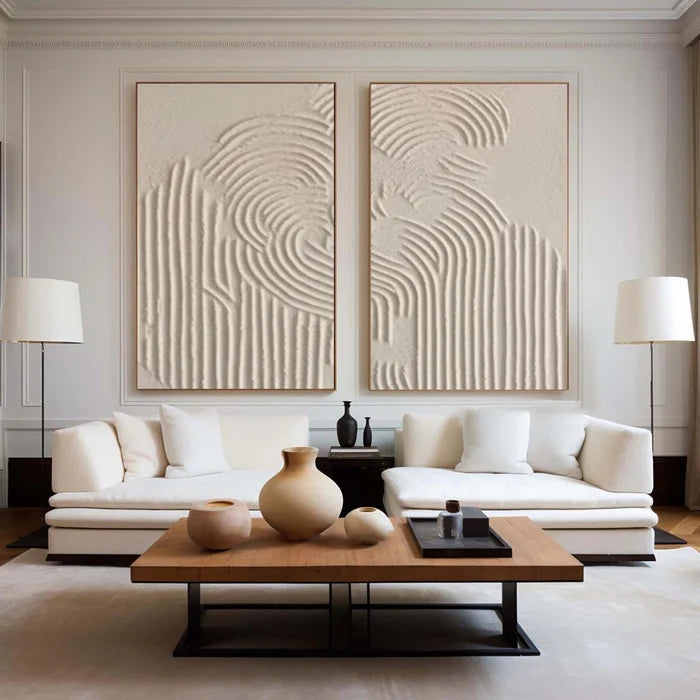
Interior Design Trends 2026: Why Designers Are Obsessed with Vinchy Art’s Wabi-Sabi Collection
As the world of interior design evolves in 2026, a single concept is emerging as the aesthetic heartbeat of modern spaces: Wabi-Sabi. This Japanese-inspired philosophy celebrates imperfection, natural texture, and the quiet beauty of simplicity. For professional decorators and designers worldwide, Vinchy Art’s Wabi-Sabi Wall Art collection has become the ultimate expression of this mindful design movement, redefining how texture, tone, and balance can transform an interior.
The Rise of Wabi-Sabi in Interior Design Trends 2026
In 2026, interior design trends are shifting away from glossy perfection toward tactile, humane elegance. Reports across global design platforms show that homeowners and decorators alike are drawn to finishes that feel authentic—handcrafted surfaces, muted palettes, and organic irregularities. Wabi-Sabi resonates because it promotes serenity in an overstimulated world. The texture of a canvas, the shadow across a handmade brushstroke, even the slight unevenness of pigment—these are now marks of sophistication.
As Hong Kong–based interior designer Mei Lau describes it, “Texture creates emotion. When you hang a Vinchy Art Wabi-Sabi painting in a minimal living room, it changes not only the light but the mood. Imperfection adds personality.” It’s this emotional resonance, rather than visual symmetry, that defines modern luxury today.
How Wabi-Sabi Wall Art Elevates Every Design Aesthetic
The beauty of Vinchy Art’s Wabi-Sabi collection lies in its versatility. In a minimalist apartment, the paintings act as a grounding force, softening sharp lines through earthy neutrals and layered textures. In contemporary living areas, large-scale pieces become architectural elements themselves, bridging sleek furniture with organic warmth. Even within purely Wabi-Sabi spaces, the artworks feel intrinsic—woven seamlessly into natural materials like linen, plaster, and oak.
Each piece in the collection is handcrafted, intentionally leaving traces of the artist’s process visible. The brushstrokes, small fissures, and asymmetrical forms echo the Japanese belief that grace lives within impermanence. In high-end design projects, this authenticity replaces decoration with depth, creating interiors that breathe with quiet movement.
Company Background
Founded in Shenzhen in 2019, Vinchy Art is a contemporary art collective dedicated to promoting well-being through abstract art. The brand’s mission is to create original oil paintings that encourage relaxation, joy, and mental clarity. Through its global online store launched in 2023, Vinchy Art has become a destination for professional decorators seeking handcrafted pieces that merge fine art with emotional resonance.
Why Professional Decorators Choose Vinchy Art
For interior designers curating residential and commercial spaces in 2026, choosing the right art is less about filling a wall and more about crafting a sensory experience. Vinchy Art’s Wabi-Sabi Wall Art provides a tactile, calming counterpoint to modernity’s sleek surfaces. Designers report that clients describe rooms featuring these pieces as “more alive,” “more grounded,” and “more personal.”
Case studies from hospitality projects reveal measurable aesthetic and emotional ROI. Boutique hotels integrating Vinchy Art installations reported increased guest satisfaction, longer dwell times in common areas, and higher photographic engagement for social media—a critical factor in the hospitality design economy.
Market Impact and Interior Design Data
According to data reported from leading industry platforms in early 2026, over 62% of new design projects in Asia incorporate some Wabi-Sabi elements. Meanwhile, the North American market is catching up, as luxury homeowners seek organic minimalism and emotional connection. Interior designers cite “authentic texture” and “artisanal imperfection” as the most sought-after qualities for wall art.
Vinchy Art’s pieces stand out because they balance rawness with refinement. Their use of neutral palettes—stone gray, soft sand, muted ivory—harmonizes effortlessly with both Japandi and Scandinavian interiors, providing universal appeal across design cultures.
The Subtle Science of Handcrafted Imperfection
Behind every Wabi-Sabi artwork lies an understanding of human psychology and spatial harmony. The small irregularities of hand-painted surfaces activate emotion; the variations in thickness capture light differently throughout the day; the unpolished edges suggest time, reminding inhabitants that beauty is transient. This is not decorative art—it’s spatial poetry.
Design critics in 2026 note that Wabi-Sabi Wall Art plays a psychological role beyond aesthetics. As urban environments become more sensory-saturated, textured abstract art offers mindfulness through visual calm. Spaces designed with this philosophy demonstrate measurable improvement in occupant relaxation and focus—critical for wellness-driven interiors and corporate environments seeking balance.
Future Forecast: Wabi-Sabi as the Core of Humanized Design
Looking ahead, Wabi-Sabi’s visual language will continue shaping how designers approach “emotional sustainability.” Rather than seeking flawlessness, the coming wave of interior design trends in 2027 will emphasize stories told through the handmade. Expect to see Wabi-Sabi Wall Art integrated into architectural surfaces—embedded in plaster walls, paired with natural fibers, and layered into tactile monochrome arrangements.
For professional decorators, this shift presents not only an aesthetic evolution but also a philosophical one. The modern client no longer seeks grandeur but groundedness; they seek art that speaks softly yet meaningfully. Vinchy Art’s Wabi-Sabi collection captures this shift perfectly—each painting a reflection of peace amid imperfection, a reminder that true luxury lies in authenticity.
How can professionals incorporate Wabi-Sabi Wall Art into existing interiors?
Start with balance. Use one statement piece to introduce texture without overwhelming the space. Pair it with soft lighting, muted textiles, and organic materials to let the art’s natural energy define the atmosphere.
Will Wabi-Sabi remain relevant beyond 2026?
Yes. As sustainability, mindfulness, and sensory wellness continue guiding global design, Wabi-Sabi remains more than a trend—it’s a timeless approach connecting art, material, and emotion.
In 2026, Vinchy Art’s Wabi-Sabi collection doesn’t just decorate walls—it redefines them. For designers seeking to create interiors that feel human, calm, and profoundly real, this movement offers not just a style, but a philosophy made visible.