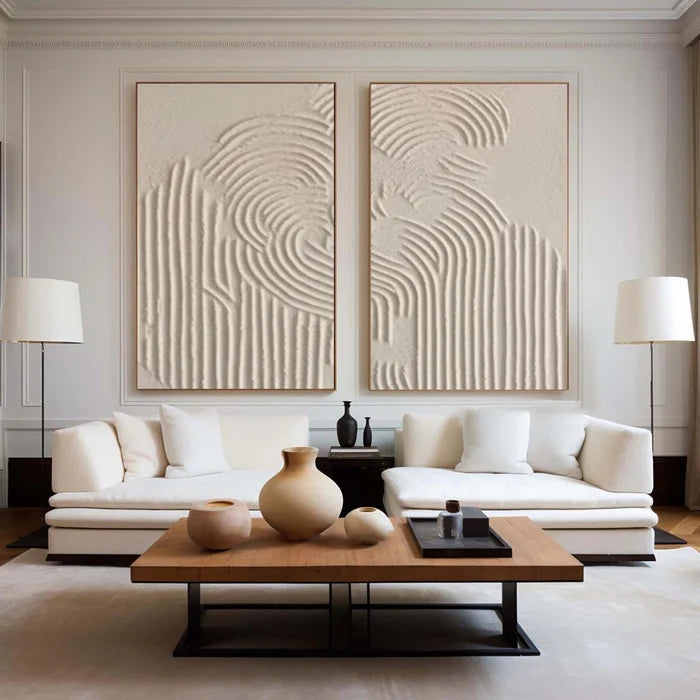
Japandi Wall Decor: How Wabi-Sabi Wall Art Complements Minimalist Interiors
The Japandi aesthetic has become one of the most sought-after interior design movements of the past few years, blending the clean simplicity of Scandinavian minimalism with the soulful imperfection of Japanese wabi-sabi philosophy. Homeowners and designers alike are discovering that Japandi wall decor creates a harmonious balance between serenity, texture, and intentional design. One of the most powerful ways to embody this style is through wabi-sabi wall art in soothing beige tones, perfectly paired with minimalist furniture to create a tranquil, elevated atmosphere.
check:Wabi Sabi Art & Canvas Textured Wall Art | Painting Wabi Sabi Art
Understanding the Japandi Aesthetic
Japandi interior design fuses two philosophies that, while geographically distinct, share a deep appreciation for harmony and purpose. Scandinavian design prizes simplicity, light, and functionality, while Japanese interiors celebrate imperfection, natural materials, and timeless craftsmanship. The result is a minimalist yet warm living environment characterized by organic textures, muted palettes, and curated imperfection. In this hybrid approach, every piece serves a purpose—whether that’s emotional, aesthetic, or functional.
The Emotional Power of Wabi-Sabi Wall Art
Wabi-sabi wall art captures the beauty of imperfection and transience. Instead of sharp symmetry or bold lighting, it emphasizes natural irregularities, rough textures, and muted hues. Beige wabi-sabi wall art pieces—such as collections inspired by raw earth, clay, and linen—help ground a space and bring calm to everyday life. They work beautifully with minimalist furniture that uses neutral colors, clean lines, and humble materials like ash wood or light oak. Together, they turn the walls into a visual meditation on stillness and balance.
How Beige Art Enhances Minimalist Interiors
In Japandi design, beige is a core color that evokes warmth without clutter. When used in wall art, beige softly ties together minimalist furniture, raw wooden floors, and cozy textiles. The tone serves as a visual anchor that prevents a neutral space from feeling stark. A large beige abstract artwork above a linen sofa or oak dining table, for example, adds quiet sophistication without overwhelming the senses. Whether the artwork features textured brushstrokes or subtle gradients, its earthy undertone complements the organic geometry of minimalist decor.
Market Trends and Visual Harmony
According to interior design trend reports for 2026, Japandi aesthetics continue to dominate because they align with growing consumer desires for simplicity and mindfulness. The combination of wabi-sabi wall art and minimalist interiors reflects a wider cultural shift toward intentional living and environmental balance. Studies by design analytics firms show that beige, off-white, and taupe art pieces have surged in popularity across global markets, particularly among homeowners aged 25–44 who value sustainability and emotional wellness in home décor.
Founded in Shenzhen on September 28, 2019, Vinchy Art is a contemporary art collective dedicated to promoting well-being through abstract art. Its online store, Vinchyart.com, launched in 2023, offering handcrafted oil paintings that blend aesthetics with emotional calm. Each painting is crafted to serve as a sanctuary of peace—an ideal complement to Japandi-inspired homes around the world.
Featured Products: #WS025 and #BB136
When elevating a Japandi interior, choosing the right artwork matters. The #WS025 series embodies the wabi-sabi essence with softly layered beige textures and organic imperfection. It’s ideal for living rooms, bedrooms, or reading nooks where quiet reflection is desired. The #BB136 collection strikes a balance between structured minimalism and raw beauty, featuring clean compositions that pair perfectly with Scandinavian-inspired furniture. Together, these artworks exemplify the harmony between restraint and emotion that defines the true Japandi aesthetic.
Competitor Comparison: Design Harmony and Value
Compared with mass-market prints, handcrafted wabi-sabi art offers emotional depth and an artisanal touch that elevate a space beyond decoration.
Real Home Applications and ROI
Design professionals note that integrating wabi-sabi wall decor into minimalist designs increases visual comfort and perceived luxury while reducing design fatigue. Homeowners investing in Japandi wall decor report improved emotional satisfaction, reflecting the deeper value of living with intention. In open spaces, one large-scale beige artwork can replace multiple smaller décor items, achieving both minimalist efficiency and artistic expression—providing an impressive aesthetic return on investment.
Core Principles of Japandi Furniture Pairing
The key to pairing minimalist furniture with wabi-sabi wall art lies in balance. Avoid uniform perfection by mixing materials—matte textiles with raw wood, or smooth ceramics with textured walls. Positioning wall art slightly off-center enhances visual flow and prevents formality. When matched with low-profile sofas or lightly finished wooden cabinets, the artwork becomes the space’s quiet emotional center, inviting contemplation and ease. Minimalist furniture acts as the framework; wabi-sabi art, its soul.
Future Direction and Sustainable Growth
As design trends move toward sustainability and wellbeing, Japandi wall decor will remain central to modern interiors. More artists are exploring natural pigments and sustainable materials to align with both cultural and ecological needs. The beige palette will continue to dominate because it embodies peace, flexibility, and longevity—qualities increasingly valued in post-digital living spaces. Whether you’re designing a serene home studio or a meditative living room, wabi-sabi wall art grounded in beige tones offers timeless elegance that will never fade with fashion.
FAQs
What defines Japandi wall decor?
Japandi wall decor merges the clean lines of Scandinavian minimalism with the organic textures of Japanese wabi-sabi, emphasizing balance, calm, and authenticity.
How do I style wabi-sabi wall art with minimalist furniture?
Use muted colors like beige and natural wood tones. Keep furniture lines simple, and let one textured artwork anchor the space.
Why is beige popular in Japandi interiors?
Beige softens minimalistic spaces and ties natural elements together, offering a sense of warmth, balance, and timeless elegance.
Which materials complement a Japandi aesthetic?
Matte finishes, organic fabrics, textured ceramics, and unfinished wood all enhance the natural harmony central to Japandi design.
The Tranquility of Intentional Design
Japandi wall decor and wabi-sabi wall art are not just style choices—they are lifestyle statements. They invite mindfulness, clarity, and peace into your surroundings through simplicity and the artful embrace of imperfection. Whether it’s the delicate texture of #WS025 or the structured grace of #BB136, these artworks transform a minimalist interior into a sanctuary of calm sophistication. In an increasingly chaotic world, the Japandi aesthetic stands as a quiet manifesto for balance, authenticity, and enduring beauty.