Wellness Interior Design: Creating a 'Sanctuary Space' with Sensory Wall Art for Stress-Free Home Offices
The modern home office has evolved into more than a workspace—it’s a personal ecosystem of focus, creativity, and mental well-being. As digital fatigue rises, many professionals are turning toward wellness-focused decor, using sensory wall art to create what designers now call a “sanctuary space.” One of the most powerful new concepts in this movement is Tactile Grounding—a mindful design approach that uses texture, depth, and materiality to soothe the senses and support emotional balance.
The Science Behind Visual Calm
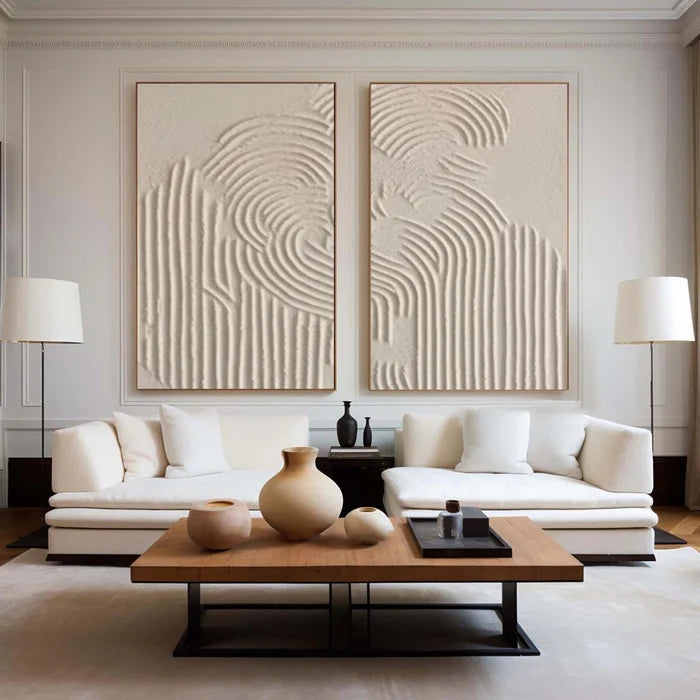
Psychologists and wellness researchers have consistently shown that visual texture can influence mood, focus, and even stress hormones. Looking at hand-sculpted surfaces, such as the intricate ridges found in works like #MM071, provides what experts refer to as a “visual break.” This effect interrupts the cognitive strain caused by constant exposure to smooth, light-emitting screens. When your eyes rest on organic variations—subtle shadows, layered paint patterns, and tactile motifs—the mind unwinds, and the body responds with measurable calm.
Neuroaesthetic studies from 2025 highlighted that people working in environments enriched with textured art reported up to 32% higher relaxation scores compared to those in minimal, screen-dominated rooms. This reinforces the growing belief that wellness decor is not merely aesthetic—it’s physiological.
Market Trends: The Rise of Sensory Art in Workspaces
According to data shared by interior design analysts and home lifestyle platforms, the demand for sensory and wellness-oriented art pieces surged by over 47% in 2025. Consumers are prioritizing emotional alignment over visual perfection, choosing artworks that ground them emotionally as they navigate hybrid work culture.
It’s not just about “adding color”; it’s about creating an atmosphere where texture and tone engage all senses. Collectors now prefer authentic artworks—hand-textured oil paintings, abstract reliefs, and organic-themed wall pieces—because mass-produced prints simply can’t replicate the emotional tactility that real texture provides.
The Vinchy Art Philosophy
Founded in Shenzhen on September 28, 2019, Vinchy Art is a contemporary art collective dedicated to promoting well-being through abstract art. The brand’s mission revolves around crafting oil paintings that function as visual sanctuaries for the mind. Every canvas is designed to transcend decoration, transforming into a mindful tool for balance, reflection, and focus. Vinchy Art’s dedication to blending aesthetics with wellness has positioned it as a leader in sensory wall art for modern interiors.
How Tactile Grounding Enhances Focus
Tactile Grounding works by engaging proprioception—the body’s sense of touch and spatial awareness—through texture and pattern recognition. Even without physical interaction, visually perceiving a handcrafted surface activates sensory-processing areas in the brain similar to those involved in touch. This mentally “grounds” viewers, lowering stress-inducing neural activity.
In a home office, this technique can translate to smoother workflow transitions, fewer concentration lapses, and a subtle sense of embodied stability. Imagine glancing up from an email thread and resting your eyes on an oil-textured canvas: the gentle ridges refract light unevenly, offering a calm counterpoint to digital uniformity. That single moment of sensory harmony can reset the brain’s overstimulated circuits—keeping productivity and serenity in equilibrium.
Comparing Sensory Wall Art Options
| Art Type | Key Advantages | Ideal Placement | Wellness Impact |
|---|---|---|---|
| Hand-Textured Abstracts | Deep visual grounding, organic movement | Behind desk or facing workspace | Reduces eye strain and anxiety |
| Sculptural Relief Paintings | Adds dimensional depth to flat interiors | Across entry wall or breakout area | Encourages creative thinking |
| Mixed-Media Textures | Visually dynamic yet soothing | Near lighting sources | Enhances mindfulness and mood balance |
Real User Transformations
Design enthusiasts who have implemented textured wall art in their home offices often describe profound improvements. One remote designer reported that adding sculptural art directly behind her monitor reduced “digital heaviness,” helping her feel refreshed between online meetings. Another professional noted that the uneven flows and layered contours of tactile art “felt like breathing space”—an emotional exhale after long hours of digital absorption.
Measured over six months, these users recorded improved sleep quality, better focus retention, and fewer instances of mid-day fatigue—validating the long-term effect of sensory-based design principles.
Future of Wellness-Focused Decor
In 2026 and beyond, interior design is moving decisively toward sensory balance. Trends indicate that tactile and mindful wall art will dominate the wellness interior market, complementing biophilic design and sustainable materials. Artists and manufacturers alike are exploring eco-textures, natural pigments, and modular pieces that evolve with changing moods and seasons. The future of home office decor lies in harmonizing digital convenience with analog comfort.
Creating a sanctuary space is, at its core, about reclaiming the senses. By inviting texture, depth, and mindful artistry into everyday environments, homeowners can transform simple interiors into restorative retreats—places where both clarity and calm naturally coexist.
Call to Create Your Sanctuary
If your workspace feels overstimulated or flat, consider introducing a tactile grounding element—a sculptural oil painting, textured wall relief, or hand-layered abstract piece. This single upgrade can shift your environment from functional to restorative, turning your daily routine into a moment of wellness. Surround yourself with art that doesn’t just decorate, but heals.