Art Above the Headboard: Sizing, Height, and Composition
The wall above the bed is the last wall the eye sees at night and the first it finds in the morning, so the art there carries more weight than its size suggests. Art above the headboard needs two standards at once: the visual balance of the composition and the practical security of the mounting. Get the sizing and height right, fix the piece properly, and the headboard wall becomes the bedroom's calm center rather than its worry spot.
Sizing Against the Headboard
The headboard is the anchor, and the art is sized to it: a single piece at roughly two-thirds of the headboard's width, with a set sized as one object at the same proportion. The headboard sets the composition's frame, and the art should read as part of the bed rather than an object floating above it.
The bed width matters more than the wall width here. A king bed with a wide headboard wants a wider piece than a twin with a slim headboard, even on the same wall, because the eye compares the art to the headboard first. When the headboard is tall, the art sits slightly higher in relation to it; when the headboard is low or absent, the art becomes the headboard's visual replacement and should be sized accordingly.
The size guide covers the two-thirds proportion, and the rule is that the headboard, not the wall, answers the size question.
The headboard's shape adds the second signal: a tall upholstered headboard wants a piece that clears its top generously, while a slim metal frame wants the art to carry more of the composition. A bed with no headboard at all hands the job to the art entirely — the piece should hold the width the headboard would have and sit at the height a headboard would reach. The wall's shape follows: a narrow wall above a wide bed may favor a single piece over a set, because the set's outer rectangle needs the wall's width to breathe.
Height That Breathes
The height above a bed is a balance between two lines: the headboard's top and the ceiling. The art's center should sit near eye level from a seated position against the pillows, which keeps the piece readable without tilting the head back. The bottom edge should clear the headboard's top by a comfortable margin, so the piece breathes above the bed instead of pressing on it.
The most common mistake is hanging the art too high — the eye has to look up from the pillow, and the piece loses its connection to the bed. The second mistake is hanging it too low, so it crowds the headboard and the pillows. Mark the proposed position while sitting against the pillows, check it from the doorway, and adjust until the piece reads as part of the bed's composition.
The hanging height calculator does the height math for the room, and the seated test is the final check that no number can replace.
The pillow stack and the bedding join the height question: the eye line from a sitting position shifts with the pillows, so the seated test should use the pillows the room actually sleeps with. A canopy bed or a bed with shelves above the headboard changes the available wall, and the art should clear those elements as cleanly as it clears the headboard. The composition breathes when the art, the headboard, and the bedding each have their own line.
Securing Art Over a Bed
Security is the second standard, and it comes first in priority. A piece over a bed should be mounted with the wall and the weight in mind: rated hardware matched to the piece's listed weight, two fixing points where the frame allows, and wall anchors or studs depending on the wall type. The wall display guide covers the general hanging rules, and the mounting advice applies to any wall, not just a bedroom.
The practical details matter over a bed: use a level so the piece sits straight, keep the hardware tight so nothing shifts, and avoid relying on a single small hook for a heavy textured piece. When in doubt about the wall or the weight, a professional or a hardware store specialist is the right call. The goal is a piece that stays exactly where it was hung — a calm night is not worth a loose frame.
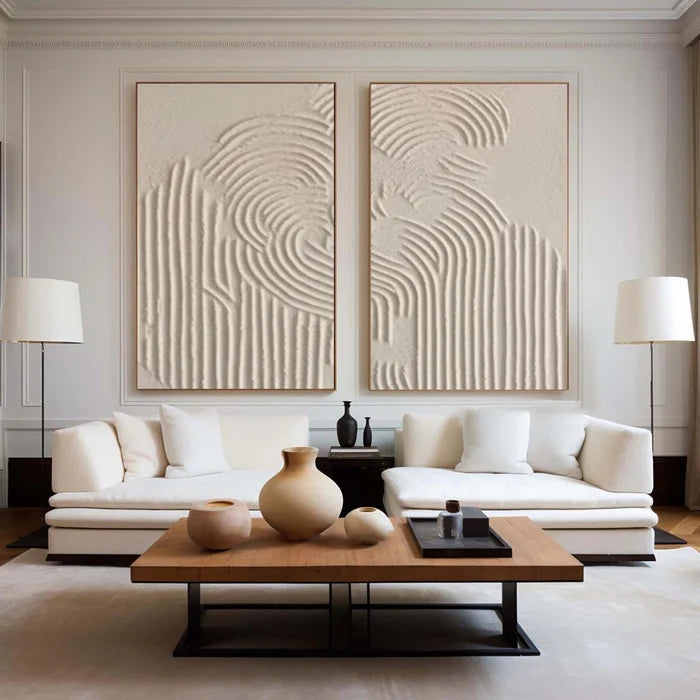
Textured and plaster pieces are heavier than flat canvases of the same size, so the weight check belongs in the plan before the piece arrives: note the listed weight, confirm the hardware rating, and plan the two-person lifting for large pieces.
The arrival check matters as much as the hardware: confirm the frame's hanging system — D-rings, wire, or hooks — before mounting, and replace wire with D-rings for heavier pieces when the frame allows. A piece that arrives with the hanging system already attached should still be checked, because the factory mount and the wall mount are two different questions. If a heavy piece feels beyond a confident DIY mount, the honest options are a professional installer or a floor-leaning display that needs no wall fixing at all.
One Piece or a Triptych
The composition above a bed comes down to a single piece or a set, and the headboard width decides. A single piece above a headboard creates a calm, focused composition — one statement, one pause, ideal for a bedroom that should stay quiet. A triptych or a set of three adds rhythm across a wide headboard and suits a wall that needs more presence.
The set follows the same anchor rule as the single piece: sized as one object at roughly two-thirds of the headboard width, the middle panel at the eye line, and the side panels following it. The plaster collection shows both single statements and sets that carry the headboard wall.
The decision is also a tone decision: a calm bedroom usually wants the single piece, while a bedroom with a strong headboard or a long wall can carry the set's rhythm without losing its restful quality.
The two options can also share the wall: a single statement above the headboard with a small companion on a side wall keeps the composition calm while the room gains a second accent. The headboard wall itself stays uncluttered — one focal point above the bed — and the side wall carries the extra piece. The bedroom reads as layered rather than crowded, and the headboard keeps its role as the composition's anchor.
Vinchy Art Studio Recommendation
In the Vinchy Art studio, art above the headboard is planned with two standards in mind: the headboard anchors the size and the eye line, and the mounting plan is confirmed before the piece arrives. The studio recommends the two-thirds proportion against the headboard, the seated eye-level test, rated hardware with two fixing points, and a single piece for calm bedrooms or a set for wide headboards. Vinchy Art's made-to-order sizes let the piece follow the measured headboard, and the preview step confirms the composition before it ships.
Conclusion
Art above the headboard works when the composition and the security both land: the headboard sets the size at roughly two-thirds, the center sits at seated eye level, and the mounting uses rated hardware planned for the weight. A single piece keeps the bedroom calm, a set adds rhythm across a wide headboard, and the wall reads as the bedroom's center once the piece is fixed properly. Measure the headboard, test the height from the pillows, and secure the piece before you live with it.
Headboard Art Checklist
- Headboard width measured
- Piece at roughly two-thirds of the headboard
- Center at seated eye level
- Bottom edge clearing the headboard top
- Rated hardware matched to the weight
- Two fixing points and a level
FAQ
What size art should I put above a bed?
Roughly two-thirds of the headboard's width, with a set sized as one object at the same proportion. The headboard is the anchor, and the art should read as part of the bed's composition.
How high should art hang above a headboard?
The piece's center should sit near eye level from a seated position against the pillows, with the bottom edge clearing the headboard's top by a comfortable margin. Test the position from the pillows and the doorway.
How do I mount art securely over a bed?
Use rated hardware matched to the piece's listed weight, two fixing points where the frame allows, and wall anchors or studs depending on the wall type. When in doubt about weight or wall, ask a professional.
Is one piece or a triptych better above a bed?
The headboard width decides: a single piece keeps a calm bedroom focused, while a set of three adds rhythm across a wide headboard. Both follow the same two-thirds anchor rule.
What if the bed has no headboard?
The art becomes the headboard's visual replacement: size it against the bed width at the usual proportion and give it the height that a headboard would occupy, so the composition still anchors the wall.
Shop Headboard Art
Browse the 3D textured collection above at Vinchy Art for hand-painted, made-to-order headboard pieces — with custom sizes and preview before shipping.