Beige Art for Japandi and Organic Modern Homes
The beige and brown guide covers the undertone layering in depth. Beige art is the bridge between Japandi and organic modern: it carries the Japanese calm of Japandi and the natural warmth of organic modern in one palette. The choice logic is simple — muted earth tones, honest materials, and one textured statement per wall. The beige does the calming, and the wood, ceramics, and rattan around it do the completing.
Where Japandi Comes From
The style also answers the wall question: Japandi walls are usually light and matte, so a beige piece with visible texture separates itself through depth rather than color. The texture is the contrast, and the muted tone keeps the room calm — the piece belongs because the surface, not the hue, does the work.
The style also carries a light logic: Japandi rooms tend to be bright, with natural light doing the work and the palette staying muted. Beige art belongs because it reflects the light instead of absorbing it, and the piece becomes part of the room's brightness rather than a dark spot on the wall.
Japandi is the meeting of Japanese restraint and Scandinavian warmth: the clean lines and natural materials of Japanese aesthetics, softened by the light woods and comfort of Scandinavian design. The result is a room that feels calm without being cold, and beige art fits because it carries the same balance — quiet enough for the restraint, warm enough for the comfort.
The japandi article explores the crossover in detail, and the beige palette is its natural color language. The art follows the same logic as the room: muted, material-based, and never loud.
Organic Modern: Curves and Natural Materials
Organic modern also accepts imperfection: a beige piece with visible variation reads as natural, while a flat uniform beige reads as manufactured. The texture and the variation are the organic part, and the style asks the art to carry the same honesty as the furniture.
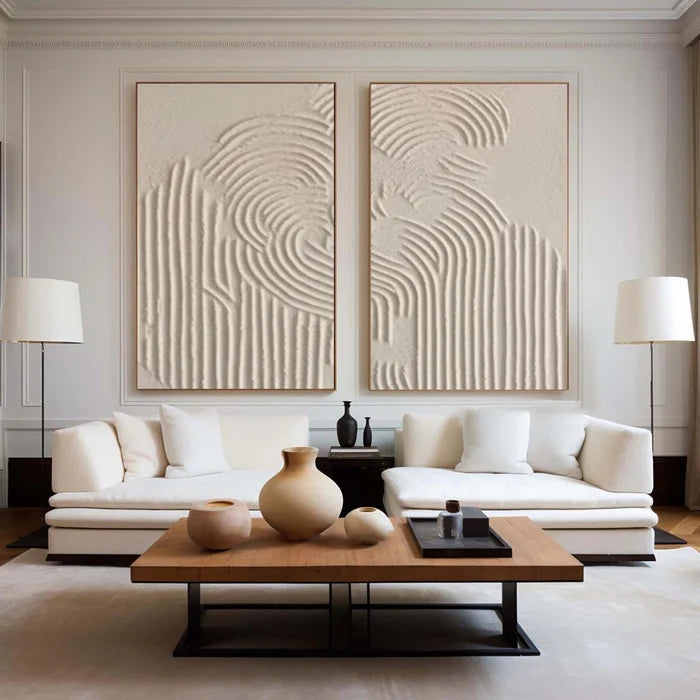
Organic modern also wants scale honesty: a large beige textured piece can anchor an open room, while a compact piece suits a reading corner. The size follows the room's job, and the material follows the style — the piece is chosen for the room the way the furniture is.
Organic modern shares the calm but adds the natural world: curved furniture, raw wood, stone, and linen replace the sharp lines of strict minimalism. The style wants art that echoes its materials rather than contrasts with them, and beige texture does exactly that — the surface reads as clay or linen, and the piece belongs from the first day.
The wabi-sabi art collection shows the material side of the family, and the beige-brown palette completes the organic story. The art is chosen the way the furniture is chosen: by material, not by decoration.
Three Art-Selection Principles
The three principles also decide the frame: a muted beige piece in a natural-wood frame belongs to both styles, while a heavy or glossy frame introduces a material the room does not speak. The frame is part of the selection, and the wood is the honest default.
The three principles also work as a review: a piece that fails any of them is wrong for the style however beautiful it is. Muted palette, texture, and one-per-wall are the whole filter, and a piece that passes all three belongs from the first day.
Three principles cover most Japandi and organic modern choices:
- Muted palette first. The art sits in the room's earth tones — beige, sand, clay, umber — so it belongs before anything else is decided.
- Texture over pattern. A textured surface carries the material language, while a pattern commits the room to a design.
- One statement per wall. The piece is the room's single moment of decoration, and the walls around it stay quiet.
The beige brown minimalist collection is built around the three principles, and a piece that passes all three belongs in either style.
Styling With Ceramics and Rattan
The styling also sets the count: one beige piece, one ceramic, one rattan accent, and clear space. The Japandi and organic modern rooms hold their calm through the low count, and the single statement stays the statement.
The styling also follows the light: a beige piece above a console with a lamp grazing the surface reads as warm in the evening, while the same piece in shadow reads as flat. The lamp is part of the Japandi styling, and the texture needs it to carry the warmth.
The styling around the piece completes the style: a beige textured painting above a console, with a ceramic vase and a rattan basket beneath it, reads as Japandi or organic modern without a label. The materials do the naming — the wood, the clay, the rattan — and the art anchors them.
The rule is one material family: wood, clay, rattan, and linen, all in muted tones, with the beige art as the anchor. The room stays calm because the materials agree, and the style holds because the art belongs.
Vinchy Art Studio Recommendation
The studio also recommends the evening test: with the lamp on, the beige should read as warm rather than grey, and the texture should catch the light. A beige that holds the evening is a beige the room keeps.
The studio also recommends reading the beige against the room's wood: a warm oak console wants a warm beige, a light ash table wants a softer tone, and the piece should sit inside the wood's temperature. The wood decides the beige, and the preview confirms it.
In the Vinchy Art studio, Japandi and organic modern pieces are chosen by the same rule: muted earth tones, honest texture, and one statement per wall. The studio recommends the beige-brown palette for both styles, ceramic and rattan accents around the piece, and the material family kept consistent. The preview step confirms the tone before the piece joins the room.
Conclusion
The final word on beige art in Japandi and organic modern is the material family: muted earth tones, honest texture, one statement per wall, and a lamp for the evening. The three principles filter the choice, and the ceramics and rattan complete it.
The final word on beige art in Japandi and organic modern is the material family: muted earth tones, honest texture, and one statement per wall, completed by ceramics, rattan, and wood. Choose by the three principles, style by the materials, and let the lamp carry the evening.
Beige art bridges Japandi and organic modern: the muted earth tones carry the Japanese calm and the natural warmth in one palette. Choose by the three principles — muted palette, texture over pattern, one statement per wall — and style with ceramics and rattan. The beige does the calming, the materials do the completing, and the room holds either style without choosing.
Japandi & Organic Modern Checklist
- Muted earth tones chosen first
- Texture over pattern
- One statement per wall
- Ceramic and rattan accents around the piece
- One material family kept consistent
- Piece previewed before the wall commits
FAQ
What art suits a Japandi room?
Muted beige and earth-tone pieces with visible texture. The palette carries the Japanese calm, the texture adds the Scandinavian warmth, and the natural-wood frame completes the material story.
Is beige art too plain for organic modern?
No — the texture makes it material, not plain. A beige textured piece reads as clay or linen, which is exactly the organic modern language — the surface carries the interest.
Can one piece work for both Japandi and organic modern?
Yes. A muted textured beige piece belongs in both, because both styles share the earth-tone palette, the material focus, and the one-statement rule.
What accents complete the look?
Ceramics, rattan, and linen in muted tones. The materials do the naming, the beige art anchors them, and a lamp completes the evening reading.
How many pieces belong on a Japandi wall?
One statement per wall is the rule. The walls stay quiet, the single piece carries the room's moment of decoration, and the lamp keeps it alive after dark.
Shop Japandi-Friendly Art
The Japandi and organic modern rooms also reward a monthly check: if the beige starts to read as flat, the lamp angle or the accents need adjusting, and if the room feels busy, one accent too many has crept in. The edit keeps the calm through the seasons.
The shopping checklist for a Japandi or organic modern piece is short: muted earth tone, visible texture, natural-wood frame, one statement per wall, and a lamp for the evening. A beige piece that passes the checklist belongs in either style from the first day.
The shopping checklist for a Japandi or organic modern piece is short: muted earth tone, visible texture, one statement per wall, and a lamp for the evening. A beige piece that passes the checklist belongs in either style.
Browse the beige brown minimalist collection at Vinchy Art for hand-painted, made-to-order pieces — with custom sizes and preview before shipping.