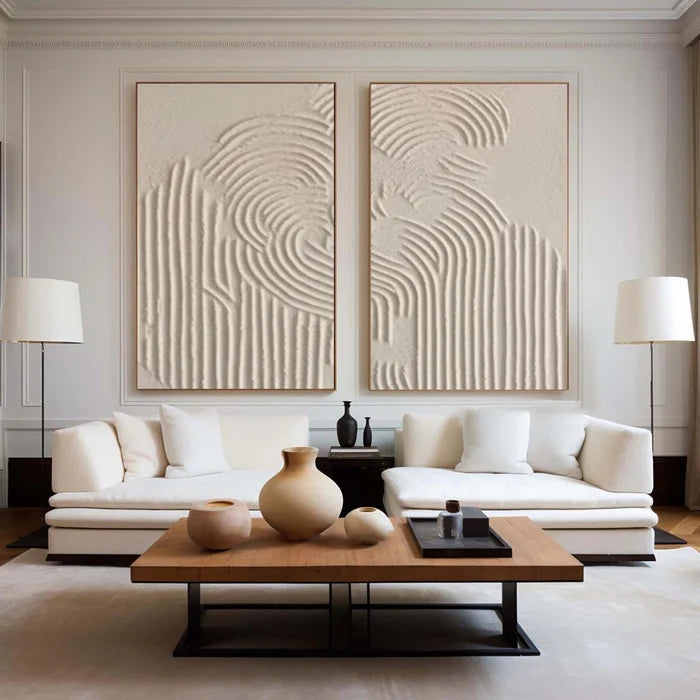
Black Textured Wall Art: Bold Relief for Modern Interiors
Black textured wall art flips the calm of white relief into drama: dark sculptural surfaces that make shadow part of the composition. It is one of the boldest moves in modern decor, and it rewards the right room, the right lighting, and a willing wall. This guide covers why black texture works, the styles to know, and how to buy and hang it so it impresses rather than disappears.
The drama of black relief
Where white relief catches light, black relief swallows it — and in doing so, turns its own shadows into the artwork. The ridges and planes of a black textured piece read as a study in light and dark, dramatic and sculptural. That is the appeal: it is not a black painting, it is a black sculpture on your wall, and it demands attention from across the room.

How black texture changes a room
Black is an anchor. On a bright or neutral wall, a black textured piece creates a strong focal point that grounds the space. It adds weight and contrast, and it makes everything around it feel more intentional. But black also absorbs light, so the same piece in a dim room can sink into the wall and read as a dark rectangle. Black texture needs light to perform — that is the single most important thing to plan for.
Styles: geometric and abstract black
- Black geometric relief — raised lines, grids, and architectural shapes in matte black; precise, modern, gallery-like.
- Black abstract texture — gestural peaks and ridges that read sculptural from any distance.
- Black-and-white contrast pieces — white relief on black or black on white, adding depth through two-value drama.
- Textured black with metallic accents — hints of gold or silver on the ridges catch light.
All four stay bold; the choice is about precision versus gesture.
Pairing black with warm materials
Black texture works best when balanced by warmth. Wood floors, brass or bronze accents, terracotta, leather, and textured linen all soften black’s severity and keep the room from feeling cold. A common winning formula: black textured art on a warm painted wall (greige, taupe, or deep warm grey) with wood furniture beneath. The contrast gives the black piece presence while the warm tones keep the space inviting.
Black texture in bright spaces
Black textured art performs at its best where there is light to sculpt with: a well-lit living room, a hallway with a picture light, or across from a large window. In bright rooms, black relief reads crisp and dramatic; in low light, it needs help. If the wall you want is dim, add a picture light or aim a lamp across the piece rather than choosing black and hoping for the best.
Quality checks for dark paint
Dark paint hides nothing — which makes it a brutal honesty test for texture quality. Look at the relief up close: are the transitions between ridges clean, or is the surface lumpy? Is the black even, or patchy where the material shifted? Does the piece hang flat and stay rigid? Dark surfaces also show dust and fingerprints more readily on the flat areas, so construction and finish matter more than they would in a busy color.

Buying black textured originals
Confirm the relief is real (plaster, paste, or heavy paint — not a printed texture), check the depth, and ask for angled or video evidence, because dark colors compress in photos. Start inside the black textured collection to see the range of geometric and abstract pieces, and use the size guide to match the statement to your wall. A preview step that shows the actual dark surface before shipping is worth its weight here.
Mixing black texture with other art
Black textured art is naturally a solo act, but it can sit in a composition done right. Pair it with a single flat piece in a matching tone, or let it anchor one side of a gallery wall with lighter work balanced opposite. Keep the mix restrained: black texture is strong, and several strong black pieces in one room can fight each other. One confident black relief, well lit, carries more than three weaker attempts.
FAQ
Does black wall art make a room look smaller?
Dark art can make a small or dim room feel more enclosed, so use it where there is light and space. On a bright wall in a room with light, black relief adds drama without shrinking the space.
How do I clean black textured art?
Dust with a soft, dry brush or microfibre duster, brushing gently into crevices. Avoid water and sprays, which can dull dark plaster; regular dusting keeps the black crisp.
Where should black textured art be hung?
Where light can reach it — well-lit living rooms, hallways with picture lights, or across from windows. Avoid dim corners where black texture can sink into the wall.
Make a bold, sculptural statement. Browse the black textured collection and confirm scale with the size guide.