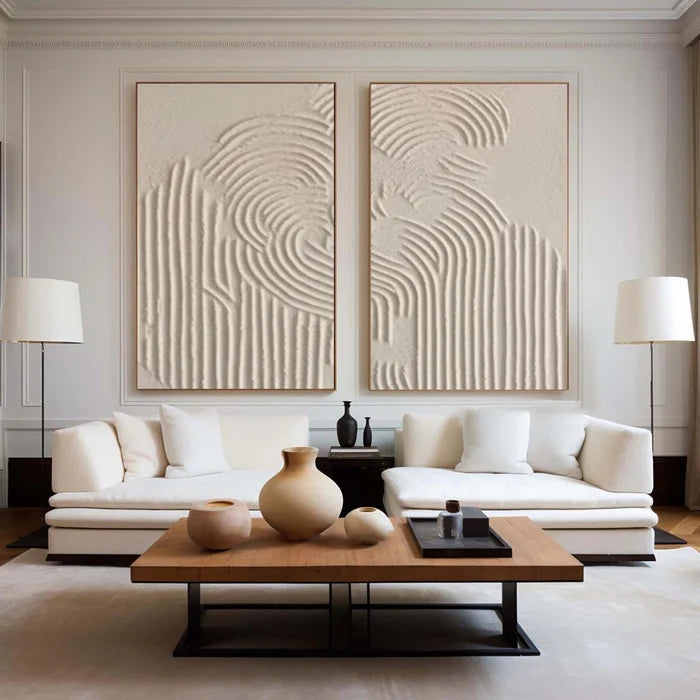
Textured Art vs Flat Canvas: Which Look Lasts and Fits Your Space
Textured art and flat canvas answer different questions for a wall. One brings sculpture, light, and drama; the other brings clarity, flexibility, and ease. Most rooms could hold either — which is why the choice should come down to your walls, your light, and how you live, not to fashion. This comparison lays out the differences so you can pick the one that lasts in your space.
Defining flat and textured canvas
Flat canvas is a painting whose interest is in the image: colors, forms, and brushwork that sit thinly on the surface. Textured art builds physical depth with plaster, paste, or heavy paint, so the surface itself carries the composition and shadows become part of the design. The line between them is drawn by the eye and the hand — a flat canvas is about what you see, a textured piece about what you see and feel with the light.
Visual weight in a room
Flat and textured pieces do not weigh the same on a wall. Textured art reads heavier and more prominent, because its depth catches light and demands attention even from across the room. Flat canvas reads lighter and quieter, letting the color do the work. In practice: a large flat abstract can fill a wall gracefully without stealing the room, while a textured piece of the same size becomes the room’s focal point by default. Choose based on whether you want the art to lead or to accompany.

Light, shadow, and depth
This is the biggest functional difference. Textured art changes with the light — raking light reveals ridges, shadows shift through the day, and the same piece looks different in morning and evening. Flat canvas is stable: it looks the same at every hour and angle. If your room has interesting daylight or you plan a picture light, texture rewards you; if the piece sits in flat, even lighting, texture’s main advantage goes unseen and flat canvas may serve you better.
Care: dusting vs wiping
Care divides cleanly along the depth line. Flat canvas is easy — a soft dry cloth or duster keeps it clean, and it tolerates a careful wipe where needed. Textured relief needs gentler, more deliberate care: dust with a soft brush, work into the crevices, and never use water or sprays, which can dull or soften the plaster. White textured pieces also show dust faster. If ease of maintenance is a priority and the wall gets dirty, flat canvas is the forgiving choice.
Cost differences between the two
Textured art generally costs more than flat canvas of the same size, because the material itself is a major cost: plaster and paste are heavy, drying is slow, and each piece is labor-intensive. Flat canvas uses less material and produces faster, so prices sit lower for comparable sizes. Neither is a quality verdict — both can be excellent — but the budget should reflect that relief is a more expensive physical object.
Which subjects read better textured
Depth suits some subjects more than others. Abstract, geometric, and organic relief all gain from texture, because the form is the meaning. Landscape and ocean abstracts do beautifully in relief and in flat. Realistic or highly representational subjects usually read worse textured — realism needs the surface to disappear, which is exactly what relief prevents. As a rule: the more abstract the image, the more texture can help it; the more literal, the more it fights.

Room scenarios: when flat wins
Flat canvas is the better default in several situations: small rooms where heavy relief can overwhelm, busy walls where another focal point is not needed, rooms with flat even lighting, spaces with high dust or humidity (kitchens, bathrooms), and any place you want to rotate art easily. Flat canvas is also the flexible choice for gallery walls, where a mix of light pieces is easier to keep balanced than several heavy reliefs.
How to choose between them
Work through three tests. First, the light test: does the wall have directional light that could reward relief? Second, the role test: do you want the art to anchor the room (textured) or accompany it (flat)? Third, the care test: are you happy to dust gently and protect the surface? If relief clears all three, go textured; if any fails, flat canvas will serve you longer. Starting points: the white textured collection for relief, and the abstract collection for flat originals; the size guide settles scale for either.
FAQ
Is textured art better than flat canvas?
Not universally — textured art adds drama and light but costs more and needs gentler care; flat canvas is easier and more flexible. Choose by the room’s light and the role the art should play.
Does textured wall art cost more?
Yes, generally — relief uses more material and slower, more labor-intensive production than flat canvas of the same size. The higher price pays for the physical depth.
Can textured art be repaired?
Often yes — a real plaster or paste surface can be touched up by an artist. Flat canvas damage is usually fixed by cleaning or re-stretching; printed canvas delamination is not repairable.
Decide by light, role, and care. Compare the textured collections with the flat abstract collection, and use the size guide for scale.