

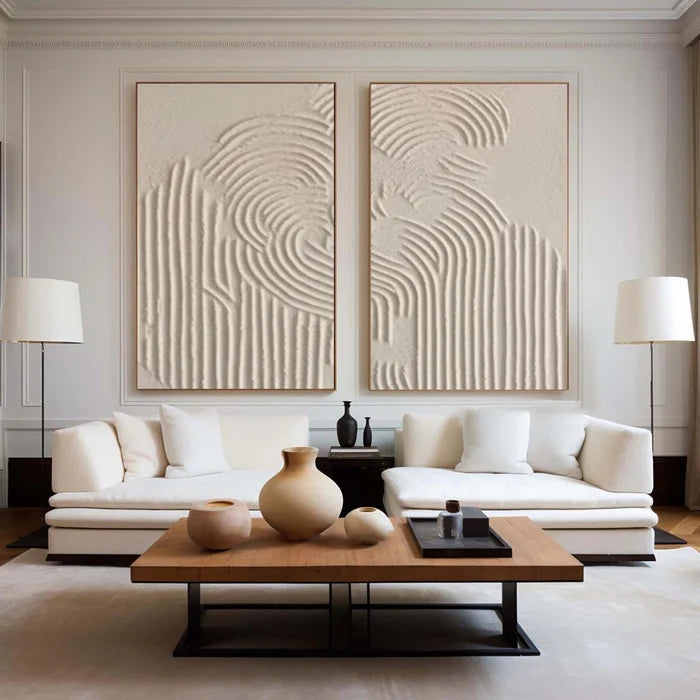

Blue green abstract art that brings a calmer rhythm into modern living spaces
Staring at screens all day can leave a room feeling sharper than it should be. That is exactly where blue green abstract art starts to matter. These tones do more than “match decor”; they soften visual noise, slow the eye, and introduce a kind of quiet movement that flat prints rarely achieve. When layered by hand, blue and green stop behaving like flat color blocks and begin to shift with light, creating an atmosphere that feels closer to water, sky, or foliage than to a static image. The result is not just decoration, but a visual reset—especially in bedrooms and home offices where mental fatigue tends to accumulate.
Why blue and green feel restorative instead of cold
Blue and green sit on the cooler side of the spectrum, but their emotional effect depends heavily on how they are built, not just which shade is chosen. A flat digital teal can feel sterile, while a hand-painted surface with visible ridges catches light and creates subtle warmth within the same palette.
In real interiors, this becomes obvious over the course of a day. Morning light may pull out soft sage tones, while evening lighting deepens the same piece into navy and forest hues. This variability prevents the artwork from feeling static or lifeless. Instead of “cool,” it reads as fluid and grounded—closer to natural environments than artificial color swatches.
That is why blue green abstract art is often chosen for spaces where people want to decompress. It does not demand attention in the way high-contrast or overly saturated art does, but it also does not disappear into the wall.
The difference texture makes in deep color palettes
Dark blues and greens are notoriously difficult in mass-produced prints. Without physical depth, they can appear muddy, flat, or overly uniform. Handcrafted paintings solve this in a very physical way.
Layered paint—especially in acrylic or plaster-infused techniques—creates micro-shadows and highlights. These small variations allow the eye to perceive depth even within a limited color range. It is this depth that gives blue green abstract art its “breathing” quality.
You can see the difference most clearly in low-light conditions. A printed piece tends to collapse visually, while a textured painting continues to hold form because light catches the raised surfaces differently across the canvas.
For buyers exploring options, browsing a tranquil collection of blue-green abstract masterpieces can make this distinction clearer, especially when comparing smoother versus more heavily textured finishes.
Choosing between ocean tones and forest tones for your room
Not all blue green palettes behave the same way. The decision often comes down to how much natural light your room receives and what kind of mood you want to reinforce.
A bright, sunlit bedroom can handle deeper navy and forest compositions without feeling heavy. In fact, these darker tones can anchor the space and improve visual balance. In contrast, a dim home office may benefit more from lighter teal or sage variations that reflect available light rather than absorb it.
Instead of thinking in terms of color names alone, it helps to think in terms of “light interaction.” Ask how the painting will behave at different times of day, not just how it looks in a product image.
Visual rhythm and the idea of “music” in abstract painting
Some buyers search for blue and green art with a musical quality, and while that may sound abstract, it points to something very real: rhythm.
In hand-painted work, brushstrokes act like tempo. Long horizontal sweeps feel slow and calming, while shorter, layered strokes introduce movement and energy. When these marks overlap in blue and green tones, they can resemble waves, wind through leaves, or shifting skies.
This sense of rhythm is what separates a static composition from one that feels alive. It also explains why two artworks with the same colors can create completely different emotional responses.
A common disappointment happens when buyers choose based only on color swatches. The piece arrives, matches perfectly, but feels “flat” or lifeless on the wall. The missing element is usually rhythm—how the paint actually moves across the surface.
Understanding this before buying helps avoid that mismatch.
Placement decisions that change how the artwork feels
Where you place blue green abstract art matters as much as which piece you choose. Above a bed, it should feel expansive and calming, often favoring horizontal compositions that echo the width of the headboard. In a home office, a slightly more dynamic composition can help maintain focus without becoming distracting.
Scale is equally important. A piece that is too small will break the immersive effect these colors are known for. Blue and green need enough surface area to create atmosphere; otherwise, they read as isolated patches rather than an environment.
This is one of the main reasons buyers hesitate online. It is difficult to judge scale from images alone. Tools that allow you to preview artwork on your own wall or consult on sizing can reduce that uncertainty significantly.
When blue green abstract art is the wrong choice
Despite its versatility, this style is not universally suitable. Rooms that rely on strong contrast or bold color accents may find blue and green too subdued, especially if the existing palette includes warm reds, oranges, or high-gloss finishes.
Similarly, spaces that need energy—such as social dining areas or creative studios—may feel too restrained with overly calm compositions. In those cases, introducing warmer tones or more contrast-heavy artwork may create better balance.
Recognizing when not to choose blue green abstract art is just as important as knowing when it works.
How to reduce uncertainty when buying textured art online
Buying handcrafted paintings online introduces a specific kind of hesitation: will it look the same in real life?
Texture, scale, and color shift are the three main variables. A painting may appear smoother or darker depending on lighting conditions in your home. This is normal, but it should be anticipated.
Working with an online shop like Vinchy Art can help bridge that gap through practical tools. A room preview feature allows you to upload your own wall photo and check proportions before ordering, while their art advisory offers guidance based on your lighting conditions and existing materials. If you are unsure whether to lean toward deeper navy or lighter sage tones, using their art advisory can help refine that decision with more confidence.
Frequently Asked Questions
Is blue green abstract art suitable for bedrooms?
Yes, it is one of the most effective choices for bedrooms because the color range naturally supports a calmer visual environment. The key is selecting the right saturation level based on your room’s lighting.
Will textured paintings look different from photos online?
They often do, especially in how they reflect light. Texture adds depth that cannot be fully captured in flat images, so expect subtle variation in tone and highlights in real conditions.
What size works best above a bed?
A general guideline is to choose artwork that spans roughly two-thirds to three-quarters of the bed width. This maintains balance and allows the color field to feel immersive rather than fragmented.
Can blue and green artwork work in a home office?
Yes, particularly if you want to reduce visual fatigue. Slightly more dynamic compositions with visible brush movement can help maintain focus without overstimulation.
How do I choose between darker and lighter tones?
Look at your natural light. Bright rooms can support deeper navy and forest tones, while lower-light spaces benefit from lighter teal or sage palettes that reflect available light.