Choosing Black and White Canvas Art for Modern Interiors: How to Make It Look Intentional on Your Wall
Black and white canvas art is a timeless, versatile design element that introduces contrast, sophistication, and structure to modern interiors. However, many homeowners select a piece thinking it is the safest choice, only to find it looks flat, harsh, or unfinished once installed. The difference between artwork that anchors a room and a piece that feels generic comes down to texture, scale, composition, and lighting. When chosen with intention, monochrome artwork functions like architecture—defining edges, reinforcing lines, and adding emotional depth without overwhelming your visual space.
What Makes Abstract Black and White Canvas Art So Popular?
The enduring appeal of black and white canvas art lies in its ability to communicate depth without the distraction of color. By removing the color palette, viewers are forced to focus on shapes, brushstrokes, and tonal transitions. This creates a refined visual experience that complements minimalist, industrial, Scandinavian, and contemporary interiors alike.
Designers often utilize a monochrome palette because it unifies spaces effortlessly. Whether paired with bold furniture or subtle, layered neutrals, black and white canvas art maintains visual harmony while preventing a room from feeling cluttered. Brands like Vinchy Art elevate this concept by blending abstract oil techniques with calming, structured compositions that support mental clarity and psychological comfort.
How Does Black and White Canvas Art Fit Different Interior Styles?
Because black and white art relies entirely on form and spacing, it adapts dynamically to the raw materials and design languages of various interior styles. Instead of acting as a mere colorful accent, it behaves like a visual backbone that stabilizes a room.
In minimalist interiors, a large monochrome abstract reinforces clean lines and uncluttered aesthetics. In industrial spaces, high-contrast pieces complement raw textures like metal, brick, and concrete. Scandinavian designs benefit from softer grayscale tones that preserve a light, airy atmosphere, while modern luxury spaces use sharp blacks and bright whites to introduce drama and premium contrast.
Interior Style and Art Compatibility Overview
Interior Style: Minimalist
How It Works with Black and White Art: Reinforces simplicity, clean architectural lines, and balance.
Interior Style: Industrial
How It Works with Black and White Art: Complements raw textures like metal, concrete, and exposed brick.
Interior Style: Scandinavian
How It Works with Black and White Art: Supports light, airy atmospheres using softer grayscale compositions.
Interior Style: Modern Luxury
How It Works with Black and White Art: Adds high-contrast drama, sophistication, and a clear focal point.
Texture Matters: Why Handcrafted Oil Paintings Outperform Flat Prints
One of the biggest misunderstandings about black and white canvas art is assuming all pieces behave the same way on a wall. A flat, digitally printed design and a handcrafted oil painting look dramatically different in person, even if they share an identical composition.
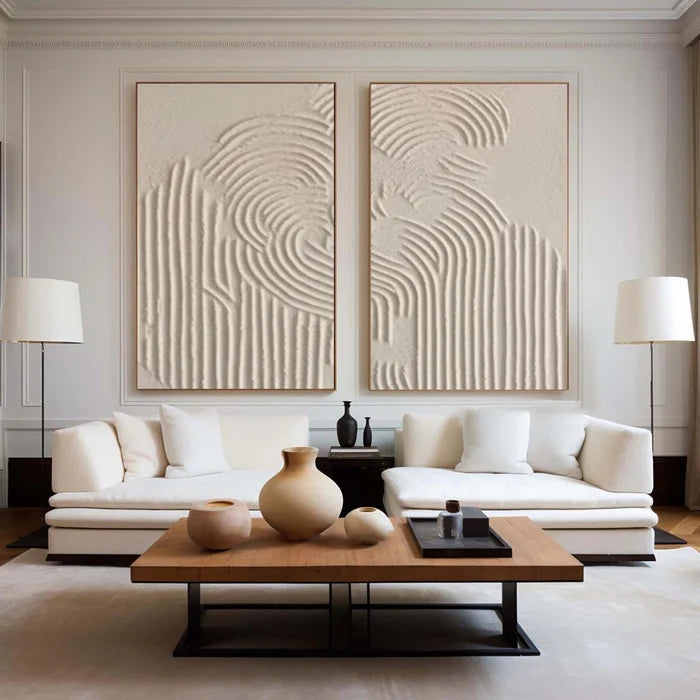
A smooth print may look crisp online, but on a large wall, it can feel visually thin and lack physical weight. In contrast, handcrafted pieces introduce subtle surface variations, uneven pigment density, and layered textures that catch light differently throughout the day. If your room relies on soft, premium materials like linen upholstery, wood grain, or matte finishes, a textured painting will integrate far more naturally than a flat graphic print. Vinchy Art focuses strictly on these original hand-painted canvas pieces, utilizing abstract brushwork and textured plaster styles to give the artwork a tangible presence.
Getting the Scale Right: A Practical Selection Guide for Common Placements
Scale is where most artwork decisions fail. Because the color palette is restrained, size becomes the dominant factor in how a monochrome piece reads. A small canvas on a large wall does not feel minimal; it feels unfinished. Conversely, an oversized black and white piece feels intentionally architectural when proportioned correctly to your furniture.
To maintain proper balance and visual flow, your artwork should generally span two-thirds to three-quarters of the width of the wall or the furniture below it.
Artwork Width and Sizing Reference
Wall Context: Above Sofa
Recommended Artwork Width: 60% to 75% of sofa width
Wall Context: Above Bed
Recommended Artwork Width: 55% to 70% of bed width
Wall Context: Entryway Wall
Recommended Artwork Width: 50% to 65% of wall width
Wall Context: Narrow Hallway
Recommended Artwork Width: Vertical orientation or consistent multi-panel series format
Where Should You Place Black and White Canvas Art for Maximum Impact?
To achieve maximum visual appeal, black and white canvas art should be placed at eye level in primary focal areas, such as above living room sofas, beds, or entryway consoles. Center the artwork approximately 57 to 60 inches from the floor to align with standard viewing heights.
For large, expansive walls, a single oversized canvas or a multi-panel arrangement creates a powerful statement. In transitional spaces like long hallways or staircases, a coordinated series of smaller minimalist line art pieces can introduce a rhythmic, gallery-like pacing without overwhelming the narrow architecture.
Lighting Quietly Changes Everything: Warm versus Cool Tones
Black and white artwork is highly sensitive to ambient lighting conditions. Because there are no colors to anchor the image, the tone of the artwork shifts with your light bulbs and natural environment. Warm residential lighting changes crisp whites into cream or ivory tones, reducing the overall contrast. Cooler office lighting makes blacks appear sharper, more clinical, and highly graphic.
Natural light adds an evolving layer to textured abstract art. Layered oil paints and plaster surfaces cast small shadows that shift as the sun moves, ensuring the piece never feels visually static. When planning your space, consider where the main light sources hit the wall; directional spotlighting or soft track lighting is highly recommended to enhance the depth of textured brushwork.
Can Black and White Canvas Art Improve Mood and Well-Being?
Beyond aesthetics, a simplified visual environment offers distinct psychological benefits. Scientific studies suggest that environments with reduced visual clutter help minimize cognitive overload, creating a focused space for relaxation.
Monochrome art aligns with this principle by providing visual calmness while still engaging the viewer’s imagination through abstract design. By removing bright color distractions, the mind connects directly with movement, form, and emotion. This makes abstract black and white art an excellent choice for bedrooms, home offices, and corporate environments where mental clarity and stress reduction are prioritized.
When Black and White Canvas Art Does Not Work
Despite its versatility, monochrome art is not a universal solution for every interior. In spaces that completely lack contrast, such as a purely monochromatic white room with no texture, a black and white piece can fade into the background or look clinical.
Similarly, in highly eclectic, deeply traditional, or rustic spaces that rely on heavy warmth, a stark black and white print can feel cold and disconnected. To make black and white art work in these environments, it must be balanced with natural wood grain, leather, or warm textiles to prevent the contrast from feeling too aggressive.
Who Should Consider Investing in Premium Monochrome Art?
Black and white canvas art is ideal for interior designers, corporate professionals, and homeowners seeking long-term design relevance. Because it does not rely on fleeting color trends, high-quality monochrome art ages exceptionally well, evolving seamlessly alongside changing décor styles over the years.
To take the guesswork out of the selection process, buyers can utilize modern digital tools. Vinchy Art provides a digital room preview service that allows you to upload a photo of your wall to visualize scale before buying, alongside professional art advisory support to ensure your chosen piece matches your room's specific lighting and texture profile.
Frequently Asked Questions
Is black and white canvas art too simple for a main living room?
No, simplicity in color does not mean simplicity in visual impact. A large, well-composed monochrome piece featuring rich texture and varied brushwork often feels more substantial, luxurious, and intentional than a colorful but generic print.
How do I know if a piece of art will look flat in person?
Review the product images closely for surface details, layered paint, and shadow depth. Original hand-painted works show natural brush variations and plaster textures, whereas flat digital reproductions look completely uniform and lack dimensional weight under directional light.
Does black and white art coordinate well with colorful furniture?
Yes, it acts as an excellent visual anchor. By pairing high-contrast black and white art with bold, colorful furniture, you create a sophisticated balance that prevents the room from feeling visually chaotic or overwhelming.
How should I clean and maintain a black and white canvas painting?
Keep the canvas away from high-humidity areas and direct, intense sunlight to protect the materials over time. Dust the surface gently using a clean, dry, soft microfiber cloth, and avoid using liquid cleaning chemicals which can damage the textured oil or plaster layer.
Can abstract black and white art improve property appeal in real estate?
Yes, real estate professionals frequently use large-scale black and white abstract art in home staging. Its neutral yet sophisticated nature appeals to a broad demographic, making spaces look modern, expensive, and structurally balanced during property viewings.